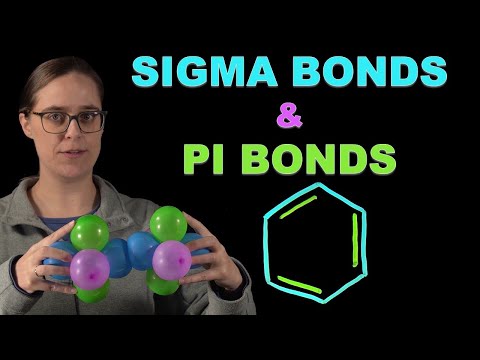
Alright, picture this. You’re at a party, and there’s this super charming couple on the dance floor. They’re moving perfectly in sync, right? That’s kind of how pi and sigma bonds work in chemistry. Weird analogy? Maybe! But hear me out.
These two types of bonds are like the ultimate dance partners in the world of atoms. Sigma bonds are all about that solid connection. They hold things together nice and tight, just like a good hug from your favorite friend.
Then there’s pi bonds, which are more like those spontaneous twirls you do when you’re feeling free. They bring a little flair to the mix but need that sigma bond to really shine.
So, if you want to understand how these bonds shape chemical reactions—like how they can make or break a molecule—stick around! It’s a wild ride through the atomic dance floor that keeps everything in check. You ready for this?
Understanding Pi and Sigma Bonds: Essential Rules in Molecular Chemistry
Alright, let’s chat about Pi and Sigma bonds, a really cool part of molecular chemistry. If you’ve ever thought about how atoms stick together to form everything around us, these bonds are pretty much the glue! So, buckle up, and let’s break it down.
Sigma Bonds are the first type of bond formed between two atoms. You can think of them as the strong backbone in a relationship—like when you and your best friend promise to always have each other’s back. They form when atomic orbitals overlap head-on. This means there’s a lot of electron density directly between the two nuclei.
Now, here’s where it gets interesting: every single bond in a molecule contains at least one sigma bond. So, basically, you can’t have any relationships without that solid foundation!
But things get more complex with Pi Bonds. Imagine adding some flair on top of that strong foundation! These bonds form when there are two atoms already connected by a sigma bond but want to add more connections—like hanging out with more friends after school. Pi bonds happen when p-orbitals overlap sideways.
A key thing to remember is that you can only find pi bonds in double or triple bonds. For instance:
Now let’s talk about why these bonds matter in chemical reactions! When molecules go through reactions—like when you’re baking cookies or even rust forming on metal—their bonds break and form anew. Sigma bonds are usually stronger than pi bonds because they’re held tighter due to that direct overlap we talked about earlier.
So what happens in reactions? Well:
To illustrate this point further: think of it like playing tug-of-war with friends; if one side breaks free (say it’s just a few people holding onto those weaker pi connections), then new teams can be formed quickly!
It’s fascinating how these subtle differences in bonding strength influence chemical behavior and outcomes! And before you know it, understanding those little guys—sigma and pi—can help you grasp way bigger concepts in chemistry.
So yeah, exploring molecular interactions through these types of bonds opens up whole new worlds in science! Each time you’re mixing ingredients or observing nature’s processes, remember there’s some serious bonding action happening at the atomic level beneath it all.
Understanding Pi and Sigma Bonds: Their Critical Role in Chemical Reactions
Alright, let’s talk about pi and sigma bonds. You might have heard these terms floating around in chemistry class. They’re not just fancy words; they play a big role in how atoms stick together and how chemical reactions happen. So, what’s the deal with them?
First off, you’ve got to know that these bonds are types of covalent bonds. This means they form when two atoms share electrons. But here’s the kicker: not all shared electrons are created equal! That’s where pi and sigma bonds come into play.
Sigma bonds are the first kind we usually encounter when two atoms bond together. Imagine you’re holding hands with a friend; that hand-holding is like a sigma bond—strong and straightforward. It forms along the axis connecting the two nuclei of the atoms, so it comes from the end-to-end overlap of orbitals. This makes it really stable.
- In a simple example, think of hydrogen gas (H2). Each hydrogen atom shares its single electron with another hydrogen atom to form a sigma bond.
- This kind of bond allows for rotation around the bond axis, which can lead to different shapes in molecules.
Now, let’s move on to pi bonds. These guys are a bit more complex and come into play after a sigma bond has formed. Picture it like adding layers to your sandwich—sigma is the bread, and pi is anything you slap on top! They form when two p-orbitals overlap sideways. This overlap happens above and below the bonding axis, creating this cool double or triple bond situation.
- A classic example is ethene (C2H4). Each carbon atom forms one sigma bond with another carbon atom using sp2 orbitals. Then they share an additional pair of electrons through a pi bond using their unhybridized p-orbitals!
- This unique arrangement locks those carbons into place so they can’t rotate freely as they could with only sigma bonds—leading to fixed shapes in larger molecules.
You might be wondering why this matters for chemical reactions. Well, when molecules interact during reactions, it’s often about breaking these bonds and forming new ones. Generally speaking, saturation levels, determined by these bonds, influence how reactive a molecule is.
If you’ve got double or triple bonds (thanks to those pi bonds), your molecule is usually more reactive than one held together by just sigma bonds alone because it’s easier to break those weaker pi interactions compared to sigma ones!
An emotional little story here: think about how life changes when two people form connections over time. At first, it’s just that solid handshake—a strong foundation (that’s your sigma). But as relationships deepen—like sharing experiences—that emotional layer adds complexity (hello pi!). Chemistry works in similar layers!
The balance between pi and sigma bonds makes or breaks compounds and ultimately dictates their chemical behavior—from stability to reactivity! So next time you’re mixing things up in lab class or cooking up some science at home, remember: those tiny little electrons are doing some serious heavy lifting behind the scenes!
You see? Pi and sigma bonds aren’t just academic jargon—they’re central characters in the ongoing saga of chemistry that brings everything from reactions to life itself!
Understanding Sigma and Pi Bonds: Fundamentals of Molecular Chemistry
Sigma (σ) and Pi (π) bonds are pretty fundamental concepts in molecular chemistry. They’re the building blocks that help us understand how atoms stick together to form molecules. So, let’s break this down.
First off, sigma bonds are formed by the head-on overlap of atomic orbitals. Imagine two people shaking hands; that’s basically how sigma bonds work. You’ve got one orbital from one atom overlapping with another from a different atom directly. This kind of bond is strong and is usually the first bond formed between two atoms.
Now, if we move on to pi bonds—those are a bit different. They come into play when there’s already a sigma bond present between two atoms. Think of it like a good friendship where you have that solid handshake (the sigma bond), and then you add a fun high-five over the top (the pi bond). Pi bonds come from the sideways overlap of p-orbitals. They’re not as strong as sigma bonds but add some interesting dynamics!
You might be wondering about their roles in chemical reactions. Here’s the thing: when molecules react, it usually involves breaking and forming these bonds. When pi bonds break during a reaction, they can lead to new sigma bonds forming, which creates new products.
And here’s an example to make it clear: consider ethylene (C₂H₄). It consists of two carbon atoms double-bonded together with one sigma bond and one pi bond between them. If those carbon atoms were to react with something else, they could break the pi bond while keeping the sigma bond intact—opening up new possibilities for forming different compounds.
Also, it’s worth mentioning how these types of bonds affect molecular geometry. Since sigma bonds allow for free rotation around their axis, molecules can twist and turn in ways that often influence how they interact with others. On the flip side, pi bonds restrict this rotation because they need that side-to-side overlap to exist.
So yeah, understanding these two types of bonds gives you insight into everything from simple compounds to complex biological molecules! The way atoms connect affects everything around us—the air we breathe to the food we eat! Isn’t it cool how much bonding goes into life?
So, let’s chat about these cool things called pi and sigma bonds in chemistry. You know, when I was a kid, I remember looking at my mom’s old textbooks and getting totally lost in the weird symbols and diagrams. It was like deciphering a secret code. But then, one day while baking cookies, it hit me—bonds are kind of like how ingredients come together to make something awesome.
Now, let’s break it down a bit. When two atoms bond, they essentially come together to form molecules. You’ve got sigma bonds, which are these strong bonds formed by the head-on overlap of atomic orbitals. Imagine two friends giving each other a super tight hug—that’s your sigma bond! It’s sturdy and straightforward, making it the backbone of most chemical structures.
Then there are pi bonds. They’re more like having a fun dance party on top of that hug! Pi bonds happen when two p-orbitals overlap sideways. They aren’t as strong as sigma bonds but play a vital role in determining the structure and reactivity of molecules. So picture this: if sigma bonds are your solid foundation, pi bonds add flair and give those molecules some serious character.
In chemical reactions, these bonds really strut their stuff. When substances interact, the rearrangement of sigma and pi bonds can lead to new compounds being formed. If you think about it emotionally for a sec—when friendships evolve or change, you might let go of some people (breaking old bonds) while welcoming new ones into your life (forming new ones). That’s kind of what happens on a molecular level!
But it can get tricky too! Like if there’s too much energy or if conditions change—things can get chaotic! Bonds can break unexpectedly like when you forget to stir your cookie dough and end up with burnt edges instead of soft cookies.
Understanding these bonding types helps scientists predict how substances will behave in reactions—kind of like knowing which friends will gel well together at that party you’re throwing! So next time you’re mixing up something delicious or studying for that chemistry test, just remember: every bond tells a story about connection and transformation. Isn’t that kinda beautiful?