You know that feeling when you find the perfect pair of socks? They just fit, and you wonder how you ever lived without them. Well, that’s kind of how atoms feel when they form chemical bonds.
Seriously! Atoms don’t just float around like lost socks. They’re on a mission to connect with others, creating all the stuff we see around us. Like, without these bonds, we’d be living in a world made of lonely atoms, and that sounds pretty dull, right?
So, what exactly is this bond business? It’s about how atoms stick together to form molecules. And let me tell you, it’s a lot more exciting than it sounds! From the air we breathe to the water we drink—bonds are everywhere.
Let’s explore this little dance of electrons and see why these connections are super important for life as we know it!
Understanding Chemical Bonds Between Molecules: A Comprehensive Guide to Molecular Interactions in Science
So, let’s chat about chemical bonds, shall we? You know, those invisible forces that hold molecules together like best friends in a tight hug. Understanding these bonds is key to getting what makes everything tick in the world of chemistry.
First off, let’s look at what a **chemical bond** actually is. Think of it as a connection between two atoms where they share or exchange electrons. This connection allows the atoms to form stable structures called **molecules**. And trust me, these molecules are basically the building blocks of everything around us—like water, proteins, and even the air we breathe!
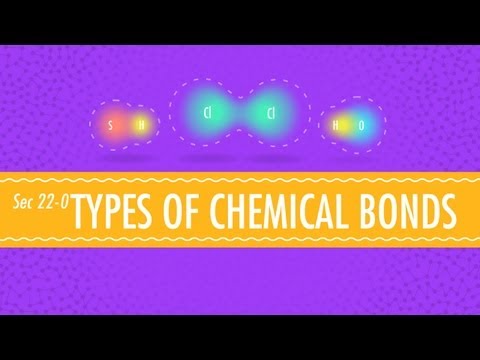
Now, there are three main types of bonds: **ionic**, **covalent**, and **metallic**.
- Ionic Bonds: These happen when one atom gives up an electron to another atom. Imagine this like a game of catch where one player tosses a ball (the electron) to another player who really needs it. This creates charged particles called ions that stick together because they are oppositely charged. A classic example is table salt (sodium chloride), where sodium gives up an electron to chlorine.
- Covalent Bonds: This bond forms when two atoms decide to share electrons instead of tossing them around. It’s kind of like two friends sharing their snacks instead of fighting over them! Water (H2O) is a perfect example here; each hydrogen atom shares an electron with oxygen, making the whole molecule super stable.
- Metallic Bonds: Picture a big crowd at a concert, everyone’s close together and sharing energy. That’s how metal atoms behave! They have this pool of shared electrons that move freely between them which gives metals their shiny appearance and helps conduct electricity.
One time I remember trying to explain ionic bonding to my little cousin while we were making cookies together. We were mixing ingredients and I said, “Think about sodium as a cookie that wants chocolate chips but can’t find any! So it gives away its cookie crumb (the electron) to attract the chocolate chip (the chlorine), making something delicious!” He loved that idea—because who doesn’t love cookies?
Now let’s talk about strength for a sec; not all bonds are created equal! Ionic bonds tend to be pretty strong because you have those opposing charges pulling the ions tightly together. Covalent bonds can vary: some are super strong (like in diamond) while others can be weaker (like in gases). Then there are metallic bonds which allow metals some flexibility due to those free-flowing electrons.
Another key aspect is how these interactions influence properties like boiling and melting points or even solubility in water! For example:
- Substances with strong ionic bonds usually have high boiling points since you need lots of energy to break those strong attractions.
- Covalent compounds might have lower boiling points depending on how strong or weak their intermolecular forces are.
- On the other hand, metals generally have high melting points due to their robust metallic bonding structure.
In essence, understanding chemical bonds doesn’t just help chemists whip up new recipes in their labs but also gives insight into things like how our body functions or why certain materials behave differently under pressure or heat.
So next time you mix your ingredients or look at your favorite metal object, think about those tiny atomic connections holding everything together—it’s pretty awesome when you think about it!
Studying GOC: Exploring Organic Chemistry Without Chemical Bonding Concepts
Exploring the world of organic chemistry without diving headfirst into chemical bonding concepts can seem a bit, well, tricky. But fear not! GOC, or General Organic Chemistry, is all about understanding organic compounds and their behaviors without getting too tangled up in the technicalities of bonds.
So, why focus on GOC? Well, it allows you to appreciate how different substances behave under various conditions. You can learn about things like functional groups, which are specific clusters of atoms that give organic molecules unique properties. Think of them as little flags that tell you how the molecule might react.
Now, let’s break this down a bit more:
- Functional Groups: These are critical to understanding organic chemistry because they define the characteristics and reactions of molecules. For example, molecules with hydroxyl groups (-OH) tend to be alcohols and have unique behaviors.
- Stereochemistry: This explores how the spatial arrangement of atoms in a molecule affects its properties and reactions. Imagine two different versions of a drug that look like mirror images; they can have very different effects in your body!
- Reaction Mechanisms: Here’s where it gets fun! Instead of focusing on bonds, you explore what happens during chemical reactions—like who’s doing what and when. This way, you can predict outcomes even if you’re not fixated on bond formation.
- Aromatic Compounds: These guys are pretty cool too! They’re stable due to their structure and often smell great (think perfumes). By studying GOC, you get to know why aromatics behave differently than aliphatic compounds without getting bogged down by bond specifics.
Think back to when I was learning chemistry—I remember looking at molecular models thinking they were just pretty toys. But once I understood these concepts without stressing over every little bond detail, it all clicked! You see the bigger picture.
In GOC studies, it’s about grasping relationships between elements and discovering patterns—or what chemists call reactions. For instance, knowing that alcohols will usually undergo oxidation to form aldehydes can help you predict what might happen in an experiment.
You don’t need to memorize every bond type or energy level; instead, focus on how functional groups influence **reactivity** or how different molecular shapes impact **interactions**.
So basically, diving into GOC lets you play around with the exciting world of organic compounds while sidestepping some complex bonding theories—and honestly? It makes learning a lot more enjoyable! Embrace the fun parts of chemistry first; worry about the nitty-gritty later!
Exploring the 7 Types of Chemical Bonding: A Comprehensive Guide for Science Enthusiasts
Sure, let’s take a casual stroll through the world of chemical bonding! You know, chemical bonds are like the glue of chemistry. They hold atoms together to form everything around us, from water to trees, even you and me. So let’s break down the seven types of chemical bonding to see what they’re all about.
Ionic Bonds
These guys form when one atom completely gives up an electron to another atom. Basically, you have one atom that’s super enthusiastic to get rid of an electron (think sodium) and another that is really eager to grab one (like chlorine). When this happens, you get charged atoms called ions. They stick together because opposites attract! A classic example is table salt—sodium chloride.
Covalent Bonds
Now these bonds are more about sharing. Atoms come together and share electrons so they can fill their outer shells. It’s like sharing a pizza—everyone gets a slice! A good way to picture this is with water (H2O). Each hydrogen shares its lone electron with oxygen, making for a happy little molecule.
Metallic Bonds
Let’s talk metals! In metallic bonding, metal atoms join forces by sharing all their electrons in a “sea” of electrons. This means that all those positive metal ions are surrounded by freely flowing electrons. Think of it as a football game where everyone can pass the ball around—it’s why metals are good conductors of electricity!
Polar Covalent Bonds
This one’s a bit more complex but fun! In polar covalent bonds, atoms still share electrons but don’t share equally. Imagine if you and a friend were sharing that pizza again; maybe you’re grabbing more slices because you’re hungrier! In water, oxygen pulls harder on the shared electrons than hydrogen does. This creates slight charges—oxygen becomes partially negative while hydrogens get partially positive.
Hydrogen Bonds
Hydrogen bonds are special attractions between molecules rather than between individual atoms. They happen when the hydrogen atom in one molecule is attracted to an electronegative atom (like oxygen or nitrogen) in another molecule. This bond is much weaker than ionic or covalent bonds but super important! It’s why water has such high boiling and freezing points compared to other molecules.
Van der Waals Forces
These forces are kinda like the shy kids at school—they’re weak and temporary but still make an impact! They arise from temporary shifts in electron density which create short-lived dipoles that attract nearby molecules. Think geckos walking up walls; they utilize these forces for grip!
Dative Covalent Bonds
Also known as coordinate covalent bonds, these involve one atom donating both electrons for a bond while the other just accepts them without giving anything back. Imagine someone bringing two pizzas for everyone else at a party who didn’t bring anything—that’s dative bonding for you! Ammonium ions (NH4+) illustrate this concept well.
So yeah, there we go—a casual tour through the different types of chemical bonding. These interactions form the backbone of molecular chemistry and help create everything we see around us—from air we breathe to our own bodies! Isn’t it incredible how tiny particles come together in fascinating ways?
Chemical bonds might sound like something you’d find in a science textbook, but they’re actually the glue that holds everything together in our universe. Seriously, without chemical bonds, we wouldn’t have water, air, or even you and me. It’s wild to think about how just a tiny shift at the atomic level can lead to all these complex interactions.
Remember that time your friend gave you a homemade cookie? Maybe it was warm and gooey with chocolate chips melting in your mouth. Well, believe it or not, that cookie’s deliciousness is all thanks to some pretty neat chemistry. The flour, sugar, and butter are linked together by chemical bonds. When you bake it, those bonds change and create new ones—a little heat magic right there! Isn’t it funny how something so ordinary as a cookie can relate to something as profound as molecular interactions?
Alright, let’s get into the nitty-gritty of it. You see, atoms like hydrogen and oxygen bond together to create water—H2O. Two hydrogen atoms team up with one oxygen atom through covalent bonds (fancy term for sharing electrons). It’s like a buddy system for atoms! This sharing gives water its unique properties—like being a super solvent (which basically means it can dissolve tons of stuff). That’s why we need it for life; it’s not just about hydration but about enabling countless processes within our bodies.
But wait! There’s more than just covalent bonding out there. There’s ionic bonding too—which is kind of like an atom tug-of-war where one atom steals an electron from another. This creates charged ions that attract each other. Think sodium chloride—or table salt! Without these bonds forming between sodium and chlorine atoms, we’d be missing out on so many flavors.
Even when you grab your morning coffee or step outside for fresh air, remember: every sip and every breath depends on these unseen connections happening at the molecular level. You know what I mean? It’s all these interactions working behind the scenes—like unsung heroes of everyday life!
So next time you’re munching on that cookie or sipping coffee while chatting with friends, take a moment to appreciate the bond that made it possible – both chemically and literally! Because after all this talk about chemical bonds being foundational to molecular interactions—it makes every interaction taste just a little sweeter.