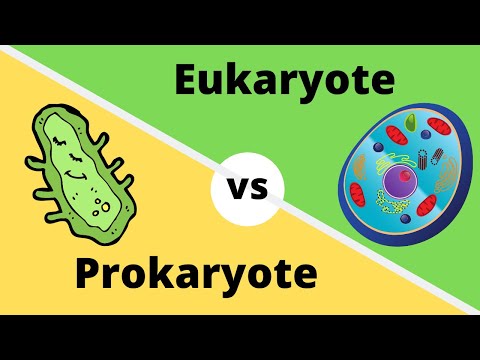
So, picture this: you’re at a party, right? And there are two types of people hanging out. On one side, you’ve got the chill, go-with-the-flow crowd. And on the other, there’s this super organized group with all their plans laid out. That’s kind of how cells roll too!
You’ve got prokaryotic cells—yeah, those carefree little guys. They’re like that friend who shows up in comfy clothes and makes everything feel laid-back. Then there are eukaryotic cells, the ones that look like they just came from a business meeting, wearing suits and ties, you know what I mean?
This isn’t just some random analogy; it totally reflects their differences! So let’s take a closer look at these two worlds of tiny life forms that make up basically everything around us. You ready? Let’s dig in!
Exploring the 10 Key Differences Between Prokaryotic and Eukaryotic Cells in Biological Science
Alright, let’s talk about **prokaryotic** and **eukaryotic** cells, which are the two main types of cells we find in living things. Understanding their differences can feel like diving into a sea of tiny life forms, but it’s actually pretty cool and straightforward!
1. Size: Prokaryotic cells are really small, usually between 0.1 to 5 micrometers. Eukaryotic cells? They’re generally larger, around 10 to 100 micrometers. This size difference gives eukaryotes some advantages when it comes to complexity.
2. Nucleus: This one is a biggie! Eukaryotic cells have a defined nucleus that holds their DNA, almost like a fancy filing cabinet. In contrast, prokaryotes don’t have this structure; their DNA floats around in the cytoplasm in a region called the nucleoid.
3. Organelles: Eukaryotic cells come equipped with lots of organelles—little organs that carry out specific tasks. You’ve got mitochondria for energy production, ribosomes for protein synthesis, and lots more! Prokaryotes? They are quite minimalist; they lack these membrane-bound organelles and stick mainly to ribosomes for making proteins.
4. DNA Structure: The DNA in eukaryotes is linear and wrapped around proteins called histones, making it super organized—think of it as getting your closet all neat and tidy! Prokaryotic DNA is typically circular and not associated with histones; it’s a bit more free-spirited!
5. Cell Wall Composition: Many prokaryotes have cell walls made of peptidoglycan (like bacteria), which gives them structure and protection. Eukaryote cell walls can be made from different materials: plants use cellulose while fungi use chitin.
6. Reproduction: Prokaryotes mainly reproduce asexually through binary fission—basically splitting in half when they’re ready to multiply. On the other hand, eukaryotes can reproduce both sexually (mixing genes) and asexually.
7. Examples: When you think of prokaryotes, think bacteria! They’re everywhere—from your gut microbiome to those nasty infections you want to avoid! Eukaryotes are all around you too: plants, animals (including us!), fungi… you name it!
8. Ribosomes Size: The ribosomes in prokaryotes are smaller (70S) than those found in eukaryotes (80S). This impacts how proteins are synthesized across these cell types.
9. Cytoskeleton Presence: Eukaryotic cells boast an intricate cytoskeleton that helps maintain their shape and aids in movement—like scaffolding supporting a building! Prokaryotes have something simpler but still functional to help them maintain structure.
10. Introns and Exons: In eukarya’s genes (those segments coding for proteins), you’ll find introns (non-coding sections) mixed with exons (coding sections). But many prokaryotic genes don’t have introns at all; they tend to keep things simple by just coding directly for proteins.
So there we go—you see the contrasts? Each type of cell has its own quirks that make it special! Whether you’re enjoying a salad filled with plant cells or getting up close with bacteria on your skin, appreciating these tiny worlds is pretty fascinating stuff.
Comprehensive Comparison Table: Key Differences Between Prokaryotes and Eukaryotes in Biological Science
You know, when you start to look at the microscopic world, it can get a bit mind-blowing. Seriously, it’s like a hidden universe! One of the coolest things in that universe is the difference between prokaryotes and eukaryotes. So let’s break it down, nice and easy.
Prokaryotic cells are the simplest form of life. Think back to that time you saw bacteria under a microscope; those tiny dudes are mostly prokaryotes! They don’t have a nucleus. Instead, their DNA floats around in the cell. This makes them super simple compared to eukaryotes. Here’s the scoop:
- No Nucleus: The DNA is just hanging out in the cytoplasm.
- Smaller Size: Usually less than 5 micrometers.
- Cell Structure: They have no membrane-bound organelles.
- Asexual Reproduction: Most of them reproduce by binary fission. Basically, they split in half!
Now, on the flip side, we’ve got eukaryotic cells. These are like party planners with all sorts of fancy gadgets! If you think about plants and animals—yeah, those are eukaryotic cells. Here’s what makes them stand out:
- Nucleus Present: Their DNA is safely tucked away inside a nucleus.
- Larger Size: Typically ranges from 10 to 100 micrometers.
- Complex Structure: They have membrane-bound organelles like mitochondria and endoplasmic reticulum.
- Asexual and Sexual Reproduction: They can reproduce both ways; think about how plants can clone themselves or how humans need two parents!
If we take a quick stroll down memory lane—picture yourself as a kid in biology class learning about different life forms. Remember when your teacher showed you an onion cell? That was an example of eukaryotic cells with all its structures visible under the microscope! On the other hand, when your friend caught some pond water with those little squiggly things? Yep, prokaryotes at work!
If we consider their habitats: prokaryotes just love extreme places! They’re often found in boiling hot springs or super salty lakes—how cool is that? Meanwhile, eukaryotes hang out more comfortably where conditions are stable like your backyard garden or your pet fish tank.
You see how both types play crucial roles in Earth’s ecosystems? Prokaryotes do amazing work breaking down organic material while eukaryotes form complex multicellular organisms like trees and humans. And guess what? Without one type or another, life as we know it wouldn’t really exist!
The long and short of it is that although they seem quite different on paper—or should I say cellularly—they’re both fundamental for life on our planet. Isn’t nature just fascinating?
Comprehensive Guide: Differences Between Prokaryotic and Eukaryotic Cells – Downloadable PDF
So, let’s talk about cells. Yep, those tiny little powerhouses that make up all living things. When you break it down, there are basically two main types of cells: prokaryotic and eukaryotic. It’s like comparing apples and oranges, but they each have their own unique quirks that make them fascinating in their own right.
First off, here’s a cool thing about prokaryotic cells. They’re usually smaller and simpler than eukaryotic ones. We’re talking about bacteria and archaea—those little dudes that can thrive just about anywhere. You know how sometimes you might find bacteria living in super hot springs or even in Antarctica? Wild, right? These cells are like the ultimate survivors!
Now let’s break this down a bit more:
- Structure: Prokaryotic cells lack a nucleus. Instead of being enclosed in a fancy membrane, their DNA just kinda floats around in the cell—a space called the nucleoid. In contrast, eukaryotic cells have a well-defined nucleus where the DNA hangs out safely.
- Size: Prokaryotes are generally smaller—think one-tenth the size of your typical eukaryotic cell. That tiny size helps them squeeze into places that bigger cells simply can’t reach.
- Organelles: Prokaryotes don’t have membrane-bound organelles (those specialized little structures within the cell). Eukaryotes do! Imagine them having their own tiny factories for different jobs inside.
- Asexual Reproduction: Most prokaryotes replicate through a process called binary fission. It’s quick and efficient! Eukaryotes often go through mitosis or meiosis, which is way more complex.
But wait! There are also some serious perks that come with being a eukaryotic cell:
- Diversity: Eukaryotes include everything from fungi to plants to animals—pretty much all complex life forms we know. The diversity in structure and function is mind-blowing!
- Complex Functions: With organelles like mitochondria (the powerhouses) and chloroplasts (the green guys in plants), they can perform advanced tasks like cellular respiration or photosynthesis.
- Easier to Study: If you’ve ever looked at plant or animal cells under a microscope, you get to see distinct structures—not just blobs of goo. There’s so much organization!
Here’s where things get fun: if you think back to school science class when they mentioned evolution, it gets interesting! Eukaryotic cells might’ve evolved from prokaryotic ancestors—a real plot twist if you think about it.
So what does all this mean? Well, understanding these differences helps us appreciate how life adapts. Whether it’s those resilient bacteria thriving where life seems impossible or those intricate multicellular organisms built from complex eukaryotic structures.
In essence, whether you’re team prokaryote or team eukaryote, both types of cells play vital roles on our planet—and learning about them is just plain cool!
So, let’s chat about cells for a moment, yeah? You know, those tiny building blocks of life that are seriously everywhere. There are two main types: prokaryotic and eukaryotic cells. When you get into it, it’s fascinating how these little guys can be so different but still play huge roles in life as we know it.
First off, prokaryotic cells are like the original cell type, the OGs of the microscopic world! They’re usually single-celled organisms, like bacteria. The thing is, they don’t have a nucleus or any fancy organelles. Their structure is pretty simple—just a cell membrane and some genetic material floating around. I remember once hiking with friends and we stumbled upon a mud puddle teeming with bacteria. It was wild to think how all that life was living in what looked like plain old mud!
Now on the flip side, you’ve got eukaryotic cells. These guys are way more complex and diverse. They’ve strutted their stuff with a well-defined nucleus encapsulating their DNA and come equipped with various organelles—think mitochondria for energy and ribosomes for making proteins. You find them in plants, animals, fungi—you name it! The complexity allows them to perform specialized functions which is just mind-blowing.
But here’s where it gets really interesting: despite their differences in complexity, both cell types manage to thrive and adapt in various environments. Prokaryotes can survive extreme conditions—like hot springs or even radioactive waste! Meanwhile, eukaryotes have evolved into multicellular organisms capable of forming intricate systems.
It makes you ponder about life’s diverse forms and how each tiny cell contributes to the bigger picture of existence. You ever look at something as simple as a leaf? That leaf is packed with eukaryotic cells all working together to harness sunlight through photosynthesis while supporting ecosystems around it!
In essence, this comparison between prokaryotic and eukaryotic cells goes beyond just science; it reflects life’s incredible adaptability. And honestly? It makes me feel a tad bit awed by nature’s craftsmanship! Isn’t science just amazing sometimes?