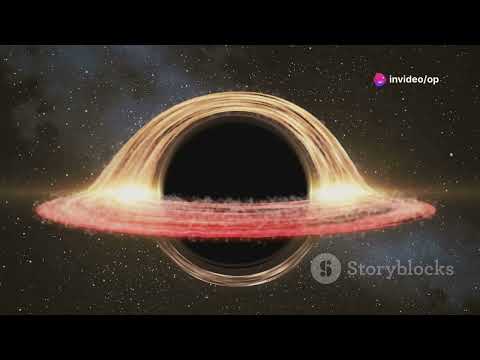
So, picture this: you’re at a party, and there’s this couple who can’t stop twirling around the dance floor. It’s kind of mesmerizing, right? Now imagine if that couple was made up of two black holes. Yeah, I know—sounds like the plot of a sci-fi flick! But seriously, that’s what binary black holes do. They’re like cosmic dance partners locked in a waltz of gravity.
Now, black holes on their own are already pretty mind-blowing. But when you throw two into the mix? It gets even wilder. These titanic space monsters pull each other closer until they eventually collide in an explosion of energy that’s so massive it shakes the universe like a cosmic maraca.
You might wonder: how do these giant gravitational beasts even form pairs in the first place? Well, it turns out that space is full of surprises. There’s so much more going on than we can see. So buckle up while we unravel this wild cosmic dance!
Exploring the Existence of Binary Black Holes: Insights from Modern Astronomy
So, black holes, right? These cosmic heavyweights are already pretty mind-blowing on their own, but when you throw in the idea of **binary black holes**, things get even wilder. Imagine two black holes orbiting each other in a sort of cosmic dance. This isn’t just sci-fi; it’s real stuff we’re actually discovering!
First off, what exactly are binary black holes? Well, they’re just pairs of black holes that are gravitationally bound to each other. You can think of them like a couple dancing around a shared center of mass—except one wrong step could mean game over for anything nearby! The existence of these pairs was hinted at for years, but modern astronomy has really helped us understand their behavior better.
Recent advances in technology have pushed our understanding forward. For instance, gravitational wave detectors like LIGO and Virgo have been key players here. These detectors pick up ripples in spacetime caused by massive events like the merging of two black holes. When they finally detected the merger of a binary black hole for the first time in 2015, it changed everything. It was like finding evidence for something people had only theorized.
Now let’s break down why these binary systems matter:
- Understanding gravity: Studying binary black holes helps scientists dive deeper into Einstein’s theory of general relativity.
- Cosmic origins: They also give clues about how these colossal structures form and evolve over time.
- Mergers and more: The collisions create powerful gravitational waves that teach us about extreme physics—and allow us to observe phenomena we can’t see with light alone.
You know, I remember reading a story about a scientist who was so excited when they first spotted one of these mergers. They described it as hearing a “cosmic heartbeat” echoing through space! It’s moments like those that remind us how amazing our universe is.
But where do these binary buddies come from? Well, typically they might form from star systems that are close enough together that their gravitational pull becomes significant over time. After exhausting their nuclear fuel and going supernova (an epic explosion), what’s left behind could eventually turn into black holes.
What’s super interesting is the idea that not all binary systems are made equal! Some can be relatively “quiet,” while others are actively merging and creating those juicy gravitational waves we love to study.
To wrap your head around this whole concept: think about it as if you’re at a cosmic carnival with multiple rides happening simultaneously. You’ve got your roller coasters (the individual black holes) and then there’s this awe-inspiring Ferris wheel (the merged pair). Together they create new experiences for anyone lucky enough to witness them!
In short, binary black holes aren’t just fascinating phenomena—they’re keys unlocking secrets about our universe’s most fundamental laws and its mysterious past. Keep looking up; there’s a whole lot more to discover!
Understanding Binary Black Hole Simulations: Insights into Gravitational Wave Astronomy
So, let’s talk about binary black holes and how scientists use simulations to understand them better, especially in the context of gravitational wave astronomy. It’s a pretty thrilling subject if you ask me!
First off, binary black holes are just two black holes that are hanging out together. They can orbit each other, like dance partners in a cosmic waltz. Over time, as they spiral closer due to gravity, they start to emit gravitational waves—ripples in spacetime that carry energy away. This is where things get really cool.
Simulations play a massive role here. Basically, researchers use computer models to replicate what happens when these black holes get all tangled up. The equations can be super complicated because we’re dealing with stuff like relativity and massive gravitational forces. But, thanks to advanced computing power, scientists can run simulations that showcase everything from the initial orbit to the dramatic merger.
You might wonder why they do this. Well, understanding these events helps us learn more about the universe. When two black holes collide and merge, they release an incredible amount of energy. Think about it like the most intense fireworks show you could imagine—only it happens in space! This energy is what we detect as gravitational waves.
Now let’s break down how these simulations work:
- The Setup: Scientists start by choosing parameters for their binary system—like the mass of each black hole and their distance apart.
- The Evolution: As they simulate time passing, they model how the gravitational interaction changes their orbits and speeds.
- The Merger: Eventually, when they get close enough, we see them spiral into each other and form one larger black hole.
- The Wave Generation: As this merging occurs, gravitational waves are produced—these are what we aim to detect on Earth.
What’s super interesting is how this research offers clues about the fundamental laws of physics. You know when you hear someone say “what goes up must come down”? In this case, when two massive objects collide at unimaginable speeds? You can’t just apply simple rules; you have to consider relativistic effects.
Thinking back to a moment that really struck me: I remember watching a documentary where scientists recreated those cosmic dances using simulations. It felt like I was observing something wildly beautiful and incredibly powerful unfolding before my eyes! Seeing those visuals kind of makes it easier to grasp just how intense these cosmic events are.
Something else worth mentioning is that detecting gravitational waves directly has opened an entirely new window into astrophysics. The first confirmed detection came in 2015 from LIGO (Laser Interferometer Gravitational-Wave Observatory). Since then, researchers have found several events linked to binary black hole mergers.
In summary, through simulations of binary black holes and their mergers—which look like an epic cosmic dance—we gain insights not only into gravity itself but also into the evolution of our universe. These studies continue giving us more knowledge about everything from dark matter influences to potential future explorations beyond our current understanding! How cool is that?
Understanding the Attraction of Light to Black Holes: The Role of Photons in Gravity
So, let’s chat about why light gets a little too cozy with black holes. You might think of black holes as these mysterious vacuums in space, right? They’re not just celestial oddities—they have some serious gravitational pull.
Now, you know how gravity works? It’s that invisible force that keeps your feet on the ground. Gravity is stronger near massive objects, and black holes are *super* massive. We’re talking millions to billions of times the mass of our Sun! So when light—or photons, like the fancy science people call them—gets close to a black hole, they can’t help but feel that gravitational tug.
Here’s where things get interesting. Photons travel at the speed of light. But when they approach a black hole, they face something called an “event horizon.” Imagine this as a point of no return, kind of like when you’re trying to make a last-minute decision at the snack bar; once you grab those nachos, there’s no going back! For light, crossing that boundary means it’s lost forever to the black hole.
Then there’s this wild concept: **time behaves strangely around black holes**. If you could somehow hover near an event horizon (which is not recommended), time would seem to slow down for you compared to someone far away. It’s like a cosmic dance between gravity and time—how cool is that?
But let me paint you a picture here: Think about two binary black holes swirling around each other; they’re like dancers in a grand ballroom! As they twirl and spin due to their massive gravitational forces, they create ripples in spacetime itself—these are called gravitational waves. And guess what? When these waves impact nearby photons, it can create some funky effects we actually observe from Earth!
Also worth noting is how photons can be bent by gravity. This bending happens because mass curves spacetime around it—even light follows this curved path! This phenomenon is called gravitational lensing. It allows us to see objects that are way behind other massive objects in space.
So yeah, while we might think of light as untouchable and independent since it travels so fast, it still plays by the rules set by gravity when it comes close to black holes. It’s this cosmic relationship between gravity and light that’s endlessly fascinating.
In the grand scheme of things, these interactions between photons and black holes make up some of the most intense environments in our universe! From serious scientific inquiry to just daydreaming under the stars, understanding this dance makes us appreciate how everything in our universe is connected—even if one part wants nothing more than to trap everything around it!
Alright, so let’s talk about binary black holes for a sec. Picture this: two massive black holes spiraling around each other like a cosmic dance. It’s pretty wild when you think about how these gigantic objects, each with their own gravitational pull, can pull together and create this beautiful but chaotic movement in the universe.
I remember the first time I saw an animation of binary black holes merging. It was mesmerizing! The way they spiraled closer and closer until they merged into one, sending ripples of gravitational waves through space-time—that’s like the universe’s way of playing music! Just thinking about it gives me chills. You can almost feel the energy radiating from that event.
So here’s the deal: black holes are born from dying stars. When a star runs out of fuel, it collapses under its own gravity and boom—black hole! Now imagine two of these bad boys, each millions or even billions of times more massive than our Sun, forming a pair and orbiting each other.
What happens next is nothing short of epic. As they orbit, they lose a tiny bit of energy through gravitational wave radiation. It’s kinda like shaking a soda bottle—you know how it builds up pressure? Well, instead of fizzing out with bubbles, these black holes spiral inward over time until they’ve danced too close to one another and then… merge! This event creates powerful bursts of gravitational waves that scientists can detect with really sensitive instruments like LIGO.
When we hear those waves actually being detected? It’s like catching whispers from the edge of the universe; it’s emotional in a way! It makes you realize how interconnected everything is out there. Astrophysics might sound heavy sometimes, but honestly, it’s all just another way for us to explore our universe’s most profound mysteries.
I find it somewhat poetic that even in such extreme conditions—where gravity reigns supreme—there’s still this elegant choreography happening in the cosmos. Sure, it’s not all rainbows and sunshine out there; things can get pretty intense when you’re dealing with objects whose very nature bends the fabric of space-time itself! But isn’t that just part of what makes exploring space so compelling? There’s beauty even in chaos if you’re willing to look for it.