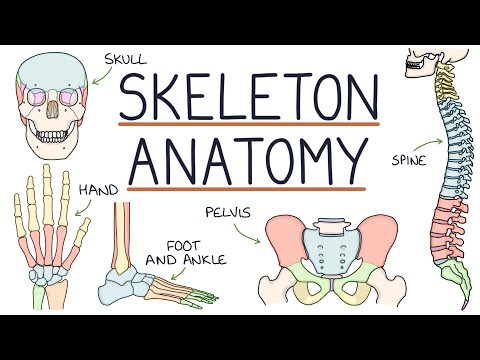
So, picture this: you’re chilling with friends and someone accidentally bumps into you. You stumble back, arms flailing. Ever think about how your skeleton is like, this incredible support system that keeps you upright? Crazy, right?
Now, I mean, we all know bones are kinda important. They hold us together and stop us from turning into a big pile of goo. But have you ever really looked at what’s going on in there? It’s like a hidden world that deserves a closer look.
Imagine all those bones working together every single day just so you can dance like no one’s watching! So let’s dive into the anatomy of your skeleton, shall we? It’s way cooler than it sounds!
Comprehensive Human Skeleton Diagram: A Essential Resource for Anatomy and Science Studies
The human skeleton is a fascinating structure, you know? It’s like the framework that holds everything together. Understanding it is essential for anyone diving into anatomy or science studies. So let’s break it down a bit and see what’s essential.
The *human skeleton* consists of around 206 bones when you’re an adult, but this number can vary slightly due to some people having extra bones. When you’re born, you actually have about 270 bones, but as you grow up, some of those bones fuse together. This gives us that final count.
Divisions of the Skeleton
The skeleton can be divided into two main parts:
- Axial Skeleton: This includes the skull, vertebral column (your spine), and rib cage. It’s like the core part that protects your brain and vital organs.
- Appendicular Skeleton: These are the bones of your limbs, including the pelvis and shoulder girdles. Basically, everything that helps you move around with grace—or clumsiness!
Each bone in your body has a specific job. For instance, the femur, or thigh bone, is not just the longest bone; it supports your weight when standing and helps with walking and running. The skull protects one of your most precious assets: your brain!
Bone Structure
Now let’s get into how these bones are structured:
- Cortical Bone: This is the hard outer structure of a bone. It provides strength.
- Trabecular Bone: Inside you’ll find this spongy kind of bone which is lighter but still strong enough to handle stress.
- Bone Marrow: Some bones contain marrow where blood cells are produced—it’s like a little factory inside your bones!
Understanding these structures can help in many ways—like knowing why certain injuries heal faster than others or how osteoporosis can set in when there’s loss of density in the bones.
Skeletal System Functions
Okay, so what does this skeletal system actually do? Here are some key functions:
- Support: It gives shape and support to our bodies.
- Movement: Bones act as levers for muscles.
- Protection: Bones shield internal organs—like how ribs protect the heart and lungs.
- Blood Cell Production: As mentioned earlier, marrow produces red blood cells.
- Mineral Storage: Bones store minerals like calcium and phosphorus which are crucial for other body functions.
A good example here would be when someone breaks their leg; while it may seem devastating at first, understanding how our bodies naturally heal through processes involving bone remodeling gives hope.
So yeah, having a comprehensive diagram of the human skeleton can really help visualize all these elements together—seeing where each bone fits into that whole picture makes learning about anatomy much easier! Whether you’re hitting the books for an exam or just curious about how we function as humans, knowing our skeleton is like having a map to understanding ourselves better.
Overall, remember that each part plays its role in keeping us upright and active—even if sometimes we feel more like couch potatoes than athletes! Understanding this intricate system not only boosts knowledge but creates appreciation for what keeps us moving through life.
Detailed 3D Model of the Human Skeleton with Labeled Anatomical Structures for Educational and Research Purposes
So, let’s talk about the human skeleton. It’s like the sturdy framework of our body, right? You know, without it, we’d just be a pile of soft tissue. Pretty wild to think about! A **3D model** of this incredible structure helps us understand it better. Imagine being able to see every single bone and how they fit together in real-time!
The human skeleton is made up of around **206 bones** in adults, give or take a few that some people might have extra or are missing. And if you’re picturing a simple flat diagram with labels, hold on! A detailed 3D model really opens things up visually and makes learning way more engaging.
Here’s where it gets cool: with 3D models, you can rotate the skeleton and zoom in on any part. It’s like having a mini anatomy class right on your screen! You can actually focus on areas like:
- Skull: It protects your brain and supports your facial structure.
- Spine: This makes sure you stand upright and helps with movement.
- Rib cage: It shields your heart and lungs—like a natural armor!
- Pelvis: It’s essential for walking and is quite different between men and women.
- Limb bones: From humerus to femur—you can see how all the parts work together!
Now, here’s an emotional nugget: I remember my first day in anatomy class. We had this giant model of the human skeleton in front of us. I was overwhelmed at first but then fascinated by how each bone had its story—like why our collarbone is shaped just so, or how each vertebra helps us move flexibly.
Using these *3D models* can be super beneficial for both education and research purposes. For students learning anatomy, it’s less intimidating than working from flat images. You get context! And for researchers? Well, creating accurate representations of bones can help with everything from understanding bone diseases to improving surgical techniques.
The level of detail in these models means that anatomical structures are labeled clearly—sometimes even down to tiny features like various projections where muscles attach. Having that kind of clarity makes discussions around topics like **osteoporosis** or **fracture healing** much easier.
So yeah, if you’re diving into learning about anatomy or just curious about how our bodies are structured, those detailed 3D models really make a difference! They turn something complicated into something much more tangible and relatable. It’s amazing how technology can help us explore our own bodies from the inside out!
Understanding the Skeletal System: Key Parts and Their Functions in Human Anatomy
The skeletal system is like the body’s frame, providing structure and support, not to mention protecting vital organs. It’s an intricate network made up of bones, cartilage, and connective tissues. So let’s break down the key parts of this amazing system and their functions.
Bones are the main components of your skeleton. You have about 206 of them in your body! They come in various shapes and sizes. There are long bones (like your femur), short bones (like those in your wrists), flat bones (like your skull), and irregular bones (like the vertebrae in your spine). Each type has its own job.
- Support: Bones give your body shape. Without them, you’d just be a blob!
- Protection: Think about it—your skull protects your brain, and your rib cage guards your heart and lungs.
- Movement: Muscles attach to bones via tendons. When you move those muscles, they pull on the bones, letting you run, jump, or dance.
- Mineral storage: Bones store minerals like calcium and phosphorus. Your body releases these minerals back into the blood when needed.
- Blood cell production: Inside certain bones lies bone marrow, which makes red blood cells (for carrying oxygen) and white blood cells (for fighting infections).
Next up is cartilage. Ever wondered why some parts of you feel so squishy? That’s cartilage at work! It’s more flexible than bone but still provides support. For example, it makes up parts of your nose and ears—and it cushions joints where bones meet.
Now let’s talk about joints. These are places where two or more bones meet. Joints let you move freely but come in different forms:
- Fixed joints Like those in the skull—no movement here!
- Slightly movable joints: Such as those between vertebrae; they allow a teeny bit of flexibility.
- Freely movable joints: These include ball-and-socket joints (like hips) that let you move in multiple directions!
It’s worth noting that your skeletal system changes over time as well. You were born with around 270 bones! But as you’ve grown up, some have fused together to create fewer bones—what a transformation!
Now imagine playing soccer or going for a run—your skeleton plays a crucial role during all this action! It works closely with muscles to keep you moving smoothly while also providing that sturdy structure we sometimes take for granted.
So there you have it—the skeletal system may not get all the glory compared to other parts like the heart or brain—but it’s absolutely vital for keeping everything together! Remember how every time you jump around or get cozy on the couch? That sturdy frame of yours is doing its job beautifully!
So, let’s talk about the human skeleton for a moment. It’s kind of amazing when you think about it. We’ve got this entire structure holding us up, giving us shape and support. You know, I remember this time in high school when we had to study anatomy. Honestly, I thought it was going to be super boring, but then I saw the diagrams of the bones and realized how complex and cool they really are! Like, who knew there were 206 bones in an adult human body? Crazy, right?
Each bone has its own story and function. For example, did you know that your femur—the thigh bone—is the longest bone in your body? It can withstand tons of force; it’s like the superhero of your skeleton! And then there’s the tiny stirrup bone in your ear called the stapes—it’s hardly bigger than a pea but plays an incredible role in hearing. It’s so wild how each tiny piece fits together to create something as complex as our bodies.
But here’s a fun thought: while we often think about bones as solid structures, they’re also living tissue that can change over time. They’re constantly being broken down and rebuilt through a process called remodeling. So if you break a bone, it doesn’t just heal—it actually becomes stronger at the site of injury once it’s healed! How cool is that?
And speaking of healing, it reminds me of a friend who broke her wrist while skateboarding (yeah, definitely not her best moment). The doctors told her about how her bones would mend back together stronger than before. It was inspiring to see her go through that journey—she had to learn not just about physical recovery but also patience and resilience.
When you look at a detailed bone diagram now, it’s not just some technical thing; it’s like peeking into this intricate blueprint of who we are as humans. Each section tells part of our story—like our vertebrae helping us stand tall or our ribs protecting vital organs—it really highlights how perfectly designed we are.
So next time you think about your skeleton or maybe even catch a glimpse of one in a science class or museum display, take a second to appreciate what’s going on inside there. It’s more than just bones; it’s all about structure and strength—and maybe even survival lessons wrapped up in every little detail!