You know that feeling when you’re lying on the grass, staring up at the night sky, and suddenly you spot a shooting star? It’s like, WHOA! Mind-blowing!
Well, what if I told you that you could do even more than just wish upon stars? Seriously!
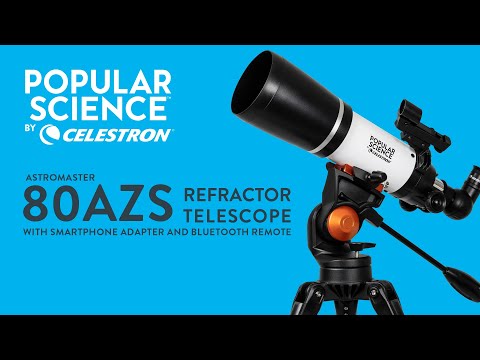
Imagine zooming in on craters of the moon or exploring distant galaxies. No superpowers required—just a cool little telescope called the Celestron PowerSeeker 80AZS.
I remember the first time I peered through a telescope. My jaw dropped as Jupiter came into focus. It felt like stepping into another world!
So, let’s chat about this nifty gadget that can turn your stargazing passion into a full-on science adventure. Sound fun?
Powerseeker vs. AstroMaster: A Comprehensive Comparison for Astronomy Enthusiasts
When you’re getting into astronomy, picking the right telescope can feel a bit overwhelming. Two popular options pop up quite often: the Celestron PowerSeeker 80AZS and the AstroMaster series. Let’s break it down a bit to see what each offers for stargazing enthusiasts.
First off, let’s look at the **PowerSeeker 80AZS**. This telescope is great for beginners. With its 80mm aperture, it captures a decent amount of light, allowing you to see craters on the moon and even some of Jupiter’s moons! Pretty neat, huh? The setup is straightforward. You can usually have it ready in no time. Plus, its lightweight design means it’s easy to transport if you want to chase clear skies.
On the other hand, the **AstroMaster series** has several models that cater to different skill levels. For instance, if we take a closer look at the AstroMaster 90AZ, it has a slightly larger **90mm aperture**, which means it can gather more light than the PowerSeeker. This could help you spot more details in deep-sky objects like star clusters or nebulae.
Now let’s talk about their mounts. The PowerSeeker uses an **Altazimuth mount**, which moves up and down and left to right. It’s user-friendly for those just starting out since you don’t have to deal with complicated adjustments. But if you’re thinking of something more advanced down the line, the AstroMaster series often features **Equatorial mounts** on some models that allow for tracking celestial objects as they move across the sky. This can be super helpful during astrophotography sessions!
In terms of eye pieces, both telescopes come with standard eyepieces that let you switch between different magnifications easily. With both options, you’re looking at something around 20x to 100x magnification potential depending on what you choose.
And hey, let’s not forget about accessories! You might want to think about things like star charts or apps that help locate constellations—these tools make everything way easier as you’re learning your way around space.
Before making a choice though, consider where you’ll be using your telescope most often. If you’re mainly observing in your backyard or local park (not too much movement), either one will do just fine! But if you’re planning to go out on trips under darker skies frequently? Well then maybe lean towards something portable like the PowerSeeker.
At times when I was just starting out with stargazing—like on chilly nights laying back looking at Orion—I didn’t really have high-end gear but was so engaged by simply seeing those stars through my scope! That’s what it’s all about!
So whether you lean toward Celestron’s PowerSeeker or explore an AstroMaster model depends on your needs and aspirations in astronomy. Both can open doors to amazing sights above; it’s all about finding what fits best for you!
Orion vs. Celestron: A Comparative Analysis for Astronomy Enthusiasts
So, you’re curious about the differences between Orion and Celestron telescopes, especially focusing on something like the Celestron PowerSeeker 80AZS? Nice! There’s a lot to unpack here as both of these brands have their loyal fans. Let’s break it down.
Orion telescopes have been around for a while. They’ve got a reputation for being user-friendly and generally reliable. They cater to both newbies and seasoned astronomers, which is pretty cool. You’re likely to find models that are versatile, allowing you to explore everything from the moon to distant galaxies without it feeling too overwhelming.
Now, Celestron is also a giant in the astronomy world. The PowerSeeker 80AZS is part of their lineup that’s aimed at beginners who want something lightweight and easy to transport. It’s like having a light snack before a big meal—it gives you just enough without overwhelming you. One thing about Celestron is that they often include helpful features such as built-in finderscopes and sometimes an automated tracking system.
But what really sets them apart? Here are some key points:
- Aperture Size: This is crucial for clarity in stargazing. Orion often offers larger apertures in similar price ranges than Celestron does.
- Material Quality: Both brands generally use durable materials, but Orion scopes tend to have better optics in lower-tier models, which means clearer images.
- User Experience: If you’re new to this whole astronomy thing, Celestron’s setup process might feel more intuitive—like opening up a new video game versus figuring out how to play chess!
- Accessories: Check out what comes with each telescope. Orion usually includes better eyepieces and mounts for their price points compared to Celestron.
Let me tell you a little story here—when I first got into stargazing, I had an Orion telescope and was totally enamored by how crisp the view of Saturn’s rings was. Then I borrowed my friend’s Celestron PowerSeeker one night—it had its perks too! The ease of use made it so approachable for someone just starting out.
But back to your comparison! A lot depends on what you want from your telescope experience. Are you more about ease of use with awesome features? Or do you care more about image quality?
To wrap this up: if you’re drawn toward value optics and bigger views, maybe check out Orion’s offerings first. On the other hand, if portability and ease matter more—like if you’re taking it camping or something—Celestron’s PowerSeeker could totally fit that bill nicely. So there you go! Hope this helps clear things up!
Exploring the Cosmos: What to Observe with Celestron StarSense Explorer LT 80AZ
So, you’ve got a Celestron StarSense Explorer LT 80AZ? That’s awesome! This telescope is a solid choice for peering into the depths of the night sky. With it, you can explore stars, planets, and even some galaxies. Let’s get into what you can actually observe with this nifty piece of equipment.
First off, the **Moon** is usually one of the first things people look at. You can see its craters and mountains pretty clearly. I still remember my first time spotting the Moon through a telescope—it felt like I was staring at a whole new world. The detail is just incredible!
Then, there’s the **planets**. Jupiter is a must-see! If you’re lucky enough to spot it on a clear night, you might even catch its four largest moons—Io, Europa, Ganymede, and Callisto—known as the Galilean moons. And Saturn? That ring system will blow your mind! Seeing those rings up close was like witnessing magic for me.
You might also want to check out some **star clusters**. The Pleiades (also known as the Seven Sisters) is super easy to find and will dazzle you with its bright blue stars. Open clusters like this are fantastic for beginners because they’re visually striking and make for excellent viewing experiences.
Another exciting target could be **nebulae**. When conditions are right and with a little patience, you might catch a glimpse of the Orion Nebula. It’s like looking at a cosmic cloud of gas and dust where new stars are being born! Honestly, that’s such an awe-inspiring thought.
Don’t forget about **galaxies**, too! The Andromeda Galaxy is bright enough to see with your telescope. Just imagine gazing at another galaxy filled with billions of stars! It humbles you in ways that are hard to put into words.
Here’s the scoop on using your Celestron StarSense Explorer LT 80AZ:
- Set Up: Make sure it’s stable before starting your observations.
- Aim: Use its built-in smartphone app for locating objects in real-time.
- Patience: Sometimes you’ll need to let your eyes adjust to darkness.
That mix of technology and nature really elevates stargazing from something casual into an adventure every time you step outside under a starlit sky!
So all in all, exploring the cosmos with your telescope isn’t just about astronomy; it’s about connecting with something way bigger than ourselves. Go out there and enjoy those clear nights! You never know what breathtaking views await when you peer through those lenses.
You know that feeling when you look up at the night sky, and it feels like you’re staring into infinity? It’s kinda magical, isn’t it? I remember this one summer evening when my friends and I decided to camp out. We were lying on our backs, just pointing at constellations and making up stories about them. It’s moments like those that really make you appreciate how vast the universe is.
Now, if you want to dive deeper into the cosmos, something like the Celestron PowerSeeker 80AZS is pretty cool for beginners. Imagine having a telescope that opens up a whole new world of stars and planets for you. You can see craters on the moon and maybe even catch a glimpse of Jupiter’s moons! It’s like having your very own window to outer space.
The neat thing about this particular telescope is how user-friendly it is. You don’t need to be a rocket scientist to set it up or understand how it works. Just point it in the right direction, and bam! You’re exploring celestial bodies. The tripod isn’t too heavy either, so if you’re feeling adventurous, you can take it with you to different spots—like that hilltop where your friends usually join in for stargazing adventures.
But here’s the kicker: it’s not just about looking at pretty pictures; it’s also about learning. Stargazing can spark curiosity about science—like why stars twinkle, or what makes planets different from stars. And hey, maybe if you’re lucky enough to catch a shooting star, you’ll make a wish that sends you down a rabbit hole of questions about the universe.
The thing is, every time you look through that scope, there’s this rush of excitement—you’re literally connecting with something bigger than yourself. Who knows? That little spark might inspire you to learn more about astronomy or physics down the line.
So whether you’re an experienced star-gazer or just starting out, tools like the Celestron PowerSeeker 80AZS can really make your night sky adventures more engaging. Just grab your telescope, head outside when it’s dark—maybe even bring a friend along for those late-night chats while searching for constellations—and let yourself be awed by what’s out there waiting for discovery!