You know what’s wild? There are some folks out there whose bodies just don’t get along with certain bugs. It’s like their immune system packed its bags and went on vacation while the germs throw a party!
So, let’s talk about Chronic Granulomatous Disease, or CGD for short. Imagine having a super tough bouncer at the door of your body’s club—only this one can’t tell the good guys from the bad. That means when nasty germs try to crash, they don’t get kicked out. Instead, they stick around and cause all sorts of chaos.
I once heard a story about a kid with CGD who loved playing in the dirt but had to be super careful because even a tiny cut could turn into a big deal. Like, really big! It’s crazy how something so simple can lead to so many complications.
So grab your favorite snack, because we’re gonna unpack this puzzling condition together. Get ready to learn why some people’s immune systems are like that one friend who always overreacts!
Understanding the Etiology of Granulomatous Inflammation in Chronic Disease Patients
Granulomatous inflammation sounds like a mouthful, but let’s break it down. Basically, it’s a type of chronic inflammation where the body forms little clumps of immune cells called granulomas. You might think of granulomas as tiny fortresses that your immune system builds to contain something it can’t easily get rid of, like certain infections or irritants.
So, **why does this happen in chronic disease patients**? Well, there are several triggers. Let’s go through them:
- Infections: Some infections just don’t play nice with our immune systems. Take tuberculosis, for example. It can lead to granulomatous inflammation as the body tries to wall off the bacteria.
- Autoimmune diseases: Conditions like sarcoidosis cause the immune system to mistakenly attack healthy tissue. The result? Yup, you guessed it: granulomas.
- Environmental factors: Sometimes, inhaling certain particles or getting exposed to chemicals can pique your immune response and lead to granuloma formation.
Imagine someone who has been exposed to silica dust at their job. Their lungs start reacting weirdly; they form those granulomas trying to isolate the foreign material from causing more harm.
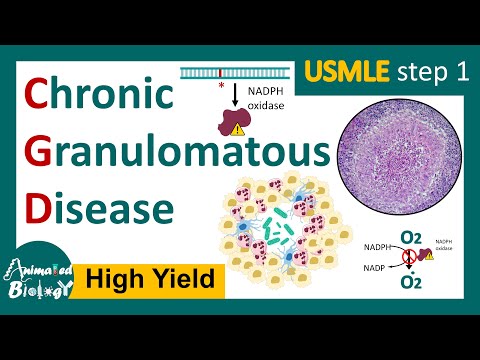
Now, let’s talk about **chronic granulomatous disease (CGD)**. This is a genetic disorder where patients have a problem with their white blood cells’ ability to produce reactive oxygen species. These molecules are crucial for killing off pesky pathogens. When someone has CGD, their body can’t clear infections effectively. Instead of eliminating them, you end up with chronic inflammation and—you guessed it—granulomas popping up everywhere.
What’s wild is that people with CGD often deal with recurrent infections as their bodies are basically fighting themselves instead of the invaders! It’s like having a superhero who can’t quite figure out who the bad guys really are.
In terms of **pathophysiology**, it’s all about understanding how these granulomas form and what happens inside them. They consist mainly of macrophages—those “pac-man” cells that gobble up debris—but in this case, they gather together instead of doing their job individually.
This clustering can cause problems too! Think about how traffic jams happen when too many cars (or in this case, immune cells) try to occupy the same space at once—things get blocked up and not much good comes from it.
And then there’s treatment! Managing granulomatous inflammation often involves controlling whatever’s triggering the response in the first place. Doctors might lean on medications that suppress the immune system or help treat underlying conditions.
Overall, understanding this kind of inflammation gives us insight into chronic diseases’ complexities and reminds us how intricate our bodies really are—even if sometimes they’re kind of messy! So yeah, knowing about granular inflammatory processes helps us appreciate just how tough our bodies can be while also showing us why it’s essential to keep everything balanced and healthy.
Understanding the Pathophysiology of Granulomas: Insights into Inflammation and Immune Response
Granulomas are these small clusters of immune cells that form when your body is trying to contain something it can’t fully eliminate, like a stubborn infection or foreign substance. You could think of them as the body’s own little barricades that form during an inflammatory response. Basically, they happen when the immune system goes into overdrive because it’s not quite sure what to do next.
Now, in terms of pathophysiology, this is where things get interesting. The process involves a bunch of different cells that come together at the site of inflammation. You’ve got macrophages, which are like the big eaters of the immune system; they gobble up debris and pathogens. Sometimes, though, they get a bit carried away. If they can’t fully kill off whatever is bugging them—like certain bacteria or fungal infections—they turn into giant cells called Langhans giant cells. These cells can merge and become super-sized!
The formation of granulomas is largely driven by a type of inflammation called chronic inflammation. It’s kind of like when you have a nagging cough that just won’t go away—your body keeps reacting even when there’s no clear danger anymore. This persistent inflammatory response can lead to tissue damage over time because your body isn’t just defending itself; it’s also causing harm.
- T-helper 1 (Th1) cells: They play a key role in promoting granuloma formation by releasing cytokines that rally other immune cells to the cause.
- Cytokines: You can think of these as chemical messengers that help coordinate the immune response. Some are pro-inflammatory and others can help regulate or dampen down the reaction.
- Granulomatous diseases: Conditions like tuberculosis and sarcoidosis feature granulomas prominently because these infections often evade complete destruction by our usual defenses.
In Chronic Granulomatous Disease (CGD), this whole saga gets even wilder! In CGD, there’s a defect in parts of your immune system called NADPH oxidase enzymes. These enzymes help produce reactive oxygen species (ROS), which are crucial for killing off various pathogens. Without them working properly, your body struggles to fight off certain infections effectively. So guess what? Granulomas end up forming more frequently as your immune system tries desperately to contain what it can’t destroy.
This creates an endless cycle: your body forms granulomas trying to keep things under control, but those very granulomas can also lead to long-term complications, like scarring and organ dysfunction. It’s almost like setting up tiny fortresses that end up causing more problems than they were meant to solve.
So next time you hear about granulomas or CGD, remember this: it’s not just about how our bodies react when something goes wrong; it’s also about understanding how complex our defenses can be—and sometimes how tricky those defenses make things.
Understanding the Pathophysiology of Granulomas in Tuberculosis: Insights from Immunology and Infectious Disease Research
Understanding the pathophysiology of granulomas in tuberculosis (TB) is like peeling an onion—there are layers upon layers, each revealing something important about how our immune system reacts to infections. In TB, caused by the bacterium *Mycobacterium tuberculosis*, your body tries to contain the infection using granulomas. Granulomas are basically a cluster of immune cells that form around the invading bacteria, almost like a defense mechanism.
Now, let’s talk about what happens at a cellular level. When *M. tuberculosis* gets into your lungs, it can evade your immune system for a while. This is sneaky because, during this time, the bacteria multiply. But then your immune system kicks in. Macrophages—these big white blood cells known for engulfing pathogens—come to the rescue and try to gobble up the bacteria. But here’s where it gets weird: sometimes they can’t kill them off completely.
So, what do they do? They call for backup! Other immune cells like T-cells come into play and start sending signals that tell more macrophages to join in. This forms a tightly packed structure we call a granuloma. It’s kind of like putting up walls around an infected area to keep everything contained.
But why does this matter? Well, granulomas can become sort of a double-edged sword. On one side, they trap and isolate the bacteria; on the other side, if these granulomas don’t function properly or if too many form, they can cause tissue damage and lead to problems like lung cavitation—think holes in your lung tissue.
Moving into chronic granulomatous disease (CGD), which is another layer in this discussion! CGD is a genetic disorder where certain white blood cells can’t produce reactive oxygen species effectively. So that means these immune warriors struggle to destroy infections as efficiently as they should. It’s not just about tuberculosis; individuals with CGD are prone to bacterial and fungal infections as well due to their impaired ability to deal with those pesky invaders.
In TB specifically, research has shown that abnormalities in the immune response can drastically affect how well these granulomas work. Immunologists have discovered that certain genetic variations might lead people with CGD not only to have ineffective responses but also abnormal granuloma formation when faced with TB infection.
Here’s something interesting: If you look at people who have both conditions—TB infection and CGD—you’ll see more severe symptoms and complications compared to someone with TB alone. That’s because their bodies can’t mount an effective response due to that genetic defect affecting their immune cells!
Finally, it’s worth noting advancements in our understanding of both diseases is helping inform treatments today! Scientists are exploring new therapies aimed at enhancing the body’s ability to form effective granulomas or even designing drugs that target specific pathways involved in these complex interactions between pathogens and our immune system.
So there you have it—a glimpse into how our body reacts when fighting off TB through granuloma formation and how things go sideways in cases like chronic granulomatous disease!
So, Chronic Granulomatous Disease (CGD) sounds pretty intense, right? It’s like you have this condition where your immune system has a serious glitch that stops it from doing its job properly. You see, our immune system is like a superhero squad—always ready to fight off invaders like bacteria and fungi. But in CGD, this squad gets a little bit confused.
Imagine you’re in elementary school during a fire drill. The alarm goes off, and everyone’s supposed to exit the building calmly. But if some kids just freeze or start playing around instead of following the instructions? Well, that’s kind of how your body reacts with CGD. The immune cells try to do their thing—fight infections—but they can’t quite finish the job because they don’t produce the right chemicals called reactive oxygen species that help them tackle these nasty bugs.
When I first learned about CGD, I thought of a friend from high school who had this rare condition. She always seemed to get sick more often than everyone else. It was tough to see her struggle with something that seemed so invisible but had such a big impact on her life. It wasn’t until we sat down one afternoon and she explained her experiences that it clicked for me—being sick isn’t just about feeling bad; it’s this whole process where your body is trying hard but still facing barriers.
In CGD, what happens is your body forms these stubborn bumps called granulomas when it can’t clear out infections effectively. They’re like little protest signs saying “Hey! There’s an issue here!” While they can trap bacteria and fungi trying to invade your body, they also end up causing inflammation and damage in tissues over time.
It’s wild how just one mutation can lead to a different reality for so many people living with CGD. They often deal with recurrent infections and need constant care. Thinking about my friend again—I remember how she had to avoid certain activities because even minor cuts could land her in trouble; how frustrating must that have been?
And while researchers work on treatments and better understand the pathophysiology of diseases like CGD, it’s heartwarming to see communities come together for support. Awareness really does make a difference! Knowing more about why certain things happen can help us empathize with those facing such challenges every day.
So yeah, chronic granulomatous disease might sound complicated at first glance, but once you peel back the layers—you find real human stories behind the science. And that’s where it gets personal! The journey toward understanding not only sheds light on medical pathways but reminds us all of our shared humanity amidst these scientific challenges.