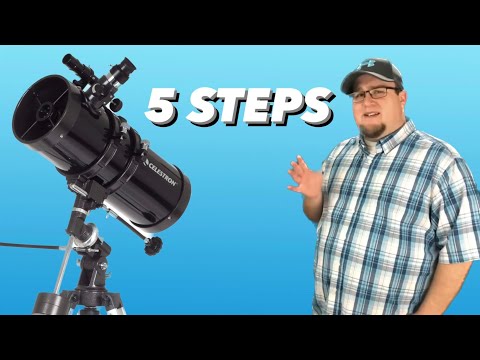
You know, the first time I tried to use a telescope, I was totally convinced I could find aliens. I mean, who wouldn’t want to?
I set it all up in my backyard, excited as a kid on Christmas morning, and then… nothing. Just a blurry mess of stars. Seriously!
That night taught me something important. If your telescope isn’t aligned perfectly, you won’t see much more than a smudge in the sky.
So if you’re into stargazing—or even thinking about it—understanding how to get that oh-so-essential alignment for your Newtonian scope is key. It’s like tuning an instrument before a concert: one little twist can make all the difference!
Let’s chat about making sure you’re not missing out on those cosmic wonders just because of a little misalignment. Sound good?
Mastering Newtonian Telescope Alignment: A Comprehensive Guide for Astronomy Enthusiasts
So, you’ve got a Newtonian telescope and now you’re diving into the exciting world of stargazing, huh? Awesome choice! But first thing’s first: if your telescope isn’t aligned right, you’re going to miss out on some serious cosmic magic. Let’s break down how to get it just right.
What is a Newtonian Telescope?
Basically, a Newtonian telescope uses mirrors to gather light and magnify images. It’s designed with an open tube where light comes in through the front and bounces off a large primary mirror at the back. That mirror reflects the light up towards a smaller secondary mirror, which then directs it to your eyepiece. Crazy how much is happening in there, right?
Why Alignment Matters
Imagine trying to focus on your favorite star while looking through a blurry lens. Frustrating! If your telescope isn’t aligned—specifically when the optics are out of whack—you won’t get that crystal-clear view of space you’re after. You want stars that twinkle like diamonds, not fuzzy blobs.
Steps for Aligning Your Telescope
Here’s where things get technical but not too scary. Aligning your telescope involves adjusting both the **optical alignment** and **mechanical alignment**.
- Optical Alignment: Start with the primary mirror. You want it positioned perfectly parallel to the optical axis of your telescope. You can do this by adjusting the screws at the back of the mirror cell.
- Collimation: After getting that primary mirror set, make sure both mirrors are working together properly—that’s collimation. Using a laser collimator or an artificial star can help spot any misalignment.
- Sighting Method: After collating, point your scope at something like a bright star or planet. If it looks centered in your eyepiece when you’re looking through it straight on, you’re golden!
- Mechanical Alignment: This is about making sure everything else is snug and functioning well—check for loose screws or any wobbles in your mount.
The Check-Up
Once you think you’ve got everything aligned nicely, do an actual test run! Head outside on a clear night—maybe grab that buddy who also loves astronomy—and try spotting some deep-sky objects like clusters or nebulae. If you see details come into focus clearly without needing to squint or adjust constantly, then great job!
And hey, don’t sweat it if things aren’t perfect at first; alignment can be finicky sometimes! In fact, I remember my first time setting up my telescope… I was so excited but ended up chasing around blurry stars for ages until I figured it out!
In short, aligning a Newtonian telescope might seem daunting at first glance but really just takes patience and practice. Give yourself time to get familiar with all those adjustments—it’ll pay off when you’re finally gazing through that eyepiece and seeing the universe come alive before your eyes! Happy stargazing!
Exploring Astrophotography: The Capability of Newtonian Telescopes in Capturing Celestial Wonders
Exploring astrophotography is like opening a window to the universe. It’s not just about looking at stars; it’s about capturing their beauty in a way that everybody can appreciate. You know, it feels pretty magical when you can freeze a moment in time, especially when that moment involves distant galaxies, nebulae, or maybe the rings of Saturn.
Now, Newtonian telescopes play a big role in this process. Why? Well, they use a simple design with mirrors to collect light from celestial objects. This means they can gather more faint light than some other types of telescopes. So when you’re aiming to snap pictures of those faraway wonders, having a Newtonian telescope is like having an awesome camera for night shots.
The first thing to consider is alignment. A perfectly aligned telescope makes all the difference in astrophotography. If your scope isn’t aligned properly, you might end up with blurry images or ones that’re completely off-center. You really want those stars to be sharp and crisp!
And here’s something cool: Newtonian telescopes have two mirrors—one primary and one secondary. The primary mirror gathers the light and reflects it to the secondary mirror, which then directs it to your eyepiece or camera sensor. But if those mirrors aren’t in the right place or angled perfectly, well… you’ll just get fuzz!
So, how do you make sure they’re aligned?
Once you’ve got everything lined up nicely, it’s time for some serious photography action! The next step is really about finding the right settings on your camera—exposure length plays a key role here. With **longer exposures**, more light comes in and details pop out! But too long and you risk blurring from Earth’s rotation; using a mount that tracks celestial movements helps big time.
You might also think about filters. Some filters enhance certain wavelengths of light better than others. For instance, if you’re photographing nebulae rich with hydrogen gas, using a **hydrogen-alpha filter** can really bring out colors and details.
And then there’s post-processing; this is where digital magic happens! You stack images taken over several minutes or hours using software like DeepSkyStacker or Adobe Photoshop to boost contrast and detail further—like polishing an old coin until it shines!
So yeah, while Newtonian telescopes have their quirks—in terms of needing regular alignment—they’re absolutely capable of capturing awe-inspiring photos of our universe’s wonders. Just think about all those beautiful images of the night sky you see online—that could be your work too! With practice and patience, you’ll find yourself knee-deep in galactic beauty before you know it.
In summary: get your alignment on point with collimation; choose the right exposure settings; consider filters for added detail; and finally don’t skip post-processing because that’s where things get cool! Happy stargazing!
Mastering Newtonian Telescope Collimation: A Step-by-Step Guide with a Cheshire Eyepiece
So, you’re ready to dive into the world of Newtonian telescopes, huh? Awesome! Let’s chat about something super important: collimation. This is basically aligning all the optical elements in your telescope to make sure the views are sharp and clear. Think of it as tuning a guitar; if things are off, your music—uh, or in this case, your stargazing—won’t sound quite right.
When you collimate a Newtonian telescope using a Cheshire eyepiece, here’s how you go about it. First off, let’s break down what a Cheshire eyepiece is. It’s an optical tool that helps you align everything pretty easily because it has reflective surfaces inside that give you visual cues.
Step 1: Gather Your Tools
You’ll need your Cheshire eyepiece and maybe a flashlight if you’re working in low light—like at night when you’re outside with your telescope! Also, having a clear view of the stars is really helpful for later tests.
Step 2: Check Your Primary Mirror
Start by loosening the screws on your primary mirror’s cell just enough so you can adjust it without much fuss. Pop that Cheshire eyepiece into your focuser. You’ll notice that there’s a small hole at the bottom; that’s where we want to be looking through.
Step 3: Aligning The Primary Mirror
Look through the eyepiece and focus on the reflection of your secondary mirror (the little one). You should see three circles: one is the edge of the primary mirror, another is the secondary mirror itself, and finally, there should be another circle for your pupil—that hole we just talked about!
If those circles aren’t right in line with each other, you’ll need to adjust the primary mirror’s position by tightening or loosening the screws around it until they align properly. It might take some tweaking!
Step 4: Adjusting The Secondary Mirror
Now rotate your telescope so you’re looking down at it from above. You want to see that secondary mirror sitting evenly within that primary mirror’s reflection—like it’s perfectly centered! If it’s not centered, you’ll need to use those adjustment screws on the secondary mount to move it around until it looks nice and even.
Step 5: Fine-Tuning Collimation
After making all these adjustments, get ready for some fine-tuning! Look through your Cheshire eyepiece again and check everything one more time. Sometimes what happens is after adjusting one part can throw off another slightly.
Keep making little tweaks until you’ve got everything aligned just right. It might feel like you’re chasing shadows sometimes but hang in there!
Step 6: A Test Drive!
Once you’ve done all this work, head out under some clear skies with stars twinkling above. This is where you test out those adjustments! Try focusing on something like a star or two—you’ll know if it’s poky or super sharp whether you’ve nailed collimation or not.
And hey! Remember that getting this just right can take practice; don’t get discouraged if it’s not perfect every time at first. Just keep adjusting and observing—a bit like learning how to ride a bike without training wheels. You know?
So grab that telescope before heading out tonight—it’s time for some stellar adventures!
So, you know when you’re trying to take a really great photo with your phone, and the focus is just a bit off? It can be frustrating, right? Well, that’s kinda how things go with Newtonian telescopes too. When astronomers set up their telescopes, everything’s gotta be aligned perfectly to get that crisp view of the night sky.
Alright, picture this: one clear night, I’m outside staring up at stars so bright they seem like diamonds scattered on velvet. I’ve got my trusty little telescope set up, but for some reason, all I see is a blurry mess of light. I mean, you want to gaze at Saturn’s rings, not some abstract painting! Turns out the alignment of the mirrors wasn’t spot on—which is super crucial in these types of telescopes.
In a Newtonian telescope, there are essentially two mirrors working together. You’ve got a big primary mirror that collects light and reflects it to a smaller secondary mirror which then sends it to your eyepiece. If those mirrors aren’t perfectly aligned—like if one’s just slightly tilted or outta whack—you’re gonna miss out on the beauty above. It’s like trying to read a book with pages stuck together; no matter how hard you try, you just can’t make sense of it!
Now let’s talk about collimation—a fancy word for getting everything lined up nice and neat. This process ensures that all light paths converge correctly at your eyepiece. It might sound tedious at first—like why bother with all this fine-tuning? But once you see Jupiter looking like an actual disc instead of an oblong blob? Oh man! You realize why those extra minutes spent aligning things are totally worth it.
Plus, it makes you appreciate how precise science can be. Think about how far we’ve come in understanding our universe! Just centuries ago people were mapping the stars by eye alone. Now we’re talking about mechanisms built on physics that let us gaze into the cosmos with astonishing clarity.
But hey, don’t let the technical stuff intimidate you too much! Even if you’re not an expert astronomer or exactly tech-savvy, it’s still something anyone can learn—with practice and patience. Just remember: don’t rush it! The sky isn’t going anywhere anytime soon.
So yeah—perfecting alignment in Newtonian telescopes is all about making sure you catch those breathtaking views while navigating through space and time. And honestly? There’s something magical about that connection between science and our desire to explore the unknown. Each eye through that eyepiece tells a story—one worth savoring under those stunning starry nights.