So, picture this: you’re out camping under a sky full of stars, right? You gaze up and think, “Wow, those twinkling dots are actually whole other worlds!” Then you pull out a telescope and suddenly, it’s like you’re peeking into the universe’s best-kept secrets.
Now, imagine if instead of just one lens in that telescope, there were two. Or three! That’s where compound telescopes come in. They mix things up with multiple lenses and mirrors to give you some seriously awesome views of space.
But hold on! It’s not just about peering at planets or star clusters. These telescopes have some pretty cool applications—like helping scientists learn more about our universe or even tracking asteroids.
Let’s dig deeper and see how these fancy instruments work their magic!
Exploring the Science Behind Telescopes: Understanding Optics and Astronomy
So, let’s chat about telescopes, shall we? You know, those magical tubes that help us peek into the cosmos and see stuff that’s super far away? Yeah, they’re pretty neat!
To get into the nitty-gritty, we should start with **optics**. Basically, optics is all about how light behaves. It’s like that friend who tells you how to find the best angle for a selfie. Light travels in straight lines but can bend when it passes through different materials. This bending is called **refraction**. In telescopes, this bending is crucial because it helps focus light from distant stars and galaxies.
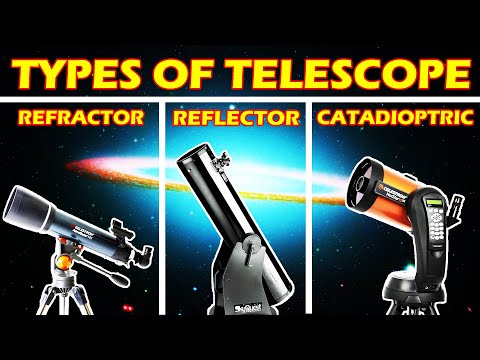
Now, there are different types of telescopes out there: refractors and reflectors. Refracting telescopes use lenses to gather and focus light, while reflecting ones use mirrors for the same job. Compound telescopes mix both worlds—kind of like a smoothie with your favorite fruits! They use mirrors and lenses together to give you a clearer image without making the telescope ridiculously long.
Here are some key features of compound telescopes:
You might be wondering what makes this all so cool in terms of astronomy. Imagine standing outside on a clear night, looking up at all those twinkling stars. But with a compound telescope… it’s like adding 3D glasses to your movie! You can see details on the moons of Jupiter or even faint galaxies far beyond our own Milky Way.
Let me tell you about my buddy Tom. He was just an average guy who loved watching documentaries about space but never thought he’d look through an actual telescope one day. Then he got himself a compound telescope after saving up for months (I mean, those things can get pricey!). The first time he pointed it at Saturn? Oh man! He said it felt like meeting an old friend from across the universe. Seeing those rings up close blew his mind!
So, when you’re peering through a telescope’s eyepiece, you’re not just looking at distant points of light; you’re actually taking a glimpse into history and science combined! Light takes years—sometimes millions—to reach us from other celestial bodies. It’s pretty humbling if you think about it.
In summary:
Telescopes are fascinating tools that allow us to explore our universe using optics principles like refraction and reflection. Compound telescopes especially shine due to their compactness and versatility—all while offering stunning views of celestial wonders.
And hey, next time you gaze at the night sky or hear someone talking about astronomy, remember how those amazing instruments work behind the scenes—making connections between our Earthly existence and the vast universe out there waiting to be explored!
Understanding the Mechanics: How Compound Telescopes Work in Modern Astronomy
Okay, so let’s chat about compound telescopes and how they tick in the world of modern astronomy. These nifty tools allow us to peer into the vastness of space and see things that are light-years away! Cool, right?
Now, first off, what’s a **compound telescope**? Basically, it’s a telescope that combines lenses and mirrors to gather light and make distant objects appear closer. You’ve got your refractors (that rely on lenses) and reflectors (which use mirrors), but compound telescopes bring the best of both worlds together.
How do they work? Well, here’s the deal: they typically use a combination of a curved mirror, which captures light, and lenses known as correctors to refine the image. The **primary mirror** gathers light while reflecting it toward a focus point. Then there’s often a **secondary mirror** that redirects this light through an eyepiece or camera.
Imagine sitting in your backyard on a clear night with friends. You set up your telescope to look at Saturn. With a compound telescope, you’d be able to see its rings in stunning detail! The design helps eliminate many optical distortions that you might encounter with other types of telescopes.
Now let’s break it down further into some key features:
- Portability: Many compound telescopes are compact and easy to transport. Perfect for those stargazing trips!
- Larger Apertures: They usually have bigger openings for collecting more light compared to other designs.
- Versatility: Ideal for both planetary observation and deep-sky viewing since you can switch out eyepieces.
You might wonder why they’re so popular among astronomers today. Well, their ability to provide clear images across the entire field makes them super effective for serious astronomical study. Plus, with all those amazing features wrapped into one device!
There’s also this cool thing called “Schmidt-Cassegrain telescopes.” These are among the most common types of compound designs found today. They come with this special lens system that reduces spherical aberration—a fancy term for when light rays don’t converge at the same point—which means crisper images.
So picture yourself again under that starry sky; you’re rotating your eyepiece dial because you want to shift from looking at planets like Jupiter to nebulae or star clusters far away—no problem! All thanks to how effectively these compound setups work.
In terms of applications in modern astronomy—it basically opens doors! Astronomers can conduct research on exoplanets, study galaxy formations, or even spot supernovae during their life cycles. It’s like having superpowers for gazing into deep space!
So yeah, next time someone talks about gazing through a telescope on a warm night with twinkling stars above you, remember those cool mechanics behind compound telescopes doing all that heavy lifting so we can enjoy the view!
Exploring the Real-Life Applications of Telescopes in Scientific Research and Discovery
Alright, let’s talk about telescopes. You know, those cool gadgets that make distant things visible—like stars and planets? But they’re not just for stargazers; they’re vital tools in scientific research. I mean, imagine sitting outside one night with a telescope and suddenly seeing Saturn’s rings like you’re right up close! Pretty neat, huh?
So, when we mention **compound telescopes**, we’re really diving into a specific type that combines lenses and mirrors. It uses both to gather more light and create clearer images. This kind of design is super handy for scientists! Why? Because it helps them explore the universe without needing to build bigger and bigger instruments.
Real-life applications of these telescopes are actually pretty extensive. Here are a few key ways they’re used:
- Astronomy: Telescopes help astronomers discover new planets or even track comets. Like the Hubble Space Telescope—it’s been up there since 1990 capturing stunning images of galaxies far far away.
- Atmospheric Science: Some telescopes observe Earth’s atmosphere to study climate change and weather patterns. By analyzing changes in gases or clouds, researchers can predict future weather events better.
- Astrobiology: These devices enable scientists to search for signs of life beyond Earth by studying the atmospheres of exoplanets (planets outside our solar system). Cool fact: some telescopes can analyze light from distant worlds to check if they have water vapor!
Now, back when I was in school, I remember this field trip to an observatory. The guide pointed out how every time we looked through the lens, it felt like stepping into another world. You could see craters on the moon or even faint details on Mars! That experience sparked so much curiosity in me about how things work out there.
Another thing that’s fascinating is that **compound telescopes** aren’t just used in space; they also play a big role on Earth! They’ve become invaluable tools in fields like medicine—yep, you heard that right! Some optical designs are used to examine cells under microscopes or assist surgeons during operations.
So really, when you’re looking through a telescope—whether it’s at a starry sky or an intricate cell structure—you’re tapping into centuries of scientific progress packed into these amazing devices. Each discovery contributes something unique to our collective knowledge and understanding.
In closing (not literally), think about how critical these instruments are throughout various scientific disciplines—from astronomy to biology. It’s mind-blowing! Who knows what else we’ll discover with these versatile tools in our hands? It truly feels like holding keys to unlock the universe itself!
You know, telescopes are one of those things that really spark the imagination. I still remember the first time I looked through a telescope as a kid—standing in my backyard, craning my neck to see craters on the moon. It felt like I was peering into another world. But have you ever thought about how these marvels actually work? Let’s talk about compound telescopes and why they’re such a big deal.
So, basically, a compound telescope takes two different types of lenses and puts them together to create sharper images. You’ve got the primary mirror or lens, which captures all that starlight, and then there’s a secondary lens that focuses it. It’s like playing with a slinky—you twist it around a bit and suddenly you see things from an entirely new perspective!
Now, why is this important? Well, these telescopes let us see deeper into space than ever before. Imagine you’re looking at something super faint—like those distant galaxies or even exoplanets orbiting other stars. With a compound telescope, you can pull back the curtain on cosmic mysteries that used to be just blips on a screen or barely visible dots in the night sky.
I remember talking to an astronomer who once shared how incredible it felt when he first spotted Saturn’s rings through his own compound scope. He said his hands were shaking with excitement! That personal connection to discovering something so beautiful makes all those late nights worth it.
These telescopes aren’t just for casual stargazers either; they’re also vital for scientists doing serious research in astronomy and astrophysics. Like, when you’re trying to figure out what black holes are made of or how galaxies form—they need detailed observations from high-tech instruments. Compound telescopes have become essential tools in this quest for knowledge.
But here’s something cool: with tech getting better every year, amateur astronomers can access powerful equipment too! You don’t need to be part of some fancy observatory; you can grab your own gear and start exploring right from your porch or local park!
Anyway, as we keep looking up at the stars with both wonder and curiosity, it’s worth remembering that behind those moments lie brilliant innovations driven by science—like compound telescopes—that help us bridge the gap between our earthly lives and the vast universe out there. So next time you’re gazing at those twinkling stars, think about all the hard work and creativity packed into that shiny instrument next to you!