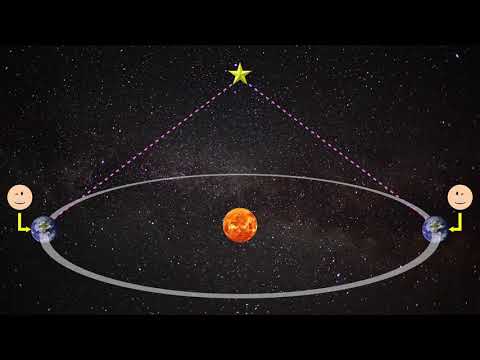
You know what’s funny? Back in the day, people thought the Earth was the center of everything. Can you imagine that? Like, they were so convinced that if you looked at the sky, it was all about us, right?
Then there’s this guy named Copernicus. Picture him, chilling in his study with a pile of books and a big ol’ telescope. He had this crazy idea that instead of us being the stars of the show, it was actually the Sun taking center stage. Kind of a plot twist for astronomy!
So there he was, shaking things up and making heads spin—literally! His ideas didn’t just rock the boat; they flipped it over. Suddenly, everyone had to rethink their place in the universe. Can you feel that? It’s like going from being a VIP at a party to realizing you’re just part of the crowd.
Let’s dive into how Copernicus changed everything with his bold thoughts and his messy little calculations!
Understanding the Copernican Revolution in Astronomy: A Transformative Shift in Scientific Thought
Alright, so let’s chat about the Copernican Revolution. This was, like, a massive shift in how we saw our place in the universe back in the 16th century. Before this revolution, people generally believed in the geocentric model, which basically said that Earth was at the center of everything. Everything revolved around us—sun, moon, stars—you name it.
But then comes along Nicolas Copernicus, a Polish astronomer who shook things up with his heliocentric theory. Instead of putting Earth in the spotlight, he suggested that the sun was actually at the center of our solar system and that Earth and other planets revolve around it. It’s kind of mind-blowing when you think about it!
There was this moment when I first learned about this theory—it hit me like a ton of bricks! Just imagining people back then realizing they weren’t the center of everything… can you imagine how they must have felt? It’s like finding out your favorite superhero is just an actor in a costume. The truth is out there!
So why was this so game-changing? Well, here are some key points:
- Shift from Earth-centered to Sun-centered: This made astronomers rethink not just our solar system but also our entire approach to studying space.
- Simplification of planetary motion: Copernicus’ model explained retrograde motion—when planets appear to move backward—much more easily than the geocentric model did.
- Encouraged observation: His ideas sparked curiosity among scientists and led to more detailed observations by folks like Galileo and Kepler.
- Broke with tradition: It challenged long-held beliefs backed by religious and philosophical views, creating some major waves at the time.
The thing is, while Copernicus laid down some pretty solid groundwork, his ideas faced serious pushback initially. People weren’t ready for such a radical change! But as time went on—and thanks to improved technologies like telescopes—the heliocentric model gained traction and became widely accepted.
This revolution didn’t just stop with astronomy either; it influenced philosophy and how we view science itself! The shift marked a big leap toward a more empirical approach, encouraging people to look for evidence rather than blindly follow tradition.
In simple terms, understanding the Copernican Revolution helps us see how science evolves over time. It shows us that challenging old ideas can lead to amazing discoveries—even if it makes people uncomfortable at first!
The journey didn’t end with Copernicus; it’s ongoing even today as we continue to explore beyond our little blue planet. So next time you look up at the night sky—remember: we’re not alone up there!
Unveiling the Legacy of Copernicus: The Father of Modern Astronomy Explained
Copernicus, man! His story is a wild ride through the cosmos. Basically, he flipped everything we thought we knew about our place in the universe upside down. Seriously, can you imagine being the dude who said, “Hey, maybe Earth isn’t the center of everything?” Talk about guts!
Let’s break it down a bit. Before Copernicus came along in the 16th century, everyone was pretty much convinced that the Earth was at the center of the universe. This idea was backed by Aristotle and later refined by Ptolemy—so you know, it had some serious historical clout. But Copernicus had a different vision. He proposed that the Sun was actually at the center and that Earth and other planets revolved around it. This was radical!
His big work is called “De revolutionibus orbium coelestium” (just a fancy title for “On the Revolutions of the Celestial Spheres”). In it, he laid out his heliocentric model—yeah, “heliocentric” just means “Sun-centered.” He didn’t just throw this out there without thinking; he calculated where each planet would be based on his model.
But hey, not everyone was onboard with this new way of thinking right away. There were some serious pushbacks from religious folks and scholars who didn’t want to let go of those old beliefs. It’s like when you try to tell someone that their favorite movie isn’t really that great—people don’t take it lightly!
So what did this mean for astronomy? Well, Copernicus’ ideas paved the way for future astronomers like Kepler and Galileo. Think about Galileo with his telescope—he started seeing things that made people question everything again! And Kepler? He took Copernicus’ ideas to another level by figuring out how planets move in elliptical orbits rather than perfect circles (which totally shook things up).
In essence, Copernicus showed us that questioning established norms can lead to groundbreaking discoveries. His work didn’t just change astronomy; it shifted our entire perspective on science and our place in the universe.
And let’s not forget about his legacy! Because of him, astronomy became more data-driven instead of being ruled by philosophical assumptions alone. The transition from thinking we were at the center to realizing we’re just one planet among many is kind of humbling when you think about it!
So yeah, Copernicus is often hailed as the father of modern astronomy, not just because he sparked all these debates but also because he encouraged others to explore beyond what they could see with their eyes alone. His courage to challenge the status quo has inspiringly shaped human understanding throughout history.
In short? He invited us all to look up and reconsider our place in this vast universe—a reminder that sometimes taking a step back can help us see much more clearly.
Exploring the Copernican Revolution: A Comprehensive Summary of Its Impact on Science
The Copernican Revolution was like a big wake-up call for astronomy. Before it happened, people pretty much believed that Earth was the center of everything. Imagine thinking your house was the center of the whole neighborhood, while in reality, you were just one of many homes. Crazy, right?
So, let’s break down what went down during this revolution and why it shook up the whole scientific community.
What Did Copernicus Propose?
Nicolaus Copernicus was a Polish mathematician and astronomer who, in the early 1500s, suggested that the Sun, not Earth, was at the center of the universe. This idea is known as heliocentrism. By flipping everything we thought we knew upside-down, he made a huge leap for science.
Shifting Perspectives
His book “De revolutionibus orbium coelestium” came out in 1543 and laid out his theories. But here’s where it gets interesting: most folks were not ready to accept this shift! The Church and many scholars stuck to their geocentric views like glue because it lined up with their understanding of scripture and everyday life.
- The Church’s Reaction: The Catholic Church wasn’t thrilled with Copernicus’ ideas since they challenged traditional beliefs.
- Scientific Community: Many scientists were skeptical or just ignored him altogether. They couldn’t let go of what they’d believed for so long.
But you know what? Slowly but surely, things started to change!
The Role of Kepler and Galileo
Enter Johannes Kepler! He picked up where Copernicus left off. Kepler introduced laws of planetary motion that supported heliocentrism with calculations that actually worked. Meanwhile, Galileo Galilei used a telescope to make observations that affirmed Copernicus’ ideas—like spotting Jupiter’s moons! That must’ve felt like proof positive that there’s more to space than just our little rock.
After all those discoveries piled up, many began to accept this new way of thinking about the universe.
A Shift in Scientific Thought
This revolution didn’t just impact astronomy; it kicked off something much bigger: the Scientific Revolution! New methods of observation and experimentation started taking root. Everyone from chemists to physicists began questioning old ideas and developing new theories. It led to a culture where challenging existing knowledge became acceptable—how refreshing!
- Empirical Evidence: Emphasis on observation and evidence instead of relying on ancient texts shaped future scientific practices.
- Mathematics Take Center Stage: Math became crucial for explaining natural phenomena.
Can you imagine being part of that wave? Like standing at the edge of something massive with everyone around you feeling excited yet fearful.
The Lasting Impact
Eventually, by breaking away from geocentrism, Copernicus set us on a path toward modern science as we know it today. Ideas about space changed dramatically over time—all thanks to that one guy who had enough guts to suggest we weren’t living at the center of everything!
So next time you’re gazing at the stars or scrolling through an astronomy app on your phone, remember Nicolaus Copernicus—not just for turning our view of space upside down but for inspiring generations to keep asking questions about our place in the universe!
Alright, let’s talk about Copernicus and how he kinda flipped the script on astronomy. You know, back in the day—like way back—everyone thought Earth was at the center of the universe. Makes sense, right? You look up at the sky, and it feels like everything revolves around you. But then here comes Copernicus, this Polish dude who had a brain like a supernova.
Imagine being in his shoes for a second. He’s hanging out during a time when everyone is pretty much convinced that they’re living in the center of everything. It must’ve been pretty intimidating to think, “Hey guys, what if we’re not actually the main attraction?” I mean, it’s awkward to challenge what everyone believes! But that’s exactly what he did.
With his heliocentric theory—yup, fancy word alert—Copernicus argued that it’s actually the Sun that’s at the center and we’re just spinning around it. This wasn’t just a small change; it was basically shaking up an entire belief system. It wasn’t easy to get people on board with this new idea either. Can you imagine trying to tell your friends they’ve been wrong about something so fundamental their whole lives? That takes guts.
What’s wild is how his ideas eventually laid down the groundwork for other astronomical giants like Galileo and Kepler to come along later. Those guys really took off with Copernicus’s ideas, challenging even more how we see our place in the universe.
And think about how this shift impacted not just science but society as a whole! It sparked curiosity and encouraged thinkers to question norms. You know those “lightbulb moments” when everything suddenly makes sense? Copernicus gave humanity one heck of a lightbulb!
In a way, his story reminds me of any time we feel stuck in our own little bubble—whether it’s beliefs or routines—and someone comes along with fresh eyes and totally messes things up for good reason. So next time you gaze up at those twinkling stars, remember there was a time when looking up meant thinking you were at the center of everything. Thanks to Copernicus, we learned we’re part of something much bigger—pretty mind-blowing if you ask me!