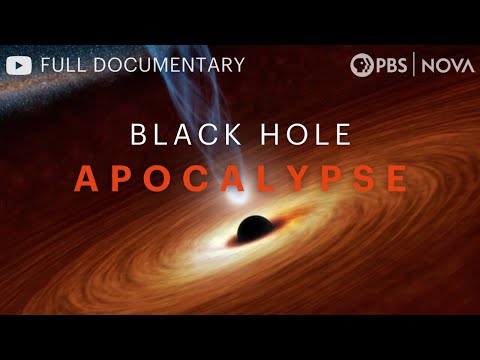
You know, I once tried to explain black holes to my grandma. She looked at me like I just started speaking Martian! “A hole that’s black? How does that work?” Anyway, that got me thinking about how these cosmic beasts are not just sci-fi stuff.
Black holes are like the universe’s ultimate mystery boxes. They suck in everything around ‘em and don’t let anything escape—not even light! It’s wild when you think about it.
So, you probably wonder how these things even get created. Well, sit tight! The science behind them is crazier than a cat video on the internet. Seriously! So let’s dig into this mind-bending journey of how black holes come to life in the vastness of space. Sounds fun, right?
Exploring the Cosmos: The Science Behind Creating Black Holes in ‘Cosmic Wonders’
So, black holes. They’re these super mysterious and mind-bending things in space that capture our imagination, right? You might think creating one is a wild idea—like something straight out of a sci-fi movie. But, guess what? There’s real science behind it all. Let’s break it down together!
First off, a black hole forms when a massive star runs out of fuel and collapses under its own gravity. This leads to the star compressing into an incredibly small point known as a **singularity**. Surrounding this singularity is the **event horizon**, the boundary where nothing can escape its pull—not even light! That’s what makes them “black,” you see?
Now, talking about actually creating black holes, here’s where things get interesting. In labs on Earth, scientists play with incredibly high energy densities to mimic conditions similar to those in space. This usually involves particle accelerators—big machines that smash particles together at super high speeds.
- Particle Collisions: When particles collide at extremely high energies, they can produce exotic particles that might form micro black holes. These would be tiny and evaporate almost instantly due to theoretical processes like Hawking radiation.
- Cosmic Rays: Interestingly enough, cosmic rays—those high-energy particles from outer space—collide with atoms in our atmosphere all the time. Some scientists think that these collisions could potentially create microscopic black holes too!
Thinking about that takes me back to my first astronomy class when we learned about stellar life cycles. I remember looking at images of dying stars collapsing into themselves and realizing how nature could create something so bizarre yet beautiful.
Anyway, no one has really seen these micro black holes yet; they are still hypothetical! But understanding how they might form gives us insights into **quantum mechanics** and how gravity interacts with the fabric of space-time.
On a larger scale, real-life black holes are detected by observing their effects on nearby stars and gas clouds instead of seeing them directly because they don’t emit light. For example, researchers capture data from stars orbiting what seems like empty space to suggest there’s a supermassive black hole lurking there—invisible but definitely real!
So yeah, while we may not be creating giant black holes anytime soon like those in movies (thankfully!), just our quest to understand these cosmic wonders fuels our curiosity about the universe—and that’s pretty rad!
Unraveling the Mysteries of Black Holes: The Science Behind Cosmic Wonders
Oh man, black holes. Just thinking about them makes my head spin a little! These cosmic wonders are like the rock stars of the universe, but they’re also super mysterious and sometimes kinda creepy. So, let’s break down what black holes really are and how they come to be, alright?
First of all, a black hole is an area in space where the gravitational pull is so strong that nothing, not even light, can escape from it. Imagine if you had a vacuum cleaner that could suck up everything around it—a black hole is kind of like that but on a cosmic scale. It’s hard to picture, but stay with me!
There are a couple of different types of black holes. We have stellar black holes, which form from the remnants of massive stars after they go supernova—kind of like their dramatic goodbye party! When these huge stars run out of fuel, they collapse under their own gravity. If the core leftover is more than about three times the mass of our Sun, it can become a stellar black hole.
Then there’s supermassive black holes. These guys hang out at the centers of galaxies (including our Milky Way) and can be millions or even billions of times heavier than our Sun. Yeah, you heard that right! Scientists aren’t completely sure how these giants form. One popular idea suggests they grow over time by gobbling up gas and dust or merging with other smaller black holes.
Now what’s wild is that even though we can’t see black holes directly because light can’t escape them; scientists have gotten pretty clever about detecting them. They look for X-ray emissions from material getting pulled into these gravitational traps or watch how objects behave around them—like stars swirling in fast loops before they get devoured.
Oh! And here’s something cool: researchers recently captured an image of a black hole’s shadow in 2019 using a global network of telescopes called the Event Horizon Telescope. This was groundbreaking because it gave us visual proof that these cosmic beasts exist beyond theory.
You might wonder what happens if you get too close to one—yikes! This point where nothing can escape is called the event horizon. If you cross this line—you’re toast! Well, not literally toast; more like spaghetti-fied in an effect known as “spaghettification.” It sounds funny but seriously scary at the same time!
So yeah, while we’ve made leaps in understanding black holes over recent years, there’s still so much we don’t know. They remain one of science’s biggest puzzles—like trying to solve a Rubik’s cube blindfolded while riding a roller coaster!
In short, unraveling the mysteries surrounding these cosmic wonders might take us some time yet—but isn’t part of science just endlessly digging for answers? You know? The excitement lies right there!
Exploring the Science of Black Holes: Unraveling the Cosmic Wonders of Nataraja
Alright, let’s jump into the captivating world of black holes and their cosmic charm, particularly the concept of **Nataraja**. You might’ve heard about him in connection with dance, right? Well, Nataraja is also known in Hindu mythology as the cosmic dancer who creates and destroys the universe. Kind of poetic, isn’t it? Now, think about that. Just like he embodies creation and destruction, black holes also have this duality going on in the universe.
Black holes are regions in space where gravity is so strong that nothing, not even light, can escape from them. Imagine trying to climb out of a pool with slippery walls; black holes take that idea to a whole new level! So how do they actually form? Typically, they originate from massive stars. When these stars run out of fuel for nuclear fusion—basically their energy source—they collapse under their own gravity.
- Supermassive Black Holes: These giants are found at the centers of galaxies. Our Milky Way has one called Sagittarius A*, which is millions of times heavier than our sun!
- Stellar Black Holes: Formed when massive stars explode in a supernova. They can be several times heavier than our sun but much smaller.
- Primordial Black Holes: Theoretical black holes that might have formed right after the Big Bang due to density fluctuations.
Now let’s get back to Nataraja for a moment. In some ways, black holes could symbolize **the cosmic dance of creation and destruction**. They “dance” through space by consuming matter around them and eventually might feed into other celestial phenomena or even help shape galaxies.
And here’s where it gets even cooler: when something falls into a black hole—like gas or even whole stars—it gets heated up and emits X-rays before crossing what’s called the **event horizon** (that’s basically the point of no return). Scientists use these X-rays to study black holes indirectly since we can’t actually see them.
You know what’s wild? The idea of spacetime around these things! According to Einstein’s theory of relativity, mass tells space how to curve, and curved space tells objects how to move. Essentially, a black hole warps spacetime so intensely that it creates this ‘well’ effect—objects nearby just spiral down while time behaves differently as you get closer.
But there’s still so much we don’t know! Like what happens inside them? Some theories suggest there could be singularities—points where gravity becomes infinite—or even portals to other universes. Crazy stuff!
So yeah, whether you look at it through science or mythological lenses like Nataraja’s cosmic dance, black holes captivate us with their mysterious beauty and chaotic nature. They’re not just cosmic vacuum cleaners; they’re symbols of change—their existence challenges our understanding while reminding us how little we really know about the universe we share. Keep pondering those mysteries; who knows what else we’ll discover together!
Black holes. Just saying the words conjures up this mysterious vibe, right? You’ve probably heard about them in movies or read some wild theories online. But what really goes on behind their creation? To put it simply, black holes are born from massive stars that have run out of fuel. They collapse under their own gravity until they become so dense that not even light can escape. Crazy, huh?
I remember sitting in an astronomy class once, and my professor started explaining how these cosmic giants form. She was so animated, her eyes sparkling as she described the gravitational pull of a black hole—how it’s like trying to escape a whirlpool but way worse! I could hardly breathe—she made it sound so thrilling! It was like magic mixed with science, and at that moment, I realized how much we still don’t know.
The beauty of black holes is both terrifying and mind-blowing. Imagine a point in space where time itself starts to behave differently! If you were nearing a black hole (which you really wouldn’t want to do), time would seem to slow down for you while everything else zoomed ahead. So wild!
Now, there are different types of black holes; stellar ones form when massive stars explode in cataclysmic supernova events. And then there are supermassive black holes lurking at the centers of galaxies—like our Milky Way—which contain millions or even billions of times the mass of our sun! It’s like they’re cosmic vacuum cleaners just sucking everything around them.
Scientists even think there might be tiny black holes floating around us, created right after the Big Bang. These little guys wouldn’t be dangerous at all; instead, they’re kind of like secret agents in the cosmos—hard to spot but possibly influential.
But here’s something that gets me thinking: does creating a black hole mean we can also create new pathways for understanding the universe? If scientists could somehow manipulate conditions leading to their formation (not that anyone’s suggesting we try), it opens up discussions about gravity and space-time like never before!
So yeah, as mesmerizing as they are terrifying, black holes remind us just how limited our understanding truly is. Each discovery about them pulls us deeper into questions that may take forever to answer. And honestly? That sense of wonder is what science is all about—chasing after these cosmic mysteries!