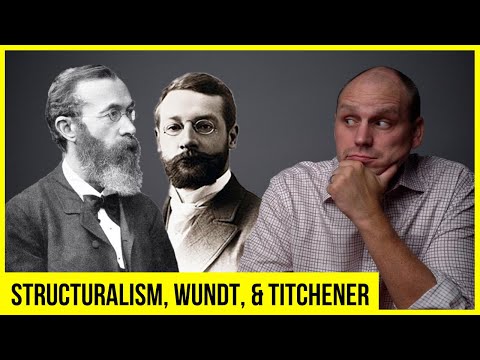
Alright, picture this: it’s the late 1800s. A mustache-twirling dude named Edward B. Titchener is sitting in his study, poring over psychology books like a kid with a comic collection. Seriously, he might as well have had a “Do Not Disturb” sign on his door!
So, what’s the deal with Titchener? Well, he’s one of those folks who helped shape what we know as modern psychology. As if that wasn’t enough pressure, he was also the guy trying to get people to look inside their own heads—literally!
Now, you might think that sounds kinda weird or even awkward. But hold on! His ideas laid down the tracks for so much of what we study today.
Stick around while I share how this quirky psychologist and his methods turned psychology from guesswork into a serious science. It’s an adventure filled with twists and turns that’ll make you see how far we’ve come since then!
Exploring Edward B. Titchener’s Impact on Psychology and Scientific Methodology
So, let’s chat about Edward B. Titchener, a major player in the world of psychology and how he shaped scientific methodology. Born in 1867, Titchener was like this curious kid in a candy store, diving into the depths of the human mind with unyielding enthusiasm. His work is often associated with structuralism, which aimed to break down mental processes into their most basic components. You know, like peeling an onion to get to the core.
Titchener studied under Wilhelm Wundt, who is known as the father of experimental psychology. Together, they kinda opened this whole new door to understanding how we think and feel. Titchener believed that you could understand consciousness by analyzing its parts using introspection—a fancy word for looking inward and describing your thoughts or feelings.
Here are some key aspects of Titchener’s impact:
- Introspection: His main tool for gathering data was introspection. Participants were trained to consciously explore their thoughts and sensations while experiencing stimuli. It was sort of like asking someone to take a really close look at their own minds.
- Psychological Laboratory: Titchener set up labs where colleagues could conduct experiments together. This collaborative environment played a big role in shaping psychological research methods.
- Structuralism vs. Functionalism: While Titchener focused on breaking down mental processes into parts, American psychologists like William James were looking more at how those parts worked together in real life—this clash of ideas created vibrant discussions in psychology!
A personal story comes to mind here: I remember being in college and stumbling upon Titchener’s work late at night while cramming for exams. His ideas sparked this sense of wonder about not just what I was learning but how I was thinking through it all! It felt like a light bulb moment—realizing there’s more than just memorizing facts; there’s actually an entire process going on inside my head.
Titchener also published a lot! His book “Experimental Psychology: A Manual of Laboratory Practice” served as a cornerstone in teaching psychological experimentation. And while not everyone agreed with his methods or conclusions (because, you know, everyone has their opinions), his work undeniably set the stage for future studies.
In a nutshell, Edward B. Titchener left quite a mark on psychology by promoting structuralism and emphasizing rigorous scientific methods through intimate exploration of cognition via introspection and hands-on laboratory practice. He may not have been perfect—some thought he limited psychology too much—but his contributions helped shape many branches of psychological science we see today!
The takeaway here? Exploring our own minds isn’t just fascinating; it has paved the way for understanding something as complex as human behavior! And that’s pretty cool if you ask me.
Titchener’s Enduring Legacy: Analyzing His Most Significant Contribution to the Field of Psychology
Edward B. Titchener was a pivotal figure in the early days of psychology, especially known for his work in structuralism. Now, he had this idea that the best way to understand the mind was not just by looking at behavior but by breaking down consciousness into its basic components. Think of it like taking apart a toy to see what makes it tick!
Titchener introduced introspection as a method where participants would reflect on and report their thoughts and feelings in response to various stimuli. This might sound a bit fluffy today, but back then, it was groundbreaking. Imagine sitting someone down with a piece of chocolate and asking them to describe every single sensation—like taste, texture, and even memories it might evoke. It’s all about getting to the nitty-gritty of mental experiences.
He taught at Cornell University and established one of the first psychology laboratories in the United States, adding significant academic heft to the field. His passion for teaching was contagious; his students often described him as charismatic—even if his methods were sometimes subject to criticism for being overly subjective.
The major takeaway from Titchener’s work is his focus on the structure of consciousness. He believed that by analyzing sensations, images, and feelings, you could build a picture of how our minds work. Although structuralism didn’t stick around forever—because let’s face it, human experience is complex—his ideas laid foundational stones for future psychological theories.
Another interesting point is that Titchener was really keen on American psychology developing its own identity separate from Europe. He wanted to create something authentically American that stood on equal footing with other scientific fields.
To sum up:
- Titchener’s introspection method: Encouraged deep self-reflection.
- Focus on structuralism: Analyzed elements of consciousness.
- Pioneer educator: Influenced generations through teaching.
- Cultural impact: Reinforced American psychology’s independence.
Even though many modern psychologists don’t use introspection anymore, Titchener’s legacy lives on in how we think about mental processes today. His quest to explore how we experience life, piece by piece, continues to inspire curiosity in psychological research. It’s fascinating how these early ideas have shaped where we are now!
The Uniqueness of Psychology: Titchener’s Argument on Its Distinction Among the Sciences
Edward B. Titchener was a big name in psychology back in the day. He really shook things up with his ideas on what makes psychology unique compared to other sciences. Now, it’s not just a matter of ticking boxes or following formulas; it’s about understanding how our minds work. So, let’s break it down a bit.
First off, Titchener believed that psychology focuses on conscious experience. Unlike physics or chemistry, which deal with tangible substances and observable phenomena, psychology digs into thoughts, feelings, and perceptions that can’t be seen directly. This brings a level of complexity to the table that’s fascinating—and sometimes frustrating!
Another key point he made is about introspection. Yeah, that word sounds a bit fancy, but it just means looking inward to examine your own thoughts and feelings. Titchener argued that this method is fundamental to psychology because it relies on personal experience rather than external experimentation alone. You see your world through your own lens, and that lens shapes everything about how you perceive it.
Of course, this doesn’t mean there aren’t scientific methods involved! Titchener believed in the rigor of experimentation but insisted that psychological experiments must account for the subjective nature of human experience. Basically, you can’t measure emotions like you measure temperature or weight—you have to consider context and perspective.
Now let’s talk about structuralism, Titchener’s big contribution to psychology. He wanted to break down consciousness into its basic elements—kind of like breaking down a recipe into individual ingredients. By understanding these components (like sensations and images), he thought psychologists could get closer to understanding the whole picture of human thought.
Here’s something interesting: consider how two people might react differently to the same situation—a rollercoaster ride might thrill one and terrify another! Their reactions aren’t just dictated by the ride itself but by their inner feelings and thoughts—and that’s what makes psychology distinct.
Titchener faced some criticism for his heavy reliance on introspection and structuralism. Critics argued that this makes psychology less scientific because it leans too much on subjective experiences rather than objective data. But hey, isn’t human behavior all about those messy feelings?
In summary:
- Focuses on conscious experience: Psychology studies internal states rather than just observable behavior.
- Method of introspection: Self-examination plays a crucial role in understanding mental processes.
- Structuralism: Breaking down consciousness into fundamental elements helps understand complex experiences.
Titchener’s argument for psychology’s uniqueness almost feels like advocating for art over science sometimes—each has its beauty! You can’t fully capture the richness of human emotion with equations alone; our brains are so intricate.
So next time you think about why you feel a certain way or why someone reacts differently than you did in the same scenario, remember—this is where Titchener’s legacy comes into play! The mind isn’t just another science subject; it’s an adventure waiting to unfold every day!
Edward B. Titchener was a bit of a trailblazer in the world of psychology, but, you know, he often gets overshadowed by some of the bigger names like Freud or Jung. It’s like when you go to a concert just to see the headline act, and you miss that warm-up band that actually had some pretty cool stuff going on.
He came onto the scene in the late 1800s, around the time psychology was trying to shake off its philosophical roots and show up as a proper science. Titchener was all about introspection—yeah, that means looking deep into your own thoughts and feelings. Imagine sitting down with a cup of coffee and just pondering what’s making you tick. Sounds introspective enough, right? But it wasn’t just daydreaming; he wanted people to report their experiences in detail. He thought if we could break down our mental processes into individual components—like putting together a puzzle—we could understand how they fit together into this intricate picture we call consciousness.
But here’s where it gets interesting! Titchener also faced criticism for being too focused on introspection. People said it was subjective; how could you trust someone’s self-reporting when they’re just sharing their own perspective? That made me think of those times when I’ve tried explaining my favorite movie to friends—everyone has their own take on what happens!
The emotional side of things really gets me too. Titchener hailed from England but spent most of his career teaching at Cornell University in the U.S., which must have felt like quite the shift for him. You know, moving across an ocean and planting your roots somewhere new; it’s both exciting and daunting at the same time.
As psychology evolved, so did Titchener’s ideas. His structuralism laid some groundwork for later schools of thought, even if they didn’t always agree with him. You can see it happening—a generational shift where younger psychologists took his principles and pushed them in new directions. This makes me reflect on how much we owe to those early pioneers who weren’t afraid to lay out their ideas, knowing full well they might not take root.
So yeah—Titchener might not be a household name today compared to others in psychological science, but his contributions were significant. The way he dissected human thought set off sparks that would eventually lead us into more modern approaches in psychology, paving the way for exploring behaviors alongside cognitive processes.
In a nutshell, isn’t it fascinating how one person can kickstart so much change? Just shows you that every conversation or new idea can be part of something much bigger than we realize!