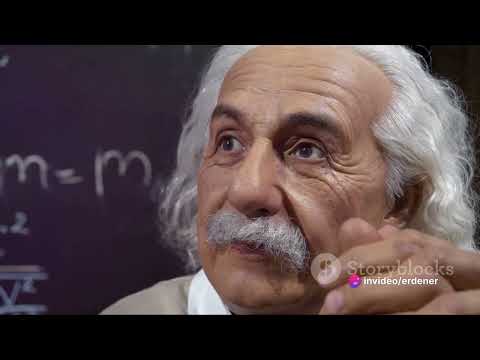
So, picture this: a guy in a messy lab coat, wild hair sticking out in every direction, scribbling equations on a chalkboard like it’s a grocery list. That’s Einstein for you! You laugh, but this genius literally changed how we see the world.
Now, I can’t help but think about that time I tried to explain relativity at a party. Let me tell ya, it didn’t go well. People either looked confused or made a beeline for the snack table. But it got me wondering… What if we could make these mind-bending physics concepts as fun as sharing memes?
Einstein’s ideas aren’t just brain stretches; they’ve shaped everything from GPS to how we understand black holes. Seriously! The dude left us with some serious puzzles to solve and a legacy that’s still super relevant today. So grab your favorite drink, sit back, and let’s unravel some of these mysteries together!
Insights from Albert Einstein: Revolutionary Perspectives on Physics and Its Impact on Science
Sure, let’s talk about Albert Einstein and how his ideas shook the world of physics to its core. You know, Einstein wasn’t just some guy with messy hair and a wild mustache—he changed how we think about the universe, and that’s pretty rad.
First off, you gotta understand **Einstein’s Theory of Relativity**, which is actually two theories: special relativity and general relativity. So, special relativity is all about how time and space aren’t what they seem. For instance, when you’re moving really fast—like close to the speed of light—time slows down for you compared to someone standing still. Pretty mind-bending, right?
Then there’s general relativity, which goes even deeper. It basically says that massive objects like planets warp space-time around them. Think of it as a trampoline with a heavy ball in the center; everything else rolls toward it because the fabric bends under the weight. This idea changed how we view gravity—not just as a force but as something that bends the very fabric of space itself.
Now, let’s talk about some of those revolutionary insights he brought to physics:
- Time Dilation: This concept from special relativity shows us that time isn’t fixed. Depending on your speed and gravitational pull around you, time can actually pass differently! Imagine being an astronaut in space; you’d age slower than your buddies back on Earth!
- Mass-Energy Equivalence: Ever heard of E=mc²? That equation tells us that mass can be converted into energy and vice versa. It’s why nuclear reactions release so much energy! It’s kinda like magic when you think about it.
- Gravitational Waves: General relativity predicted these ripples in space-time caused by massive accelerating objects like merging black holes! We only directly detected them recently in 2015—like whoa! Talk about blowing minds!
These ideas didn’t just sit on paper; they sparked whole new fields of study in physics! Quantum mechanics got reshaped thanks to his thoughts too. If you’ve ever struggled with how particles can be in two places at once—yeah, that’s part of it!
Also, his work laid the groundwork for technologies we use daily today. Ever used GPS? That depends on understanding both general and special relativity for accurate positioning!
On a more personal note—I remember reading Einstein’s letters where he talked about curiosity being key to discovery. It struck me because I feel like that’s what learning is all about: being curious enough to ask questions nobody else does.
So when you think about Einstein’s legacy, it’s not just his crazy equations or theories—we’re talking about a shift in perspective that resonates today more than ever. He made science accessible, reminding us that our universe is filled with mysteries waiting to be unraveled by anyone who’s willing to wonder out loud.
In summary: Albert Einstein didn’t just open doors in physics; he blew off the hinges! His revolutionary ideas changed our understanding of reality itself and inspired countless others to explore deeper into those mysteries we still ponder today. Isn’t exploring knowledge fun?
Unraveling the Biggest Mystery in Physics: Exploring the Enigmas of the Universe
The universe is like one big puzzle, isn’t it? Scientists have been trying to piece it together for centuries, and there’s a lot we still don’t understand. You know, when Einstein burst onto the scene with his theories about relativity, he opened up a world of questions that we still explore today.
One of the biggest mysteries in physics revolves around dark matter and dark energy. It’s mind-boggling! About 95% of the universe is made up of these two components that we can’t even see. Imagine throwing a party where most of your guests are invisible! Dark matter has weight—it pulls on galaxies and keeps them from flying apart—but we can’t see it or touch it. And then there’s dark energy, which is pushing everything apart faster than ever. Seriously, what are these things?
Another mystery involves black holes. These massive gravitational beasts warp space and time. Think of them as cosmic vacuum cleaners—they suck in everything that gets too close! But here’s the kicker: at their center lies the singularity, a point where our understanding breaks down. It’s like hitting a wall in your favorite video game—you know there’s more to explore but can’t figure out how to get past it.
And let’s not forget about quantum mechanics. This field sounds straightforward until you start digging into concepts like superposition and entanglement. Particles can be in multiple states at once and can affect each other instantly over huge distances. I mean, who wouldn’t feel a little dizzy trying to wrap their head around that? Think of it like having a friend who can be at two places at once—totally wild!
The quest for a unified theory is also ongoing. Physicists have been chasing this holy grail for ages—the idea that all forces in nature could be explained by one single framework. You’ve got gravity from relativity and electromagnetism from quantum physics competing like rival bands on stage. Wouldn’t it be cool if they could collaborate and jam out some epic tunes together?
- The nature of time: Is it linear or cyclical? Do we travel through time or just experience it?
- The multiverse theory: Could there be other universes out there with different laws of physics? Sounds mind-bending!
- String theory: If tiny vibrating strings make up the fabric of reality, what does that mean for our perception?
This never-ending journey into the cosmos reminds me of gazing at stars as a kid—each twinkle sparked questions I couldn’t quite answer: What else is out there? Are we alone? Now scientists stand on the shoulders of giants like Einstein while trying to decipher these puzzles.
If humanity keeps pushing forward with curiosity and collaboration, who knows what revelations await us just around the corner? It’s kind of thrilling when you think about all those answers lurking out there in the vastness!
Understanding Einstein’s Three Laws: A Comprehensive Overview in Science
Einstein was a total genius, right? He changed how we think about space, time, and gravity—like, really shook things up! But it’s not exactly just three laws we’re talking about. You see, he had a few major theories that are often referred to in a sort of simplified way. Let’s break them down!
The Special Theory of Relativity is where things get super interesting. Basically, what Einstein said here is that the laws of physics are the same for everyone no matter how fast they’re moving. Cool, huh? And then there’s the part about the speed of light being constant—no matter who you are or where you are in the universe.
Think about it like this: If you’re standing on a train and throwing a ball forwards while the train’s moving, someone outside might see that ball travel faster than if you just tossed it while standing still. But according to Einstein? Nope! Both views are correct depending on your perspective.
- Time Dilation: This means if you’re zooming around in a spaceship going close to the speed of light, time would move slower for you compared to your buddies back on Earth.
- Mass-Energy Equivalence: Remember E=mc²? It tells us mass and energy are interchangeable. Like, we can convert mass into energy and vice versa! Mind-blowing!
Then we have The General Theory of Relativity. Oh man! This one is all about gravity and warped spacetime. Imagine putting a heavy bowling ball onto a trampoline; see how it bends? That’s kind of how massive objects warp spacetime around them!
So when you’re orbiting Earth or hanging out near a black hole (not that I recommend that!), what you’re actually experiencing is this bending of spacetime which pulls you down or keeps you in orbit.
- Gravitational Time Dilation: This means time moves differently depending on your position in a gravitational field. Closer to a massive object? Time goes slower!
- The Curvature of Spacetime: Objects with mass cause spacetime to curve around them—so planets follow these curves when they orbit stars.
Lastly but definitely not least important is his work on Quantum Mechanics. Alright, so this one isn’t solely Einstein’s baby—lots of folks contributed here—but he still had some major thoughts on it. He even famously said “God does not play dice with the universe,” hinting at his discomfort with the randomness of quantum mechanics.
- Photoelectric Effect: Einstein explained how light could be both wave-like and particle-like by showing how light could knock electrons off metal surfaces… crazy smart!
In summary, what Einstein gave us was more than just rules; he provided frameworks for understanding everything from tiny particles to massive galaxies. Whether it’s through relativity or quantum theory, his legacy lives on today—not just in textbooks but also in our everyday lives as technology enhances through these principles!
So next time someone drops an “Einstein” bomb at dinner parties (you know they will), you’ll have some pretty cool stuff to share!
You know, thinking about Einstein always gives me this weird blend of awe and nostalgia. I remember back in school, we had this old physics teacher who was like, utterly obsessed with him. He’d go on and on about relativity as if it were the most exciting thing ever. And honestly? He made it sound a lot cooler than I ever thought physics could be.
So, Einstein’s legacy is kind of a big deal. When you say his name, folks usually think of that wild equation E=mc², right? But it’s not just that catchy formula. It’s more like he opened this massive door to understanding how the universe works. Like, seriously! Before him, people had these pretty rigid ideas about space and time—think of them as straight lines. Then he comes along and says, “Nah, it’s more like a stretchy fabric,” making everything so much more interesting.
It’s not just about bending light or time travel (although those concepts are mind-blowing). It’s the way he challenged conventional wisdom. Remember when we were kids playing in the backyard? Sometimes we’d create our own little worlds and rules. Einstein did that but with the universe! He was like a kid who refused to color inside the lines.
And what resonates with me even more is how he didn’t just share his brilliance; he invited others to think differently too. This idea that science isn’t some exclusive club but a collective journey feels really important today. When I see young scientists or even enthusiasts at workshops trying to decode what he left behind, it’s inspiring! They’re tackling questions about black holes or quantum mechanics—stuff that honestly sounds like sci-fi to me.
But here’s the thing: Einstein’s legacy isn’t only in his theories; it’s in the curiosity he sparked. His work keeps pushing us to look deeper into existence itself—like why does time flow the way it does? Why is gravity such a party pooper when it comes to uniting forces? The mysteries in physics aren’t just for physicists anymore. They’re for anyone who looks up at the stars and feels that itch to know more.
So yeah, when you think of Einstein and his contributions—or should I say gifts—to science, it’s not only his genius you’re appreciating; it’s this invitation to dream bigger and question everything around us. That spirit of wonder is what keeps all those mysteries alive today!