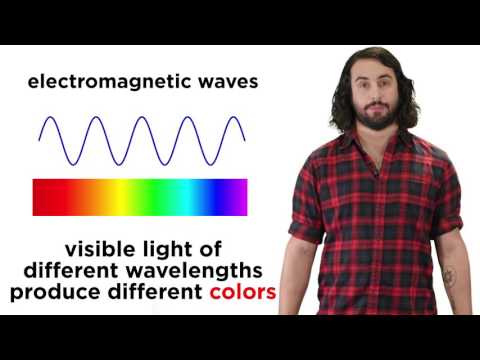
You know that feeling when your phone buzzes, and you realize it’s not just a text but a whole universe of invisible waves flying through the air? It’s wild, right?
Well, that’s electromagnetic radiation doing its thing. Seriously! It’s like magic, but it’s all science.
From microwaves cooking your leftovers to the sunlight making you feel warm on a chilly day, electromagnetic radiation is everywhere. It’s kind of one of those things we take for granted—until we stop and think about it.
So let me take you on a little journey into this fascinating world. You’ll see why understanding it is super relevant not just for nerds in lab coats but for everyone—yes, even you!
Understanding the Theory of Electromagnetic Radiation: Key Concepts in Physics
Electromagnetic radiation is one of those concepts in physics that sounds super complicated, but at the heart of it, it’s just about how energy moves around. Basically, it’s all about waves and particles doing their dance.
So, what’s the deal with these waves? Electromagnetic waves are made up of two parts: an electric field and a magnetic field. They oscillate at right angles to each other as they move through space. Picture tossing a stone into a calm pond—when the stone hits the water, ripples spread outwards. That’s kinda like how electromagnetic waves travel!
Now, these waves can vary in size and energy levels, which leads us to something cool called the electromagnetic spectrum. It ranges from radio waves (which are super long) to gamma rays (really short and high-energy). Here’s a quick rundown:
- Radio Waves: Used for communication like radio and TV.
- Microwaves: They’re not just for popcorn; they help in your phone too!
- Infrared: This is what makes you feel warm when you sit by a fire.
- Visible Light: The only part we can see! It helps us enjoy sunsets and rainbows.
- Ultraviolet: This is why you get sunburned if you chill too long in the sun.
- X-rays: They let doctors see inside our bodies without needing surgery.
- Gamma Rays: High-energy radiation often associated with nuclear reactions.
Each type of wave has its own characteristics and uses. Isn’t that neat? Like, who would’ve thought that your microwave also shares some properties with radio waves?
Now let’s talk about how this all connects to wavelength, which is basically the distance between two peaks of a wave. The longer the wavelength, like with radio waves, the lower its energy. But as you get shorter wavelengths with gamma rays, their energy goes way up.
You might be thinking about how this affects everyday life. Well, electromagnetic radiation plays a huge role in technology! Think about all those devices you use daily: Wi-Fi routers, smartphones—those rely on electromagnetic signals to transmit data!
And here’s something that really drives home its importance: Remember when COVID hit? We needed to stay connected while socially distancing. That reliance on electromagnetism for communication became more crucial than ever!
In terms of scientific relevance, understanding electromagnetic radiation has helped us probe deeper into the universe. From studying distant galaxies using telescopes that detect various wavelengths to seeing how plants absorb light for photosynthesis—it’s everywhere!
So here’s the thing: whether it’s watching TV or getting medical tests done, we depend on electromagnetic radiation more than we realize. It connects everything from basic human interactions to advanced technologies shaping our future!
That wraps it up! Electromagnetic radiation may seem abstract at times but really it’s an essential part of both nature and technology. Isn’t it amazing how much physics influences our day-to-day life without us even noticing?
Key Concepts of Electromagnetic Wave Theory in Physics
Let’s chat about electromagnetic wave theory, shall we? It’s one of those topics that sound super technical but, at its core, is pretty fascinating and essential to how we understand the universe.
Electromagnetic waves are waves of electric and magnetic fields that travel through space. They’re everywhere, you know? From the light you see when you turn on a lamp to the radio signals your phone picks up. These waves don’t need a medium, like air or water, to move. They just flow through the vacuum of space!
Now, what’s cool is that these waves come in different forms depending on their wavelength and frequency. Picture a really long wave—the one that rolls into shore at the beach—that’s like a low-frequency radio wave. On the flip side, think about those tiny wavelengths we can’t even see—like gamma rays! So basically:
- Wavelength: The distance between two peaks of a wave.
- Frequency: How many peaks pass by a point in one second.
These two characteristics are important because they determine what type of radiation you’re dealing with. The longer the wavelength, the lower the frequency, and vice versa. It’s like this big dance where they’re always connected.
The electromagnetic spectrum is where all this action takes place. Imagine it as a big rainbow stretching from radio waves on one end to gamma rays on the other. And right in between, you’ve got microwaves (handy for popcorn), infrared (think heat), visible light (the colors we see), ultraviolet (sunburn city!), and X-rays (for checking out your bones).
Speaking of visible light—it’s interesting how our eyes only pick up this narrow band while there are so many other “colors” out there! Like when I was a kid and found out about UV rays—the first time I turned red after too much sun was quite a learning experience!
Okay, let’s get to how these waves interact with matter. Electromagnetic radiation can be absorbed or reflected depending on what it’s hitting. Ever notice how some surfaces reflect light while others absorb it? That’s all about how they interact with different types of electromagnetic radiation.
- Absorption: When materials take in energy from these waves—think plants soaking up sunlight!
- Reflection: When waves bounce off an object—like when you see yourself in a mirror.
- Transmission: When waves pass through something—like how glass lets light in.
And here’s where it gets really important: understanding all this helps us harness electromagnetic radiation for practical use! For instance:
- The way microwaves cook our food.
- X-rays allowing doctors to peek inside our bodies without surgery.
- The role of radio waves in communication technology—from radios to cell phones!
Yeah, science can totally make life easier—or more fun!
So remember: electromagnetic wave theory isn’t just some boring textbook topic; it’s about understanding how energy travels through space and how it interacts with everything around us. Each little piece connects back to everyday life and reminds us just how intertwined science is with our world!
Understanding Electromagnetic Theory: Key Concepts and Significance in Scientific Exploration
Electromagnetic theory is, like, super important for so many areas of science. You know how you can feel the warmth of sunlight on your skin? Well, that’s basically electromagnetic radiation doing its thing. Let’s dig into the key concepts and see why it matters.
So first off, let’s talk about what electromagnetic radiation actually is. It consists of waves that can travel through space and carry energy. These waves have both electric and magnetic fields—kind of like a dance between two partners. The speed at which these waves move—like light—is around 300,000 kilometers per second. Can you even imagine moving that fast?
- Wavelength: This is the distance between two peaks in the wave. Different wavelengths give us different types of electromagnetic radiation—from radio waves to gamma rays.
- Frequency: This refers to how many times the wave oscillates per second. More oscillations mean higher frequencies and also more energy!
- Energy: The energy carried by a wave is related to its frequency; higher frequency means more energy! So, gamma rays are way more energetic than radio waves.
The relationship between wavelength and frequency is described by a simple formula: speed = wavelength × frequency. So if you know any two of those variables, you can figure out the third! Pretty cool, right?
You might be wondering why this stuff is so significant in scientific exploration. Well, one reason is that electromagnetic radiation allows scientists to gather data from far-off distances without physically being there. For example:
- Telescope observations<!–: When astronomers look at distant stars or galaxies using telescopes equipped with various sensors that detect different wavelengths, they're using electromagnetic radiation!
- X-ray imaging: In medicine, X-rays help us see inside our bodies without having to open us up—thanks to high-energy electromagnetic radiation!
- Communication technologies: Everything from Wi-Fi to cell phones relies on those radio waves traveling through the air.
Chemists also use electromagnetic theory when they study substances at the molecular level using techniques like infrared spectroscopy. By analyzing how molecules interact with different types of electromagnetic radiation, they can learn about their structure and properties.
This theory forms a foundation for other fields too; think quantum mechanics! It helps explain phenomena like why atoms emit light when energized or how lasers work by releasing photons in an organized fashion.
If I could share a personal story here—once I was watching some old videos about space exploration with my little cousin, who couldn’t understand why we needed telescopes when we could just go there ourselves. But then I explained how exploring distant galaxies takes forever—like millions of years—and that using light helps us see those places almost instantly! His eyes lit up as he realized we can learn so much without physically stepping a foot into space!
The implications are massive; understanding electromagnetic theory isn’t just for scientists locked away in labs—it’s for everyone! It shapes our daily lives in ways we often take for granted but also pushes frontiers further than we could’ve ever imagined.
In summary: Electromagnetic theory opens doors to understanding not only our universe but also practical applications that benefit society as a whole! Seriously fascinating stuff!
Electromagnetic radiation, huh? It sounds like something out of a sci-fi movie, but it’s actually all around us. From the sunlight that warms our skin to the Wi-Fi signals that keep us connected, it’s pretty wild when you think about it. So let’s unpack this a bit.
You know, when I was a kid, I used to think of light as just… well, light. I mean, you see it every day, but what’s happening behind the scenes? Electromagnetic radiation is the way energy travels through space. It comes in different forms – visible light is just one piece of a much bigger puzzle. There are also radio waves, microwaves, infrared radiation, ultraviolet rays, X-rays and gamma rays. Each has its own special role in our world.
Imagine standing outside on a sunny day—feels great! But then you remember: that sunshine is made up of tiny particles called photons zipping around at the speed of light! It’s mind-blowing. All those different types of electromagnetic radiation interact with matter in unique ways. Like how UV rays can give you a sunburn but also help your body produce vitamin D.
But that’s just scratching the surface! The real scientific relevance of electromagnetic radiation comes into play in tons of fields—think medicine and technology! X-rays are crucial for doctors to look inside our bodies without making any cuts; they show us bones and detect issues like breaks or tumors. And don’t even get me started on how our smartphones depend on various forms of electromagnetic waves to function!
Honestly, it’s like we’re living inside an enormous web of invisible connections and interactions every second of every day. That moment when you realize that your conversations with friends over the phone are actually bouncing around as radio waves… kind of magical if you ask me.
Not to mention how understanding electromagnetic waves has led scientists to develop cleaner energy sources and improve communication systems—like satellites orbiting Earth or radio broadcasts traveling for miles!
So yeah, electromagnetic radiation isn’t just some dry topic stuck in textbooks; it’s fundamentally woven into our lives and helps shape technology and society as we know it today. Just think about how far we’ve come because we understand this phenomenon—it’s pretty inspiring!