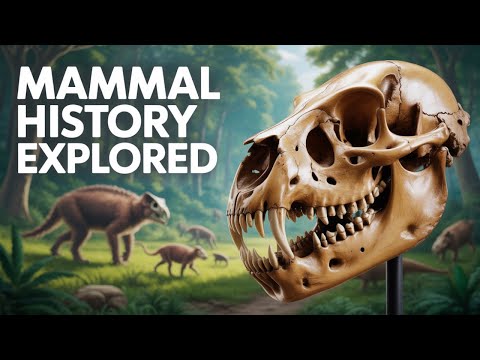
You know that moment when you see a squirrel scurrying up a tree, and you think, “Wow, that little creature is related to whales?” Yeah, mind blown!
It’s wild to think about all the crazy changes mammals have gone through over millions of years. From tiny shrew-like ancestors to massive woolly mammoths, oh man, evolution has got some epic stories to tell.
Imagine a time when dinosaurs roamed the Earth. In that chaos, our furry friends were just starting their own adventure.
So grab a snack and cozy up; we’re about to take one awesome ride through the ages. Seriously, evolution is like nature’s coolest rollercoaster!
Exploring the Evolutionary Sequence of Mammals: Insights from Evolutionary Biology
Alright, let’s chat about how mammals came to be. It’s pretty wild when you think about it! The story of mammals is like a long, winding road filled with twists and turns, where every bump and curve has shaped who we are today.
First off, mammals belong to a group called amniotes, which includes reptiles and birds too. This group split off from other vertebrates way back in the late Carboniferous period, around 300 million years ago! Imagine that! At this time, our distant ancestors were tiny creatures scurrying around underfoot.
Then came the Triassic period, about 250 million years ago. This era is super important because it’s when the first true mammals appeared. They were small, furry creatures that probably looked something like modern shrews. Can you picture it? Scurrying around while dinosaurs ruled the land—pretty brave little guys!
Now, during the Jurassic period (around 200 million years ago), mammals kept evolving but stayed mostly in the shadows while dinosaurs dominated. This is often referred to as a “waiting game.” But don’t get it twisted; these early mammals were building up some serious evolutionary chops.
The big event occurred around 66 million years ago when an asteroid hit Earth and wiped out most of the dinosaurs. With their main competition gone, mammals had a chance to spread out and evolve into different shapes and sizes. It’s like getting a new playground after all the bullies left!
After this mass extinction, mammals diversified like crazy during the Paleogene period. They evolved into groups we recognize today: primates (think humans), cetaceans (like whales), and even bats! Each branch of this family tree followed its own unique path based on environmental pressures and available resources.
Even within these groups, you can see some fascinating adaptations. Take whales, for instance—they went from being land-dwelling creatures to magnificent ocean dwellers over millions of years. Isn’t that mind-blowing?
Another cool example is how some mammals adapted to flight—hello bats! They developed wings from their forelimbs while still keeping features that link them back to those tiny shrew-like ancestors. Evolution plays by its own rules!
To put it simply:
- Mammals originated from amniotes about 300 million years ago.
- The first true mammals appeared during the Triassic period.
- Mammals thrived after dinosaurs went extinct.
- Diversity exploded during the Paleogene period.
- Mammals adapted to various environments—land, air, water!
So there you have it! The journey of mammal evolution is filled with dramatic changes and adaptations driven by survival tactics over millions of years. Think about how amazing it is that all living mammals today are distant relatives of those small creatures roaming Earth back in prehistoric times! Evolution really knows how to take us on a wild ride through time!
Exploring Mammals: Key Insights into Evolution, Ecology, and Diversity in Science
Mammals are, like, one of the coolest groups of animals out there. They’ve been around for a long time, and their story is full of twists and turns that show how life on Earth has changed over millions of years. You might not know this, but mammals first appeared around 200 million years ago. They were small creatures that lived alongside dinosaurs! Can you even picture that?
To understand mammals, it helps to break things down a bit. Here are some key insights into their evolution and ecology:
- Adaptation: Mammals have shown amazing adaptability throughout history. From furry little critters scurrying around the feet of giants to massive woolly mammoths roaming the ice age, they’ve been able to thrive in different environments.
- Diversity: There are over 6,400 species of mammals today! That includes everything from tiny bumblebee bats to gigantic blue whales. Their incredible diversity is partly due to their ability to evolve and fill various ecological roles.
- Warm-Bloodedness: One defining feature of mammals is being warm-blooded. This means they can regulate their body temperature regardless of the environment—pretty handy for surviving in all sorts of climates!
- Reproduction: Most mammals give birth to live young, which allows for a closer bond between mother and offspring. For instance, elephants are known for their strong family ties; they take care of each other in herds.
Now, let’s talk about evolution a bit more. The journey from those early mammals to what we see today was not smooth sailing at all! There were times when climate changes caused extinctions that wiped out many species. For example, the Great Ice Age led to the disappearance of more than half of Earth’s megafauna.
But then again, some mammals thrived after these changes! Take rodents and small carnivores as examples: they adapted quickly after other larger species vanished.
The story gets even better when you think about **ecology**. Mammals play essential roles in ecosystems—they can be predators or prey, pollinators or seed dispersers. Think about how bats eat tons of insects at night or how whales help circulate nutrients in ocean waters with their massive migrations.
Mammals even communicate in fascinating ways! From howling wolves to chirping dolphins and chattering monkeys—each has its own method to convey feelings or warn others about danger.
So here’s something emotional—imagine watching a mother bear teaching her cubs how to fish by catching salmon in a river. It’s such a pure example of nurturing behavior seen across many mammal species.
All in all, studying mammals teaches us so much about life itself—from survival strategies during tough times to intricate social structures within families and communities. Their diversity reflects not just adaptation but also resilience through changing landscapes over millions of years.
Ultimately, understanding our fellow furry (and sometimes scaly) friends helps us appreciate the beauty and complexity of life on Earth as we continue exploring this journey together!
Mammals Through Time: A Comprehensive Overview of Evolutionary Transformations in the Animal Kingdom
So, mammals—those furry, warm-blooded buddies we know and love. They’ve got quite a story to tell, stretching back millions of years. Let’s unpack this journey through time and explore how these creatures evolved into the diverse group we see today.
First off, mammals appeared around 200 million years ago, during the late Triassic period. Back then, they were pretty small and mostly lived in the shadows of the dinosaurs. Can you imagine these tiny critters scurrying around while massive T-rexes roamed? It’s kind of mind-blowing!
As time went on, around 66 million years ago, a big change happened: the dinosaurs went extinct. This opened up a whole new world for mammals to thrive. Without those giant lizards around, mammals began to diversify dramatically. They adapted to different environments—some took to the skies like bats, while others became excellent swimmers like whales.
Now let’s talk about some major evolutionary transformations through the ages.
- The development of fur: At some point, mammals evolved fur which helped them regulate body temperature. You know how cozy it feels to bundle up in a jacket on a cold day? Well, that’s what fur does for mammals.
- Warm-bloodedness: Unlike reptiles who depend on outside temperatures to regulate their body heat, mammals became warm-blooded. This meant they could live in various climates. It’s pretty cool (pun intended) that mammals can thrive in both deserts and icy polar regions!
- Live births: Most mammals give birth to live young instead of laying eggs—I mean, think about it! Giving birth is such an incredible process! This allowed for better survival rates since mothers could care for their babies directly.
- The evolution of teeth: Mammals developed different types of teeth based on their diets—like sharp ones for meat-eaters and flat ones for plant-eaters. This specialization really helped them adapt to various food sources.
If we fast forward to today, there are around 5,500 species of mammals roaming the planet! From tiny bumblebee bats weighing less than a penny to giant blue whales stretching over 100 feet long—it’s a real showcase of diversity.
Oh! And let’s not forget about our own species—humans! Humans belong to a group called primates which evolved from early tree-dwelling creatures about 65 million years ago. You might say that we’re part of this amazing evolutionary tale just as much as elephants or dolphins are.
But here’s something else intriguing: mammals are still evolving. Just look at how dogs have transformed over thousands of years due to domestication or how certain animals adapt quickly due to changing environments caused by human activity.
So there you have it! Mammals have undergone an incredible journey through time filled with adaptations and transformations that showcase resilience and diversity in the animal kingdom. The next time you spot your pet cat or dog lounging about or observe wildlife in nature—you can appreciate all those fascinating changes they’ve gone through over millions of years!
Mammals are pretty remarkable, right? I mean, just think about it. From tiny shrew-like creatures scurrying around millions of years ago to the massive blue whale gliding through the ocean, it’s wild to realize how diverse and adaptable these animals are. It’s a bit like watching a movie where every sequel takes unexpected twists!
I remember visiting a natural history museum when I was younger. You know that feeling—the one where you walk in and suddenly realize you’re surrounded by giant fossils? They had this enormous dinosaur skeleton, and right next to it, this display showing early mammals. It was like standing at the crossroads of time! The guide told us how these little furballs evolved after the dinosaurs went extinct. And I couldn’t help but wonder how scary it must have been for those first mammals trying to navigate a world filled with giant reptiles!
So, basically, mammals started off small and relatively insignificant in the grand scheme of things. They were lurking in the shadows while dinosaurs ruled the earth. Then came that magical moment—well, catastrophic event—when an asteroid wiped out the dinosaurs about 66 million years ago. Suddenly, mammals had their chance to shine! It’s like they won the evolutionary lottery overnight.
Talking about adaptations is wild too. Mammals went through all sorts of changes to survive different environments. Look at polar bears with their thick fur for insulation; they’re built for icy wilderness! And then there are bats—developing echolocation so they can navigate through darkness like tiny airborne ninjas. Each species represents thousands of experiments in nature trying to figure out what works best.
Of course, some went extinct—like mammoths and saber-toothed cats—but that’s part of evolution’s story too. It’s kind of heartbreaking if you think too much about it; those creatures once roamed Earth just like we do now.
Now we’ve got everything from fluffy kittens and majestic elephants to whales singing their haunting songs under the sea—all descended from ancient ancestors who adapted over eons to whatever life threw at them.
It’s kind of humbling when you put it into perspective, isn’t it? We’re part of this long chain stretching back millions of years! So every time you see your dog wagging its tail or watch squirrels darting around in your backyard, remember they’re living proof that change is constant—and oh boy does evolution love a plot twist!