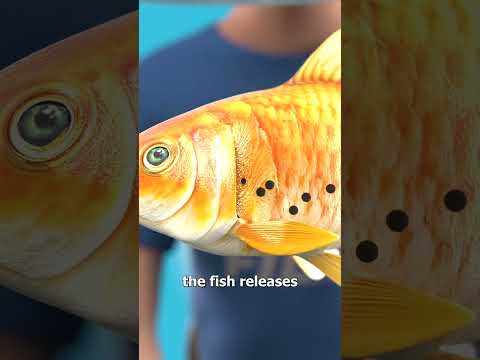
So there I was, staring at my friend’s goldfish. You know, the little dude just swimming around like he owns the place. I couldn’t help but wonder, “What’s going on inside that tiny body?” I mean, it can’t be all about floating and munching on fish flakes, right?
Goldfish are kinda amazing when you actually think about it! They’ve got this whole world of biology buzzing beneath their shiny scales. Seriously, they’ve got some wild tricks up their fins that keep them zooming around in their bowls.
Ever seen a goldfish swim backward? Or wondered how they can gulp air like little underwater superheroes? It’s not just luck; it has to do with some cool anatomy!
Come with me as we dive into the ins and outs of this finned friend. Trust me; it’s way more interesting than just watching them float around!
Understanding Goldfish Anatomy: Key Body Parts and Their Functions in Aquatic Science
Goldfish are pretty fascinating little creatures, right? Just imagine watching them swim around in their tank, and it’s easy to forget that there’s a whole lot of cool science happening under the surface. They might seem simple, but goldfish anatomy is actually pretty complex! Let’s break down some key body parts and what they do, shall we?
1. Gills: These are like the fish’s lungs. Goldfish breathe underwater through gills, which filter oxygen from the water. When water flows over their gills, it exchanges oxygen for carbon dioxide. So next time you see your goldfish swimming around, it’s hard at work breathing!
2. Fins: Goldfish have several types of fins—pectoral fins, dorsal fin, caudal fin, and anal fin—that help them navigate through water. Each fin has a different role:
- The pectoral fins are used for steering.
- The dorsal fin helps maintain stability.
- The caudal fin, or tail fin, propels the fish forward.
- The anal fin assists with balance too.
So basically, these fins work together to keep goldfish swimming smoothly.
3. Swim Bladder: This is an air-filled sac that helps the goldfish control its buoyancy—kind of like a built-in life jacket! By adjusting the amount of gas in this bladder, they can float up or down in the water without using too much energy.
4. Eyes: Goldfish have very unique eyes that can see more colors than we can! Their eyes help them spot food and predators in their aquatic environment. Interestingly enough, they don’t have eyelids; instead, they have a protective membrane that covers their eyes when they sleep.
5. Mouth and Teeth: Now here’s where it gets interesting—goldfish don’t exactly chew their food like we do. They have small teeth located in their throats called pharyngeal teeth that help grind up food before it goes to their stomachs. So next time you feed your little buddy some flakes or pellets, just know they’re getting their munch on in a whole different way!
6. Skin and Scales: The skin of a goldfish not only gives them color but also helps protect them from infection as well as parasites! Their scales play a role too; think of them like armor plating—keeping your fish safe while allowing it to glide effortlessly through water.
Goldfish anatomy might not be something you think about all the time when enjoying them swimming around in the tank—but trust me; there is so much going on beneath those sparkling scales! Understanding how these little guys work not only makes you appreciate them more but also gives you an insight into aquatic life overall.
So next time you’re gazing into your aquarium or feeding those wonderful little creatures, remember all these fantastic parts working together to create such amazing underwater buddies!
Understanding Goldfish Bioload: Implications for Aquatic Ecosystems and Aquarium Management
So, let’s chat about goldfish and their bioload. You’re probably wondering what that even means, right? Well, bioload refers to the amount of waste—like poop, uneaten food, and other substances—that a fish produces in an aquarium. Goldfish are notorious for having a high bioload because they’re not just cute little swimmers; they can also be pretty messy.
Why should you care? It’s all about balance in your aquarium ecosystem. When you have goldfish, their bioload can really affect the water quality. Too much waste means more ammonia, which is toxic to fish. If you’ve ever seen a sick fish or lost one overnight without explanation, it could be tied to poor water quality from excess bioload.
Now, let’s break down a few key points about goldfish bioload:
- Goldfish produce a lot of waste: They’re not like tropical fish that are dainty eaters. Goldfish can eat a decent amount and expel waste accordingly.
- Water quality is key: High levels of ammonia can lead to stress and disease in your fish. Regular testing helps ensure levels stay safe.
- Filtration matters: A good filter is essential when keeping goldfish. It needs to be strong enough to handle the extra waste they produce.
- Aquarium size helps: The bigger the tank, the better! A larger volume of water dilutes toxins more effectively.
- Cycling your tank: Make sure to cycle your aquarium before adding any fish. This process helps build beneficial bacteria that will break down waste efficiently.
When I first set up my own goldfish tank years ago—and oh man was I excited—I didn’t think much about this whole bioload issue. I just wanted them to look cool swimming around! But soon enough, I found myself doing way too many water changes and stressing over the chemical levels because all that waste was piling up rampantly.
Anyway, here’s another thing: health considerations come into play as well. When goldfish are kept in an environment where their bioload isn’t managed properly, they can suffer from a range of issues like fin rot or swim bladder problems because their bodies simply couldn’t cope with all those toxins.
In short, managing goldfish bioload is crucial for keeping them healthy and ensuring your aquarium thrives as an ecosystem. You need to create that perfect balance—a little love goes a long way! So if you’re thinking about getting some of these lovely aquatic friends (or already have), just keep this stuff in mind as you create their underwater home!
Exploring the Goldfish Theory: Insights and Implications in Scientific Research
Alright, let’s jump into something that might sound a bit quirky at first—the Goldfish Theory. Now, you might be thinking, what’s that all about? Well, it actually ties into how we understand scientific research and even human behavior in some ways.
The Goldfish Theory suggests that the average attention span of a person today is as short as the infamous goldfish. Actually, studies have shown that goldfish can remember things for longer than we often think. But the comparison is used to highlight how distracted we’ve become, especially with all our tech buzzing around us.
Now, onto some insights and implications. When researchers look into this theory, they notice something pretty fascinating:
- Attention Span: Many studies suggest that our ability to focus has decreased over time. Remember when you could sit through a full movie without checking your phone? Yeah, me too.
- Cognitive Load: With so much information at our fingertips—news articles, social media posts—we’re constantly bombarded. It’s like trying to sip from a fire hose; not super easy!
- Research Challenges: Scientists face difficulties when trying to communicate complex ideas to the public. If people struggle to focus for long periods, getting them interested in intricate scientific topics becomes tricky.
This brings us back to how we can break down stuff like goldfish anatomy. You see, even though goldfish may not be the most glamorous sea creatures out there, they’ve got some cool features worth exploring!
Their anatomy, for instance—let’s talk about it! Goldfish have a unique structure designed for their aquatic life:
- Gills: These fish breathe by drawing water in through their mouths and pushing it out through gills on either side. It’s kind of like having built-in lungs—but underwater!
- Swim Bladder: This little balloon-like organ helps them maintain buoyancy. It lets them float and swim without using too much energy.
- Pectoral Fins: These fins are what help goldfish steer around and keep balance. They flap a bit like arms do when you’re swimming!
A few years ago, I was at an aquarium and watched a school of goldfish darting around in perfect harmony—it was mesmerizing! You’d think they were synchronized swimmers or something! That day made me realize just how cool these creatures are—even if their attention spans aren’t part of the debate.
If researchers can effectively convey simple messages about such topics while accounting for our “goldfish” attention spans, maybe we’ll be more engaged with science overall. And who knows? Teaching people about amazing little creatures could spark interest in broader biological concepts!
The takeaway? As we explore concepts like the Goldfish Theory alongside fish biology and function, it might just help bridge gaps between science and everyday understanding—keeping things interesting enough for more than just 8 seconds!
Goldfish, those little orange buddies swimming around in tanks, are way cooler than you might think. When I was a kid, I had a goldfish named Bubbles. I remember how mesmerized I was watching him dart around and do flips. Little did I know back then that there’s a whole world of biology behind those sparkling scales and big, curious eyes.
So, let’s get into it! Goldfish belong to the carp family, and they’ve got some interesting features. For starters, their bodies are streamlined—it’s like nature’s design for efficient swimming. Imagine trying to race your friend in the pool with floaties on; not ideal, right? Goldfish don’t have that problem; they’re built to glide through water seamlessly.
One of the things that stands out are their gills. They sit behind their eyes and help the fish breathe underwater. When goldfish swim, water flows over these gills where oxygen is extracted from it. It’s like they’ve got their own little air filter system going on! And speaking of systems, their stomachs work overtime since they eat pretty much anything—this can lead to them being quite the chunky swimmers if you’re not careful with portion sizes!
Now here’s something neat—goldfish also have this thing called a swim bladder. It helps them maintain buoyancy or float at different depths without using much energy at all. Picture yourself bobbing in the pool effortlessly while everyone else is kicking hard just to stay afloat!
Their eyes? Oh man, they’re something too! Goldfish have very keen eyesight and can see colors well—way better than us humans actually! They rely a lot on their vision to find food and dodge pesky predators.
But what really gets me is how they communicate with each other through body language; it’s like having a conversation without saying a word! Some will puff up or change color when they’re feeling frisky, kind of like when we blush or get excited.
Sometimes I think back to Bubbles as he swam around his little world—a tiny universe full of mystery under the water’s surface. Each flick of his fins had purpose; each bubble he created was part of his daily life cycle—from eating to avoiding stressors.
In essence, these vibrant creatures aren’t just pets—they’re intricate beings with fascinating anatomy and biology behind them. Next time you catch sight of a goldfish swimming by, take a moment to consider all the amazing things happening beneath that shiny exterior. Life really is more complex than it seems at first glance!