So, picture this: You’re out on the basketball court, feeling like a superstar. You take that perfect jump shot, and bam! You land awkwardly. Your knee goes “ouch!” and suddenly you’re not sure if you’ll ever walk straight again. Been there? Yeah, me too.
Knees are these incredible little machines we often take for granted until they throw a tantrum. Seriously! They’ve got this whole support system—ligaments and all—that keeps us moving smoothly. But what’s the deal with these ligaments anyway?
You might think of them as those unsung heroes of the joint world, but they play a massive role in keeping you upright and active. Let’s get into the nitty-gritty of knee ligament anatomy together! Buckle up for a fun ride through your body’s own secret structure!
Understanding Knee Joint Ligaments: Structure, Function, and Implications in Orthopedic Science
The knee is one of those joints we often take for granted. But, like a delicate puzzle, it relies on several key components to function properly. Let’s talk about knee joint ligaments, which are essential for stability and movement.
Knee Ligaments Overview
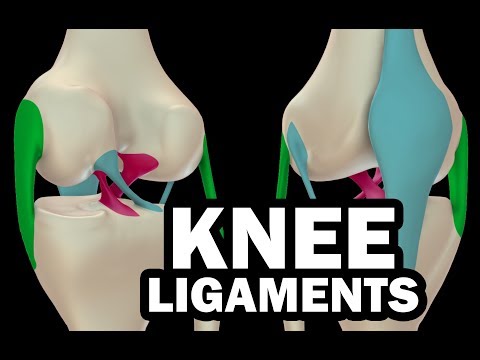
The knee has four main ligaments that help hold it together and keep everything in place: the anterior cruciate ligament (ACL), the posterior cruciate ligament (PCL), the medial collateral ligament (MCL), and the lateral collateral ligament (LCL). These ligaments are made up of strong, fibrous tissues that connect bone to bone. Imagine them as tight ropes that provide support and prevent injuries while you run or jump.
Function of Knee Ligaments
You might wonder why these ligaments are so crucial. Well, each one plays a unique role:
- ACL: This ligament is mainly responsible for preventing the tibia (the shin bone) from sliding too far forward relative to the femur (the thigh bone). It’s super important during activities like cutting or pivoting.
- PCL: The PCL does the opposite of the ACL; it prevents the tibia from sliding backward. So when you’re moving around, this ligament ensures your knee stays stable.
- MCL: Located on the inner side of your knee, this one helps control sideways motion. Think about how you might twist your leg while playing soccer—thank your MCL for keeping things secure!
- LCL: The LCL runs along the outer side and also controls sideways motion but in a different direction than the MCL. It keeps your knee aligned during all those playful maneuvers.
These ligaments work together like a well-oiled machine to provide stability and allow us to move our legs freely.
An Emotional Anecdote
I remember watching my friend twist her knee during a weekend basketball game. It was intense! She fell awkwardly while trying to make a fast break. Luckily, she just sprained her MCL instead of tearing it completely, but seeing her in pain was tough. Later on, she learned how vital those little bands of tissue were in helping her get back on her feet—literally! It’s amazing how something we hardly think about can make such a huge difference in our lives.
Injuries and Their Implications
Knee injuries often happen when there’s too much stress on these ligaments. For instance, an ACL tear is relatively common among athletes who rely heavily on sudden stops or directional changes during their sports activities.
When these ligaments get injured, recovery can be slow and frustrating. Depending on how severe an injury is—like sprains versus tears—you may need physical therapy or even surgery. Understanding this helps emphasize why taking care of our knees is so important!
So, next time you’re running around or playing sports, remember all that hard work going on behind those movements. Your knees are doing their best thanks to their powerful ligaments!
Comprehensive Exploration of Knee Ligament Anatomy: Insights into Joint Structure and Treatment Approaches
The knee joint, wow, it’s like a complex puzzle made of bones, ligaments, and cartilage working together. When we talk about the anatomy of knee ligaments, we’re stepping into a world that’s essential for movement and stability. You could think of these ligaments as the strong ropes that hold everything in place. Let’s break it down!
Key Ligaments in the Knee
The knee has four main ligaments that are super important for its function:
- Anterior Cruciate Ligament (ACL): This is probably the most talked-about ligament because it often gets injured during sports. It runs diagonally through the middle of the knee and helps control movement between the thigh bone and shin bone.
- Posterior Cruciate Ligament (PCL): Located right behind the ACL, this one’s crucial too. It keeps your shin bone from sliding too far back under your thigh bone.
- Medial Collateral Ligament (MCL): This ligament is on the inner side of your knee. It prevents your knee from bending inward too much, kind of like a guardrail!
- Lateral Collateral Ligament (LCL): On the outer side of your knee, this ligament does pretty much what the MCL does, but for outward movement.
So picture this: You’re playing soccer, you make a sharp turn to dodge an opponent, and bam! If you feel a pop in your knee? That could be an ACL injury. Ouch!
The Role of Cartilage
Now let’s not forget about cartilage! It’s this smooth tissue that covers the ends of bones in joints—think of it as a cushion. In your knee, there’s also something called menisci: two crescent-shaped pieces made up of cartilage that help absorb shock when you walk or run.
When I was younger and my friends played basketball all weekend long, one time I twisted my knee awkwardly during a layup. That was my first real encounter with how vital those ligaments were! Thankfully it wasn’t serious—but seeing others get injured really taught me about why keeping those ligaments strong is key.
Treatment Approaches
When it comes to treating injuries around these important structures:
- Rest & Ice: A classic combo after any injury—rest helps reduce inflammation while ice tackles swelling.
- Physical Therapy: Rehab can help strengthen muscles around the knee to support those ligaments better.
- Surgical Options: Sometimes injuries are severe enough that surgery is needed to repair torn ligaments like an ACL tear. Doctors can reconstruct them using tendon grafts.
Healing takes time. I remember feeling frustrated waiting for my friend to recover from an LCL injury—she couldn’t join us on hikes for months! But we learned how vital patience is in recovery.
In essence, understanding knee ligament anatomy isn’t just about knowing fancy terms; it’s about appreciating how our bodies move and function every day. Give some thought to those little cords each time you take a step or kick a ball—your knees are doing some serious work!
Understanding the 11 Ligaments of the Knee Joint: Anatomy and Function in Human Science
So, you’ve probably heard people talk about knee injuries, especially athletes. But have you ever thought about what keeps our knees stable? It’s all about the ligaments. There are 11 key ligaments in the knee joint, and they play vital roles in how we move around. Let’s break them down.
First off, ligaments are like strong ropes that connect bones to other bones. In the case of your knee, they help maintain its stability while allowing movement like bending and straightening. Without these little guys doing their job, even simple activities—like walking or going up stairs—would be tricky.
Let’s get into the specifics:
- Anterior Cruciate Ligament (ACL): This one is super important for stability during activities that involve sudden movements, like stopping or changing direction quickly.
- Posterior Cruciate Ligament (PCL): Think of this as the ACL’s partner. It helps keep your shinbone from sliding too far back.
- Medial Collateral Ligament (MCL): Located on the inner part of your knee, this ligament helps resist forces coming from the outside that could push your knee inward.
- Lateral Collateral Ligament (LCL): On the opposite side from the MCL, it does a similar job but for forces coming from inside pushing outward.
These four are called the cruciate and collateral ligaments, and they form a big part of what gives your knee its shape and function.
But wait! There’s more:
- Patellar Ligament: This one connects your kneecap to your shinbone. It’s crucial for extending your leg.
- Quadriceps Tendon: This connects muscles above your knee to the patella. It’s all about helping you straighten out those legs!
- Menisci: While technically not ligaments but cartilaginous structures, there are two: medial and lateral menisci which act as shock absorbers in between the femur (thigh bone) and tibia (shin bone).
Now here’s a fun little anecdote: my friend once sprained his ACL playing basketball. He swears he heard a pop and felt it buckle underneath him! The recovery took ages—three months of physical therapy later, he was finally back on his feet thanks to some hard work rebuilding muscle strength around those crucial ligaments.
Anyway, let’s not forget about those smaller supporting ligaments which also play their part:
- Meniscal Ligaments: Connects each meniscus to surrounding structures.
- Tibial Collateral Ligament: Helps provide additional support to MCL.
- Anteromedial ligament: Sort of an extension of other ligaments that assist with some rotational movements.
So yeah, when we move our knees around during daily activities or sports, all these ligaments are working together like a well-oiled machine to ensure everything functions smoothly. Each ligament has its role—the absence of any would impact our mobility.
In summary, understanding these 11 ligaments helps highlight just how complex our bodies really are! They’re crucial players when it comes to keeping us active and injury-free while we go through life. If one gets injured? Well, let’s just say we’ve got a lot going on under those surfaces trying to keep us upright!
Knee ligaments are, like, pretty fascinating when you stop and think about them. They’re these tough bands of tissue that connect bones in your knee and help it move smoothly. If you’ve ever twisted your knee or felt pain after a game of basketball, then you know how crucial these bad boys are.
So, let’s break it down a bit. The knee has four main ligaments: the anterior cruciate ligament (ACL), the posterior cruciate ligament (PCL), the medial collateral ligament (MCL), and the lateral collateral ligament (LCL). Each one has its own role in keeping the joint stable and allowing it to function properly. The ACL, for instance, is super important for movements like jumping and quickly changing direction. When I think back to my high school soccer days, I remember watching a teammate tear her ACL during practice. It was gut-wrenching—not just because she was a fantastic player but also because I realized how fragile our bodies can be.
The MCL runs along the inner part of your knee and helps prevent sideways bending. In contrast, that LCL runs on the outer side, providing stability there. It’s incredible how these ligaments work together to allow us to squat down low or sprint across a field without falling apart.
But here’s something more emotional: not long ago, my uncle had knee surgery because he messed up his MCL while mountain biking. He used to be so active—hiking every weekend and running trails like nobody’s business. Watching him go through rehab was tough; he’d get frustrated not being able to do things he loved due to this delicate dance between bone and tissue.
So yeah, these ligaments might not be something we think about daily but they play an essential role in our lives! They keep us moving and grooving, even if they sometimes get injured along the way. It makes you appreciate how well our bodies are designed—until they aren’t!