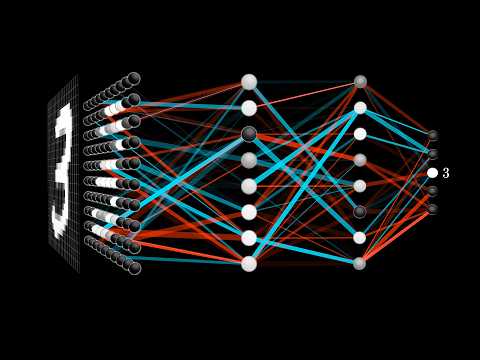
You know that moment when you accidentally send a text to the wrong person? Total cringe, right? Well, imagine if AI had those kinds of oops moments. That’s where Google’s neural networks step in—seriously smart tech that’s learning faster than most of us can keep up with!
I mean, think about it. Neural networks are like the brainy sidekicks of AI, processing information and making decisions almost like a human would. And Google? They’re pushing the envelope on what these networks can do every single day.
From predicting what you want to watch next on Netflix to helping with medical diagnoses, their applications are everywhere. So grab your popcorn and let’s chat about how these advancements are changing our world. It’s way cooler than you might think!
Exploring Recent Advancements in Neural Networks: Impacts on Science and Technology
Neural networks have taken the tech world by storm, right? You might have heard of them buzzing in conversations about AI, and honestly, they are pretty cool. These systems are inspired by the human brain and are making significant waves across various fields, from healthcare to entertainment.
What exactly are neural networks? Imagine a web of interconnected neurons in your brain. That’s kinda how neural networks work too. They’re layers of nodes that process data, learn patterns, and make decisions based on what they’ve learned. These networks can analyze tons of information faster than you could imagine.
So, like, one of the biggest advancements recently has been in deep learning—a fancy term for using large neural networks with many layers. Deep learning allows these networks to tackle incredibly complex tasks like image recognition or language translation with amazing accuracy. But what does that mean for us? Well…
- Healthcare improvements: Neural networks are helping doctors diagnose diseases from medical images quicker and often more accurately than human eyes! For example, algorithms can spot early signs of cancer in X-rays that might be missed otherwise.
- Natural language processing: You know those chatbots that seem to get you? That’s thanks to advancements in neural networks! They process your words and even predict responses that make sense contextually. It’s cool when they can hold a conversation almost like a human.
- Autonomous vehicles: Neural networks play a key role here too! Self-driving cars use them to interpret sensor data—like identifying pedestrians or obstacles on the road—pretty essential stuff when it comes to safety.
There’s this one story about a friend of mine who was trying to find some obscure song lyrics online. He got frustrated with search engines until he stumbled upon an AI-powered platform using neural networks for music recognition. Just hummed the tune into his phone and boom! In seconds he had what he was looking for! Moments like these just show how fast technology is evolving.
But it’s not all smooth sailing; there are challenges too. Training these networks requires massive amounts of data and computing power—not exactly something every garage inventor has lying around. Plus, there’s the worry over how biases in training data can lead to unfair or inaccurate outputs. It’s kinda scary if you think about it!
Despite these hurdles, researchers and companies (like Google) keep pushing boundaries. Google’s advancements involve improving their models so they learn from fewer examples (which is super important). They’re also working on making these systems more interpretable so we can understand their decisions better.
In summary, neural networks are revolutionizing various aspects of science and technology today—changing how we interact with tech while also solving complex problems in ways we never thought possible before. And honestly? Who knows what tomorrow will bring? The only certainty is that this journey is just beginning!
Exploring the Latest Developments in Deep Learning: Innovations and Insights in Scientific Research
Sure! Let’s chat about deep learning and the cool stuff happening with Google’s neural networks.
Deep learning is a type of machine learning that’s like teaching computers to think a bit more like humans. You know, it’s all about patterns and data, and it gets super interesting. Google’s been doing some amazing things in this area recently.
1. Natural Language Processing: One of the big innovations is in how machines understand language. Google’s neural networks can now grasp context and nuances much better than before. Like, if you ask your voice assistant to play your “chill” playlist, it understands you mean something specific without needing a long explanation. This is thanks to **transformer models** that analyze words in relation to each other in a sentence, which makes conversations feel way more natural.
2. Image Recognition: Then there’s image recognition, which has taken huge leaps forward too! Google Photos uses this tech to identify people or objects in your photos automatically. Imagine taking a pic at the beach, and it instantly tags “beach,” “sun,” or even your friends based on past photos! These advancements help with organizing and searching through millions of images quickly.
3. Healthcare Applications: It gets even more fascinating when we look at healthcare. Google is using deep learning to assist in diagnosing diseases from medical images. For instance, their systems can analyze X-rays or MRIs with impressive accuracy—sometimes even better than human doctors! This means quicker diagnosis for patients and less room for error.
4. Creativity in Art: Lastly, let’s touch on creativity! Yeah, seriously! Neural networks are not just crunching numbers; they’re also creating art! Google has worked on projects where AI generates music or artwork based on certain styles or prompts you give it. Think of an artist getting inspiration from mountains while an AI creates visuals based on that vibe.
So anyway, as you see, deep learning isn’t just some geeky tech jargon; it’s reshaping the world around us every day! It’s like those sci-fi movies where computers actually help humans out—just in real-time now!
And who knows what’s next? With constant innovation at places like Google, it’s exciting to think about how these advances can change our lives for the better!
Exploring Three Key Applications of Neural Networks in Scientific Research
Sure, let’s chat about neural networks and how they’re shaking things up in scientific research. You know, neural networks are like these super-smart systems that mimic how our brains work. They can learn from data, which makes them incredibly useful in various fields. Let’s explore three standout applications of these techy wonders.
1. Image Recognition and Analysis
Neural networks are amazing at recognizing images. Seriously, they can analyze thousands of pictures in a flash! This is especially useful in fields like medicine. For instance, doctors use neural networks to look at medical scans, like MRIs or X-rays. The system helps spot tumors or anomalies that might be missed by the naked eye. And I remember a story where a scientist fed a dataset of skin lesions to a neural network; it ended up identifying skin cancer with accuracy levels on par with top dermatologists. That’s pretty impressive if you ask me!
2. Predictive Modeling
Another area where these networks shine is in predictive modeling. Think about weather forecasts—they’re like trying to predict the future based on past patterns. Neural networks can take massive amounts of data from different sources, analyze them, and then make predictions about future events or outcomes. For example, researchers studying climate change use these models to predict how global temperatures might rise over the next few decades based on current emissions trends and other factors. It’s like having a crystal ball but way cooler!
3. Natural Language Processing
Now, let’s talk language! Neural networks are also fantastic at understanding and processing human language—a field called natural language processing (NLP). This means they can help computers understand what we say or write and even generate human-like text responses! Scientists utilize NLP for various tasks, such as analyzing scientific literature or extracting information from large databases quickly. Picture this: you’re researching an old paper buried under thousands of documents, but with NLP systems? They sift through it all super fast and find the info you need without breaking a sweat!
In short, these nifty neural networks are revolutionizing scientific research across multiple domains—whether it’s helping diagnose diseases through image analysis, predicting climate changes for a better future, or making sense of our complex languages with ease! And honestly? The potential is just beginning to unfold; who knows what else we’ll discover down the line?
Okay, so let’s chat about Google’s neural networks for a sec. You know, those layers of artificial neurons that mimic the way our brains work? It’s wild how far we’ve come with these. I still remember when I first heard about AI doing things like recognizing faces or chatting with people. Back then, it felt like something straight outta a sci-fi movie!
Now, Google’s neural networks are everywhere. Seriously, they’re not just limited to fancy tech stuff anymore. They help with everyday things like improving search results on Google or translating languages in real-time. I mean, imagine being in a foreign country and having your phone translate conversations as you go along—like having a personal translator in your pocket! That’s spooky awesomely cool!
But it isn’t just about convenience; it’s also making big waves in fields like healthcare. Take medical imaging, for example. These networks can analyze X-rays and MRIs faster than doctors sometimes can—spotting things that might slip through the cracks otherwise. Just thinking about how many lives this can save gives me chills.
Of course, there are challenges too. With great power comes…you know the saying. As amazing as these advancements are, there are always worries about privacy and bias creeping into algorithms. We gotta be careful to ensure that technology enhances our lives without stepping on toes.
One time, I was chatting with a buddy who works in tech about how neural networks learn from massive datasets—feeding off tons of information to get better at their tasks over time. It blew my mind! He likened it to how we learn from experiences but way faster and on a much bigger scale.
In any case, what I’m saying is that advancements in these neural networks have opened up doors we didn’t even know existed yet. And while it’s easy to geek out over all this shiny new tech, it also reminds me that we need to keep being thoughtful about where we’re heading with it all!