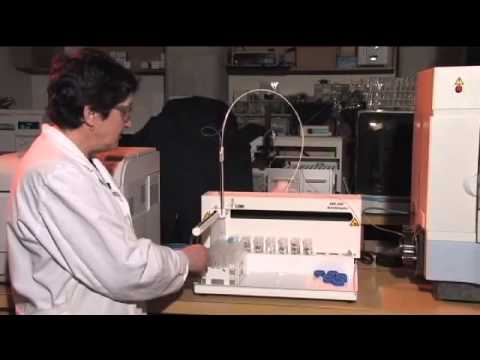
You know what’s cooler than fireworks? Plasma. Seriously! That glowing stuff in the universe is like the rockstar of matter. It’s not just out there in stars; it’s also hanging out right here on Earth, doing some amazing things.
So, imagine you’re at a science fair and someone shows you a demo with colorful lights shooting out of a machine. Pretty rad, right? That’s kind of what we’re talking about with Inductively Coupled Plasma (ICP) techniques. They use plasma to analyze materials in such a precise way it’s almost like having superhero vision.
But before you roll your eyes and think this is all just techy mumbo jumbo, hang tight! The advances in ICP techniques are shaking things up in fields from environmental monitoring to space exploration. Who knew that little glow could help us understand everything from pollution levels to the makeup of distant planets?
I mean, if nerdy can be cool, this is it! So let’s take a closer look at how these innovations are lighting up our understanding of the world around us.
Exploring ICP AES Applications in Scientific Research: Enhancing Analytical Precision and Elemental Detection
So, let’s chat about ICP AES, or Inductively Coupled Plasma Atomic Emission Spectroscopy. This technique is like a superhero in the science world, especially when it comes to analyzing elements in different samples. How does it do that? Well, it uses a super hot plasma to break things down and measure what’s inside.
First off, the way ICP AES works is pretty cool. It generates a plasma using an argon gas flow. You know, plasma is like that flashy stuff you see in neon signs? Anyway, once you introduce your sample—like soil or water—into this hot state of matter, the elements get excited and emit light at specific wavelengths. Each element has its own unique “fingerprint” of light. By measuring this light intensity, scientists can determine how much of each element is present.
- Precision: ICP AES offers amazing precision. It can detect concentrations as low as parts per billion! Imagine being able to find just a tiny speck of something in a big pile of stuff—that’s what this tech does.
- Versatility: This method isn’t just for one type of sample; it can analyze liquids, solids, and even gases! Whether you’re dealing with environmental samples, metals, or biological materials, ICP AES brings its A-game.
- Speed: Time is money in research labs! ICP AES techniques allow for rapid analysis. You can run multiple samples in just a few hours—pretty handy for busy scientists.
- Multi-element Analysis: Instead of testing for one element at a time like some other methods do, ICP AES can measure several elements simultaneously! This saves tons of time and effort.
You might be wondering how all this fits into scientific research? Well, take environmental science as an example. Say there’s pollution from factories and you want to check water quality nearby. Using ICP AES helps scientists quickly identify heavy metals or toxins that could harm ecosystems and public health.
I still remember the first time I saw an ICP setup in action during my college days. The moment they started feeding samples into the plasma chamber—it was like watching fireworks but on another level! The colors emitted were vibrant; each flash told a story about what was present in the sample.
Now think about geology; researchers need to understand rock formations better to find precious resources like gold or copper. Through ICP AES technologies, they can analyze rock samples to see which ones are likely to contain these valuable minerals without spending ages on the analysis.
If we zoom out even more—metallurgy relies heavily on this technique too! When creating new alloys or materials, knowing exactly what elements are mixed together allows industries to fine-tune properties like strength and flexibility. That’s pretty important stuff!
The bottom line here is that ICP AES techniques are revolutionizing how scientists conduct their research by offering enhanced analytical precision and reliable elemental detection across various fields. It’s like giving them high-tech glasses through which they can truly see the composition of materials clearly—that changes everything!
If you think about it creatively for a moment: it’s not just about numbers or data; it’s about making informed decisions that impact health standards or protect our planet’s resources. And really? That’s what science is all about!
Understanding the Principles of Inductively Coupled Plasma Optical Emission Spectroscopy (ICP-OES) in Analytical Science
Sure! Let’s break down the nitty-gritty of Inductively Coupled Plasma Optical Emission Spectroscopy, or ICP-OES for short. It’s a mouthful, but don’t worry, we’ll keep it straightforward.
So first off, what is ICP-OES? Basically, it’s a technique used in analytical chemistry to identify and quantify elements in various samples. Imagine you had a mystery box filled with different colored candies. ICP-OES helps you figure out exactly what candies are inside and how many of each there are.
How does it work? Well, the process begins with the sample being introduced into a high-temperature plasma, which is a hot gas made up of charged particles. This plasma is created by passing an inert gas like argon through an electromagnetic field. When your sample gets into this super-hot environment, it gets excited and emits light.
And here’s where the magic happens: each element emits light at specific wavelengths when excited. It’s like each candy has its own unique glow! By measuring this light using a spectrometer, scientists can determine what elements are in the sample and their concentrations.
Now let’s break down some key parts:
- Sample Introduction: The sample is often introduced as an aerosol mist via a nebulizer. Think of it as spray painting but with tiny droplets instead!
- Plasma Generation: The plasma can reach temperatures around 10,000 K! That’s about four times hotter than the surface of the sun. Seriously!
- Emission Spectra: Each element’s emitted light spectrum acts like its fingerprint—unique and identifiable.
- Detection: A detector captures this emitted light and compares it to known wavelengths to determine what’s present.
You might be wondering about its applications. Well, ICP-OES is super versatile! It’s used for everything from analyzing environmental samples (like soil or water) to checking metals in food products or even testing for contaminants in pharmaceuticals.
A little personal side note—once I was working on a project where we tested soil samples from different parks to understand pollution levels. Watching the results come through felt like unveiling secrets hidden beneath the surface!
On that note, let’s chat about innovation here. Advances in technology are making these devices more sensitive, faster, and capable of handling complex matrices without losing accuracy. For instance, newer models might even integrate AI for better analysis of data patterns—taking us to places we haven’t been before!
So there you have it—the lowdown on ICP-OES! It’s all about understanding what’s inside our samples using some pretty cool physics and chemistry vibes while embracing modern tech advancements too! Crazy how science can illuminate stuff literally and figuratively, right?
Transforming Trace Element Analysis: A Comprehensive Review of ICP-OES Applications Worldwide
Alright, let’s chat about something called Inductively Coupled Plasma Optical Emission Spectroscopy, or ICP-OES for short. You might be wondering what all that jargon means and why it’s important, right? Well, this technique is like a superhero for analyzing trace elements in various materials. It’s a complex process, but I’ll break it down for you.
ICP-OES works by using a plasma—a really hot gas made up of charged particles—to excite atoms in a sample. Once those atoms get excited, they emit light at specific wavelengths. By measuring that light with a spectrometer, we can figure out which elements are present and in what quantities. Pretty cool, huh?
This technique has some fascinating applications around the globe. Let’s look at a few:
- Agriculture: Farmers can analyze soil and fertilizers to make sure their crops are getting the right nutrients. It helps them avoid over or under-fertilizing.
- Environmental Monitoring: Scientists check levels of heavy metals in water samples from rivers or lakes to see if they’re safe for fish and humans alike.
- Forensic Science: You know those crime shows? They use ICP-OES to analyze evidence like gunshot residue to help solve cases.
- Food Safety: It’s used to check for harmful contaminants like lead or arsenic in food products. No one wants that on their plate!
The beauty of ICP-OES is its sensitivity and speed. It can detect elements at incredibly low concentrations—think parts per billion! Plus, it can handle multiple samples quickly, which is crucial when you’re dealing with large datasets.
I remember attending a science fair once where students showcased projects using different techniques for element analysis. One group used ICP-OES on soil samples from various parks to see how contamination levels varied across locations. Their findings were eye-opening and showed how easily pollutants could affect our green spaces!
Certainly, there’s always room for innovation in this field too! Recently, researchers have been working on improving detection limits even further and reducing interference from other elements during analysis—kind of like fine-tuning an instrument so it hits just the right note.
You see? The world of trace element analysis through ICP-OES is full of fascinating applications that touch our lives directly or indirectly! And as technology improves, who knows what else we’ll discover?
Inductively Coupled Plasma Emission Techniques, or ICP for short, is one of those things that seems pretty technical at first glance. And honestly, I get it if you’re thinking, “What’s so interesting about plasma?” But hey, let me take you on a little journey into this fascinating corner of science.
So imagine this: you’re sitting in a lab, maybe it’s late evening and the fluorescent lights are humming softly. You’ve got samples from a recent soil test in front of you. You want to see what elements are hanging out in there—like metals or minerals—because they can tell you a lot about the environment. Now, instead of just peeking at them with a basic microscope or some old-school chemistry techniques, you pull out the ICP machine. And that’s where the magic starts.
Basically, ICP works by creating a really hot plasma cloud—a bit like a mini star—using radio waves and argon gas. This plasma zaps your sample and sends out light signals that tell us all kinds of stuff about what’s inside those tiny particles. It’s like using colors to decode what elements are chilling there! Different elements emit different colors when they get excited by the energy from the plasma, which makes it super cool for identification.
I remember talking to a friend who works with these kinds of technologies. He was explaining how they can use ICP to monitor pollution levels in rivers and lakes. Just picture those vibrant hues coming from contaminated water samples; each shade revealing secrets about human impact on nature! It hit me then how this technique isn’t just some sterile lab thing but something vital with real consequences for our planet.
And there’s more! Innovations keep rolling in—not only making these machines faster and more sensitive but also allowing us to analyze larger ranges of elements at once. This helps scientists work on everything from diagnosing health issues by looking at trace metals in blood to understanding ancient artifacts through material composition analysis.
So yeah, while at first blush it might seem like just another fancy lab tool, inductively coupled plasma emission techniques have this incredible ripple effect on both science and society. They connect dots between chemistry, environmental concerns, archaeology—even health care—making them not just tools but critical pieces in solving bigger puzzles we face today. It’s wild how much deeper we can go into our world thanks to such innovations!