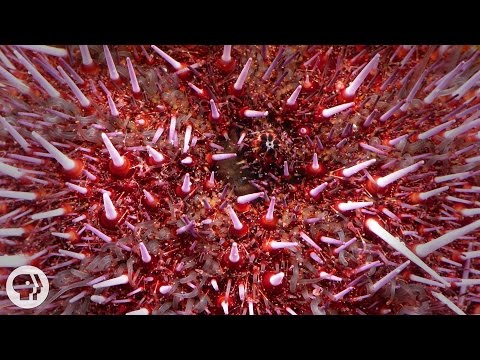
You know, I’ve always thought sea urchins looked like nature’s little punk rockers. Seriously, those spiky guys are just chilling on the ocean floor, sporting their crazy hairstyles! But if you think they’re just a bunch of prickly balls, hold on tight.
Their internal anatomy is super fascinating! It’s like a hidden world in there. You’d be surprised at how these quirky creatures thrive in some wild environments.
So, let’s take a peek inside and see what makes sea urchins so unique. Trust me; you’ll never look at them the same way again!
Exploring the Unique Biological Features of Sea Urchins: Insights from Marine Science
You know, sea urchins might look like just spiky little balls on the ocean floor, but they’re actually packing some serious biological features that are pretty amazing. These critters belong to the echinoderm family, which also includes starfish and sand dollars. So let’s explore their internal anatomy and what makes them so unique!
First off, sea urchins have a tough outer shell called a test. This test is made up of calcium carbonate plates, kinda like armor. Inside, things get interesting! If you peek inside, you’ll find a complex system of organs and structures.
One major feature is their water vascular system. Sounds fancy, right? Well, this system helps them move and feed. Basically, it uses water pressure to drive tube feet—tiny suction cup-like appendages that help them crawl along or grab food. Isn’t it wild how they move? Imagine a tiny vacuum cleaner traveling across the seafloor!
Then there’s their digestive system. Sea urchins have a mouth located on the underside of their body. It’s equipped with an incredible structure called an Aristotle’s lantern. This is basically their version of a dental toolset, made up of five teeth-like structures that they use to scrape algae off rocks or munch on other goodies. It’s like having built-in tools for dinner!
Now let’s talk about the spines. You probably know about those fierce-looking spikes on their surface! They’re not just for show; each spine is attached to muscles and can help defend against predators. But here’s something neat: these spines are also part of the sea urchin’s buoyancy control mechanism.
And speaking of defense, did you know that some species can even release toxins? Yep! Some sea urchins have special cells called nematocysts, which can inject venom into predators or threats. Makes you think twice before touching one!
So how do they reproduce? Sea urchins are pretty fascinating here too. They usually release eggs and sperm into the water during spawning season—a process known as external fertilization—where it all happens in open water instead of in a cozy nest.
Their sensory capabilities are nothing to sneeze at either! They might not have traditional eyes, but they do possess light-sensitive cells all over their body that help them detect changes in light and shadow. This ability lets them sense potential dangers nearby.
All in all, exploring sea urchins is like opening up an entire world beneath our feet—filled with intricacies and adaptations that make them uniquely suited for life in the ocean. Who knew these little spiky guys were hiding such cool secrets inside? A little reminder that nature always has surprises waiting for us!
Exploring the Internal Anatomy of Sea Urchins: Insights into Echinoderm Biology
So, you know those spiky little creatures you see on the beach sometimes? Yeah, sea urchins! They might look pretty simple at first glance, but their **internal anatomy** is actually quite fascinating. Let’s dig into what makes these echinoderms tick.
First off, let’s talk about their **body structure**. Sea urchins have a hard, round shell made of calcium carbonate known as a **test**. It’s like their own personal fortress. Inside this test is where all the action happens. Their internal anatomy has some really cool features that help them survive in their ocean homes.
One major part of their anatomy is called the **water vascular system**. This system plays a crucial role in how they move and eat! It’s like a hydraulic system that uses water pressure to operate tiny tube feet. These feet stick out of holes in the test and allow sea urchins to crawl along the ocean floor or cling to rocks during rough waves.
In addition to movement, this water vascular system also aids in feeding. Sea urchins are grazers—they munch on algae and other organic material they find. Their mouth is located on the underside of their body and has an incredible structure known as Aristotle’s lantern. This isn’t some fancy Greek philosopher thing; it’s actually a complex arrangement of teeth that allows them to scrape food off surfaces—pretty clever, right?
Now, let’s not forget about **gonads**, which are super important for reproduction. Sea urchins have multiple gonads located within their bodies— typically five pairs—for producing eggs or sperm depending on their gender (yes, they can be male or female). During spawning season, they release these gametes into the water for external fertilization.
Another interesting feature to highlight is their **ring canal**, which connects to various radial canals extending from the center out toward each arm (or “radius”). This network helps distribute water throughout the entire body and plays a key part in both movement and feeding.
And here’s something cool: unlike many other animals, sea urchins don’t have distinct heads or brains like we do! Instead, they have a nervous system that resembles a nerve net—pretty simple yet effective for coordinating those tube feet and sensory functions.
So there you have it! When you look at a sea urchin next time you’re at the beach—or even just flipping through some marine biology books—you can appreciate these unique features beneath those spiky exteriors. It’s like opening up a book when you peel back that tough armor; there’s so much more than meets the eye!
Exploring the Unique Features of Echinoidea: Insights into Sea Urchin Biology and Ecology
Oh, sea urchins! These little guys might look like just spiky balls of trouble, but they’ve got some seriously cool stuff going on inside them. So let’s take a closer look at their biology and ecology. You know, it’s amazing how much we can learn just by paying attention to these creatures!
First off, sea urchins belong to the class Echinoidea. They’re part of the phylum Echinodermata, which means they’re related to starfish and sand dollars. That’s right! They’re all part of this fascinating family of marine animals.
Now, let’s get into their anatomy. Sea urchins have a hard shell called an exoskeleton, made up of interlocking plates that form a protective case around their body. This shell isn’t just for looks; it’s essential for defense against predators like fish and sea otters. And those sharp spines? Well, they add another layer of protection.
Inside that tough shell is where things get even more interesting. Sea urchins have a unique feeding structure called the Aristotle’s lantern, which is basically a complex jaw system used for scraping algae off rocks. It’s like nature’s version of a Swiss Army knife! This jaw structure is pretty cool because it helps them survive in environments where food can be scarce.
But wait, there’s more—let’s talk about their digestive system! Sea urchins have a complete gut that allows them to process food efficiently. The food they eat gets broken down in their stomach before the waste moves through an intestine and exits through what’s called an anus. Yep, even sea urchins have to deal with waste management!
Now, let’s jump into ecology for a minute. Sea urchins play an important role in their habitats, especially in kelp forests. By munching on algae, they help maintain the balance between kelp growth and algae overgrowth. If too many sea urchins are around—like during population booms—they can actually decimate kelp forests, leading to less habitat for other marine creatures.
And here’s something you might find interesting: when sea urchin populations get out of control due to overfishing of their natural predators (like sea otters), it can lead to what scientists call “urchin barrens.” These are areas where lush underwater gardens turn into lifeless patches dominated by bare rock instead. So yeah, they’ve got quite the impact on marine ecosystems!
Speaking of reproduction—sea urchins are pretty unique here too! Most species reproduce through external fertilization; they release eggs and sperm into the water at the same time during spawning events. This creates clouds of gametes that float around until fertilization happens—pretty romantic in its own way!
In terms of movement, you probably won’t see them racing around anytime soon. They mainly crawl using little tube feet powered by hydraulic pressure from their water vascular system—a kind-of internal plumping system made from seawater! This is how echinoderms move around without muscles like we do.
So there you have it—a peek into the quirky world of sea urchin biology and ecology! Who knew these spiny little guys played such important roles under the waves? Next time you see one at the beach or in an aquarium, you’ll have some cool facts to share about what lies beneath those spikes!
So, let’s talk about sea urchins for a second. You know those spiky little dudes you sometimes find on the beach? They’re more than just something to poke at with a stick. They’ve got this fascinating internal anatomy that’s, like, surprisingly intricate for such a simple-looking creature.
First off, these guys are echinoderms. That’s a fancy word meaning they’re related to stars and cucumbers of the sea. They have this hard shell called a test that protects their insides. Imagine it like an armored car! But what’s really cool is what’s happening inside.
Their digestive system is pretty unique. Sea urchins have this thing called Aristotle’s lantern, which sounds all mystical but is actually just their mouth and teeth combined into a sort of jaw structure. It’s pretty wild because it helps them graze on algae and stuff—basically turning them into nature’s lawnmowers. I remember when I was at the beach once, I flipped one over and saw its mouth grinding away at the rocks; I was totally amazed!
Then there’s their water vascular system, which is how they move around and eat. It uses water pressure to extend tiny feet called tube feet—like tiny little suction cups! This system lets them cling to rocks and even walk slowly across the ocean floor. Ever seen one try to escape? It’s like watching someone trying to run in slow motion!
And let me tell you about their reproductive system—it gets even crazier! Sea urchins release eggs and sperm into the water during spawning season, letting nature do its thing. It’s kind of like throwing confetti at a party! But not all babies survive; it’s all part of that ocean life cycle.
The uniqueness of sea urchins doesn’t really stop there either; their spines aren’t just for show; they can also help protect them from predators and help them camouflage within their surroundings.
In short, these little creatures pack quite a punch in terms of anatomy—even if they look kinda unassuming at first glance! Next time you’re by the shore, maybe ponder what those spiky balls are doing under all those layers. So much more happens under the surface than we usually realize!