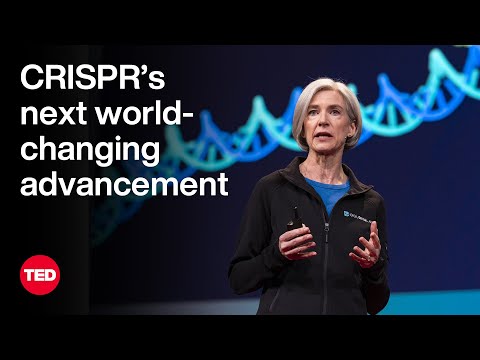
Did you know that Jennifer Doudna once imagined using CRISPR to chop up DNA like a pair of scissors? Seriously, that’s how it all started!
She and her team are not just messing around in the lab. They’re pushing boundaries and changing the future of genetics. It’s like they’ve opened a treasure chest that can help tackle diseases, improve crops, and so much more.
But the magic doesn’t stop there. Doudna’s lab isn’t just about science; it’s really into sharing knowledge too. They want everyone to get in on this exciting genetic revolution.
So grab a snack, get comfy, and let’s explore what goes on behind those lab doors!
Exploring Jennifer Doudna’s Groundbreaking Discovery in CRISPR Technology
Jennifer Doudna has made a splash in the world of genetics with her work on CRISPR technology. You might be wondering, what the heck is CRISPR? Well, it stands for “Clustered Regularly Interspaced Short Palindromic Repeats.” Sounds fancy, right? But at its core, it’s a tool that allows scientists to modify DNA with incredible precision. Imagine having a pair of scissors that can cut and paste genes. That’s basically what CRISPR does!
Back in 2012, Doudna teamed up with Emmanuelle Charpentier to unlock the potential of this technology. They figured out how to use a bacterial defense system against viruses to edit genes. It was like discovering a secret weapon for genetic engineering! Since then, their breakthrough has revolutionized how we think about genetics.
So, how does it work? Here’s a quick breakdown:
- Guide RNA: This is like GPS for CRISPR. It directs the Cas9 enzyme (the “scissors”) to the exact spot in the DNA you want to edit.
- Cas9 Enzyme: It cuts the DNA at a specific location, creating a break in the double helix.
- DNA Repair: Once that break is made, the cell tries to fix it. This is where you can introduce new genetic material or delete existing parts.
Imagine a time when I was working on a school science project and trying to make my plant grow taller using simple methods like water and sunlight. Now, think about how much more effective I could’ve been if I had access to CRISPR! Scientists could potentially cure genetic diseases or even enhance crop resilience against climate change. Wild stuff!
Doudna’s lab continues to explore ways we can harness this technology responsibly. It’s not just about editing genes; it’s also about understanding the ethical considerations involved. After all, playing with genes is serious business! Researchers are always discussing boundaries and safety measures so they don’t cross any lines.
Lastly, one of the most powerful aspects of Doudna’s work isn’t just in laboratories—it’s also about outreach and education. She strongly believes that everyone should understand these scientific advancements because they affect all of us. It’s crucial that we have conversations around genetic editing as we step into this brave new world.
In essence, Jennifer Doudna’s groundbreaking discovery with CRISPR isn’t just an achievement; it’s paving the way for future innovations in science while making sure society stays informed and engaged along the journey! Isn’t science amazing?
The True Pioneers of CRISPR: Unveiling the Inventors Behind the Revolutionary Gene Editing Technology
So, you’ve probably heard of CRISPR, right? That cool gene-editing technology that’s changing everything from medicine to agriculture? Well, let’s dig a bit into the story behind it and chat about the true pioneers who made this game-changer possible.
To kick things off, CRISPR stands for “Clustered Regularly Interspaced Short Palindromic Repeats.” Quite a mouthful! Basically, it’s a natural defense mechanism that certain bacteria use to fight off viruses. Think of it as their version of an immune system. What really blows my mind is how scientists took this bacterial tool and adapted it for editing genes in other organisms.
Two incredibly important figures in this saga are Jennifer Doudna and Emmanuelle Charpentier. The thing is, they both recognized the potential of CRISPR around the same time but worked in different labs. Doudna was at UC Berkeley while Charpentier was doing her research in Europe. They were like two explorers on parallel paths!
In 2012, Doudna and Charpentier published a groundbreaking paper describing how CRISPR could be used as a tool for precise gene editing. Their work showed just how simple and effective this system could be for altering DNA sequences. Imagine being able to cut out harmful genes or even add new ones—like giving someone a superpower!
Not long after their discovery hit the spotlight, the scientific community was buzzing. But with great innovation comes great competition. Other researchers jumped in, trying to claim ownership over this revolutionary technology. It turned into quite a heated debate about patents—a bit like squabbling kids fighting over toys!
However, Doudna and Charpentier stood firm together. Their collaboration not only advanced science but also highlighted how teamwork can lead to amazing breakthroughs. They both received numerous awards recognizing their joint effort; one biggie was the Nobel Prize in Chemistry in 2020.
So what does all this mean for the future? Well, CRISPR has opened up possibilities that we never dreamed of before! It holds promise for curing genetic diseases and even fighting off climate change by helping us create more resilient crops. But it’s not just about science; there are ethical questions too. You know, like playing god with DNA—it gets people thinking deeply.
Lastly, think about all those bright young minds inspired by Doudna’s lab at UC Berkeley! They’re not just advancing genetic research; they’re also engaging with communities to make science accessible to everyone—making sure we all get to share in these discoveries.
In short: CRISPR is like opening a new chapter in biology’s storybook thanks to pioneers like Jennifer Doudna and Emmanuelle Charpentier who dared to think differently—and look where it got us! Science really does have its heroes!
Exploring Jennifer Doudna’s Lab Location: A Hub of Innovation in Biotechnology and CRISPR Research
Okay, so let’s talk about Jennifer Doudna and her lab, which is like this vibrant hub for innovation in biotechnology, especially when it comes to CRISPR. You know, CRISPR is the tool that everyone’s buzzing about in genetic research. It’s basically a way to edit DNA, making it possible to add, remove or change parts of the genetic code in organisms. Wild stuff!
Doudna’s lab is located at the University of California, Berkeley—this classic spot that’s been a breeding ground for science since forever. When you think about it, being in such a historic place just adds to the magic of what they do there. The campus itself feels alive with ideas and energy; you can feel innovation buzzing around every corner.
You might be wondering why her lab is considered so special. Well, it’s not just about where it is—it’s what happens inside those walls. The team there focuses on advancing our understanding of gene editing technologies. They push the boundaries of what we know about genetics and how we can manipulate it for good.
- Cutting-edge Research: The lab dives deep into CRISPR technology. They explore new ways to make gene editing safer and more precise.
- Outreach Programs: Doudna also believes in sharing knowledge—like actively engaging with students and communities about biotechnology.
- Collaboration: Innovation thrives on collaboration! Her team works with other scientists globally; this cross-pollination of ideas really amps up creativity.
A little personal story here—when I first learned about CRISPR during a college class, it blew my mind! I remember sitting there thinking how awesome it was that scientists could literally edit genes like they were correcting typos in a manuscript. That feeling of amazement? Yeah, you get that often when you look into what Doudna’s lab does!
The work doesn’t stop at just understanding how to edit genes; they also focus on ethical implications—asking big questions like “Should we be doing this?” or “What happens if things go wrong?” It’s super important because with great power comes great responsibility, right? Plus, exploring these questions helps guide future research safely.
So overall, Jennifer Doudna’s lab isn’t just another research facility; it’s a vibrant community pushing boundaries while keeping an eye on ethics and outreach. Every piece of work they do could lead us closer to solving complex problems—from genetic disorders to food security challenges—shaping the future with responsible science!
So, let’s chat about Jennifer Doudna and her incredible lab. Seriously, her work in genetics has changed the game. She’s one of the pioneers behind CRISPR technology, which is kind of like a molecular scissors that can cut and edit DNA. Just imagine having the ability to modify genes like you’re editing a Word document! It’s wild, right?
I remember when I first learned about CRISPR in college. My professor was explaining how scientists could potentially tweak genes to eliminate diseases. I sat there with my jaw on the floor! It felt like something out of a sci-fi movie, but it was real science happening right now. You know that feeling when you realize there’s so much more to explore? Yeah, that was it for me.
Doudna’s lab doesn’t just focus on the science, though; they also prioritize outreach and education. That part is crucial because understanding genetics isn’t just for scientists in lab coats. It’s something we all should get excited about! It affects healthcare, agriculture, and even our environment.
Think about it: genetic research can lead to better treatments for genetic disorders or more resilient crops that can withstand climate change challenges. But without proper communication and outreach, this knowledge could easily stay locked away in academic circles. Imagine watching groundbreaking discoveries happen but having no clue what they mean in your life—yeah, not cool.
What really stands out is Doudna’s focus on ethical considerations. As we dive deeper into altering life at such a fundamental level, we have to think about the implications. You wouldn’t want some brilliant tech used irresponsibly or without careful thought. It’s like having fireworks without knowing how to handle them; it can be beautiful or dangerous.
In essence, her lab embodies a balance between pushing scientific boundaries and ensuring everyone understands what’s at stake—and that’s super important for our collective future! Whether you’re a student wondering if you should pursue genetics or someone curious about how this affects your health someday, Doudna’s work invites everyone to join the conversation.
So yeah, next time you hear something about genetic research or CRISPR technology, remember there’s real teamwork involved—not just in labs but within communities too! And who knows? Maybe someday you’ll be inspired by stories from Jennifer Doudna’s journey just like I was back then!