You ever tried to catch a ball while you were daydreaming? It’s kinda wild, right? One minute you’re staring off into space, and the next, WHAM! The ball hits you right in the face. That’s motion and forces at play, baby!
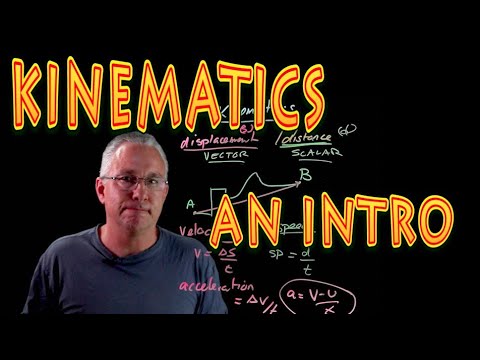
So, what’s the deal with kinematics and dynamics? Well, kinematics is all about how things move. Like, think of it as a movie of motion. You’d see speeds, directions, and paths all laid out like a roadmap.
Now dynamics? That’s where things get exciting. It digs into why stuff moves the way it does—forces! Picture trying to push your friend on a swing. You need to know just how hard to push to get them going.
These concepts are everywhere—from cars zooming by to that epic game of dodgeball at recess. They help explain why some things zoom past while others barely budge at all.
So buckle up! We’re about to untangle motion and forces in a way that’s both fun and eye-opening! Are you ready for this ride?
Understanding the Four Dynamics Equations: Key Principles in Physics and Science
Kinematics and dynamics can feel a bit overwhelming at first, but once you break it down, it’s like having a secret map to the universe. So, let’s get into the four dynamic equations that help us understand motion and forces. Each one tells us something special about how objects move.
First off, what are these equations? They’re often used in physics to relate different aspects of motion: displacement, initial velocity, final velocity, acceleration, and time. We usually talk about them in the context of constant acceleration. Think of that moment when you’re waiting for a bus that suddenly zooms away; understanding these equations can explain why and how fast that was!
Now, let’s jump right into each equation:
This one is pretty straightforward. Here’s the scoop: v is the final velocity, u is the initial velocity, a is acceleration (that’s how fast something speeds up or slows down), and t is time. If you’ve ever jumped off a diving board and felt that rush of air as you’re accelerating downward, this equation helps describe what’s happening.
In this case, s represents displacement. This equation combines everything—initial velocity times time plus half of acceleration multiplied by time squared. It might sound a bit math-heavy but think about throwing a ball straight up into the air. The height it reaches before coming back down? Yep! This formula can tell you just how high it goes.
This one links velocity with acceleration and displacement without involving time! It’s quite handy if you want to find out how fast something will be moving at a certain point without worrying about when it got there. Imagine your friend rolling down a hill on their skateboard; focusing on how fast they go after traveling a certain distance can be worked out using this equation.
This equation gives us an average velocity over time. Here’s the deal: if you know your initial and final velocities (u and v) along with the time (t), you can find out how far you traveled in total. Like when you’re driving somewhere: sometimes slow because of traffic (your initial speed) then speeding up once it’s clear (final speed)—this helps figure out your overall distance traveled.
Why do these matter? Understanding these equations is crucial because they form the foundation for exploring more complex dynamics in physics—like forces acting on objects (you know, Newton’s laws). Plus, real-life applications are everywhere—from cars accelerating on highways to sports physics like figuring out how high athletes should jump or throw.
So there you have it—a friendly breakdown of dynamical equations in physics! They might seem technical at first glance but once you get into it with real-world examples; they become much clearer! Just remember each piece does its own part to explain motion—and isn’t that just mind-blowing?
Exploring the 5 Essential Kinematics Equations in Physics: A Comprehensive Guide
So, let’s talk about kinematics, shall we? It’s all about understanding how things move. Think of it like tracking your friend on their wild skateboard ride down the street. You want to know how fast they’re going, how far they’ll roll, and when they’ll stop. Basically, we’re diving into the five key equations that help us understand motion. They’re super handy in physics!
1. The First Equation: Velocity
This one is like the hero of our story. It’s all about average velocity and time:
- v = u + at
Here, **v** is the final velocity, **u** is the initial velocity (like your friend at rest before taking off), **a** is acceleration (how quickly they’re speeding up), and **t** is time. So if your friend starts at 0 m/s and accelerates at 2 m/s² for 3 seconds, their final speed would be like… 6 m/s! Pretty cool, right?
2. The Second Equation: Displacement
Now let’s talk about distance covered during that time:
- s = ut + (1/2)at²
Here, **s** stands for displacement—how far they’ve moved from where they started. So with our example above again: if that friend moves from a stop with a nice steady acceleration over those same 3 seconds, you can plug in the numbers to find out they rolled a good bit down the street!
3. The Third Equation: Final Velocity Squared
This one’s a little different because it involves squares (don’t worry though!):
- v² = u² + 2as
This tells you how velocity relates to acceleration and displacement without directly involving time! It’s like being able to figure out what kind of skateboard your friend might need based on how far they plan to go and how fast they want to get there.
4. The Fourth Equation: Average Velocity Formulation
Sometimes it’s nice to focus on average stuff:
- s = vt – (1/2)at²
This helps if you know the average speed and want to find out how far they’ve gone while slowing down or speeding up over time.
5. The Fifth Equation: Uniform Acceleration Context
Finally, this last equation wraps everything up nicely:
- s = (u + v)/2 * t
It tells us how much distance is covered when you know both initial and final velocities over time.
Now isn’t that just awesome? All these relationships help us sketch out a clear picture of motion in our world! You might not even need advanced calculus to use them—just some basic math skills will do.
So next time you’re watching someone zoom by on their skateboard or maybe trying it yourself, you’ll have some serious knowledge tucked away in your mind—the secrets behind those smooth moves!
Exploring the Four Types of Kinematics: A Comprehensive Guide to Motion in Physics
Kinematics is like the study of how things move. It’s all about describing motion without worrying about what causes it. To break it down, let’s explore the four types of kinematics. These include linear, angular, projectile, and circular motion. Each one has its own quirks and equations.
Linear Motion is the simplest type. Think of a car driving straight down a road. Here, we focus on speed and direction. The basic equation often used is s = ut + ½ at², where ‘s’ is distance, ‘u’ is initial velocity, ‘a’ is acceleration, and ‘t’ is time. If you think back to that time you sprinted to catch a bus, your speed was changing as you ran faster or slower depending on how close you were getting.
Angular Motion comes into play when things spin around a point. Like when you’re sitting on a merry-go-round—it spins! Here we deal with quantities such as angular displacement (like how far it spins), angular velocity (how fast it’s spinning), and angular acceleration (how quickly it speeds up or slows down). The key formula here is θ = ωt + ½αt², where θ represents angle turned, ω is the initial angular velocity, α is angular acceleration, and t stands for time.
Then we have Projectile Motion. This describes objects that are thrown or propelled into the air, like when you toss a ball or shoot a basketball. It’s fascinating because it combines both linear motion in horizontal direction and free fall in vertical direction. The cool part? You can calculate its range using equations like x = v₀ cos(θ) t, where x is distance traveled horizontally, v₀ is initial speed, θ is launch angle, and t refers to time.
Lastly comes Circular Motion. Objects moving in circles might feel dizzy! This involves things like planets orbiting around the sun or cars taking turns on highways. An important aspect here is centripetal acceleration—that’s what keeps them moving in circular paths! The equation for this type involves radius: a_c = v²/r, where ‘v’ represents tangential speed and ‘r’ represents radius of the circle.
In all these types of kinematics—you see different aspects of motion at play! Like that moment you watched fireworks burst into patterns; it’s all about angles and curves making those beautiful displays happen over time.
So yeah, whether you’re running straight to catch that bus or watching planets dance around each other in space—kinematics helps explain what’s going on with all those cool motions out there!
You know, when you start thinking about motion and forces—like, how things move and why—they can seem pretty daunting at first. But let’s break it down together. Kinematics and dynamics are like the superheroes of physics, working behind the scenes to explain everything from a basketball soaring through the air to cars zooming down the highway.
Kinematics is all about describing motion. It involves things like speed and direction—basically, where something is and where it’s going. Imagine you’re watching a kid on a skateboard. You see them cruising along, maybe they pick up speed downhill or come to a stop at the top of a ramp. Kinematics helps explain that sweet glide or that abrupt halt without even needing to understand why they’re moving that way just yet.
Then there’s dynamics, which kicks in when we dive into what actually makes things move—forces! Think about the last time you tried pushing a heavy box across your room. That box didn’t budge at first because it needed a force strong enough to overcome friction, which is kind of like a little tug-of-war between surfaces. Dynamics explains those forces: gravity, friction, tension—you name it.
Let’s stop for a second and think about something personal—remember riding your bike as a kid? The thrill of pedaling fast while the wind whipped past your face was pure joy. But if you’ve ever tried to brake suddenly or take a sharp turn without slowing down first, you know what happens—you might go flying over the handlebars! That moment is influenced by both kinematics (the speed and direction) and dynamics (the force of brakes acting against your motion).
It’s wild how these concepts shape our everyday experiences without us even realizing it! Whether you’re playing sports or even just walking around town, kinematics and dynamics are part of everything we do. So next time you’re marveling at something in motion or feeling that sudden jolt when you hit the brakes in your car, remember there’s some serious science behind it all—a dance of forces that keeps life moving forward!