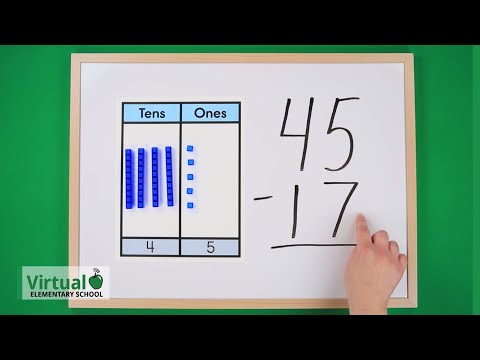
So, you know those colorful blocks you played with as a kid? Well, they’re not just for building towers or creating epic block cities anymore. Seriously, these little cubes are making their way into classrooms in some pretty nifty ways.
Imagine this: kids are not only stacking them but also using them to explore math and science concepts. It’s like turning playtime into a mini science lab!
I remember watching my niece the other day trying to figure out why her tower kept toppling over. She was all frustrated, but then it hit her — balance! And that got me thinking about how hands-on stuff like that can really light up a kid’s brain when they start connecting dots.
Math blocks aren’t just toys; they’re tools for sparking curiosity and making learning fun. So, let’s chat about how they’re shaking things up in education!
Exploring the Intersection of Math and Science: Three Key Examples of Mathematical Applications in Scientific Research
Math and science are like PB&J—they just work great together. It’s amazing how math helps us understand the universe. Let’s check out three key examples of how math is used in scientific research, and how innovative uses of things like math blocks can improve understanding in education.
First, let’s talk about physics. When scientists study motion, they use equations to predict where objects will go. Think of a ball rolling off a table. The physics behind that involves calculus, which helps calculate the ball’s speed and distance it’ll travel before hitting the ground. By using math blocks in classrooms, students can visualize these concepts by actually measuring distances and calculating outcomes themselves. It makes learning physical laws more tangible.
Then there’s biology. Have you heard of population modeling? Scientists use math to predict how populations grow or shrink over time—like tracking how many rabbits will live in a meadow if they keep reproducing! This uses differential equations to account for factors such as food supply and predators. Introducing math blocks lets students build models that represent these populations visually, making complex ideas approachable.
Finally, we have chemistry. Ever tried balancing chemical equations? It’s all about keeping track of atoms on both sides of the equation to obey the law of conservation of mass. This requires understanding ratios and proportions. When teachers incorporate interactive math blocks, students can physically manipulate pieces that represent different molecules and see how they combine or break apart in reactions. It’s a fun way to grasp abstract concepts!
The connection between math and science is deep—it helps us explore everything from tiny atoms to massive galaxies. And using innovative methods like math blocks not only makes learning fun but also enhances comprehension in a hands-on way! Just remembering those little experiences could inspire future scientists!
Innovative Methods for Teaching Mathematics: Bridging Science and Education for Enhanced Learning
You know, when we talk about teaching math, it can get a bit dry. But mixing in some creativity can make a big difference! One of the coolest ways to do this is through **math blocks**. These aren’t just your standard building blocks; they’re like little tools that help students visualize and understand mathematical concepts.
Math blocks allow learners to touch, manipulate, and even experiment with numbers. It’s pretty engaging! Kids can see how addition works by literally stacking blocks or how subtraction happens when they remove them. It’s a tactile experience that helps solidify those tricky concepts.
One big benefit of using math blocks is that they encourage collaboration. Imagine a group of students working together to solve problems with these blocks. They’re not just sitting at their desks; they’re moving around, discussing strategies, and learning from each other. This kind of social interaction is so crucial for enhancing understanding. In fact, studies show that peer learning boosts retention rates significantly!
Now, let’s break down some innovative methods where these blocks can really shine:
- Hands-on Learning: Students can create physical representations of equations or geometric shapes using the blocks—like building a pyramid for understanding volume!
- Integration with Science: When teaching about area and perimeter in science experiments (like measuring plant growth), math blocks help unify these subjects.
- Story Problems: Teachers can craft stories around the problems. For instance, if you have five friends on a playground represented by five red blocks and two join them with blue ones, kids can visually see the solution unfolding.
It’s really fascinating how math becomes less abstract and more tangible through play! I remember helping my younger sibling with their homework once. We used Lego bricks instead of traditional math tools to solve problems, and suddenly they were engaged in learning rather than just going through the motions.
Another innovative aspect is technology integration. Apps now simulate virtual math blocks that gamify learning experiences. Kids love using tablets or computers for this kind of interactive approach – think of it as digital building without the mess!
And guess what? Research supports this hands-on approach too! Studies indicate that students who engage with physical manipulatives tend to develop better skills in problem-solving compared to those who only work through equations on paper.
So yeah, bridging science and education through methods like using math blocks doesn’t just make math fun; it also boosts comprehension significantly. This combo helps teachers create dynamic classrooms where everyone feels empowered to learn at their own pace without fear of making mistakes—because mistakes are part of learning!
Isn’t it cool how something as simple as a block can open doors to deeper understanding?
Integrating Mathematics into Scientific Research: Techniques for Enhanced Analysis and Understanding
Integrating math into scientific research is, like, super crucial. Mathematics isn’t just a bunch of numbers on paper; it’s a powerful tool that helps scientists make sense of complicated data. So, let’s break down how this works and why it matters.
Why Math Matters in Science
First off, math helps in analyzing data. When researchers gather information from experiments, they often end up with heaps of numbers that can be confusing at first. This is where statistics come in handy. It allows scientists to summarize their data, identify trends, and determine whether their findings are significant or just random noise. Think of it like trying to find patterns in a jumbled puzzle; math helps you piece things together.
Techniques for Better Understanding
Now let’s talk about some techniques that make this integration smoother:
- Statistical Analysis: Using methods like regression analysis lets researchers model relationships between variables. For instance, if you’re studying plant growth under different light conditions, regression can show how changes in light intensity affect growth rates.
- Graphing: Visualizing data through graphs is super helpful! Instead of staring at pages of numbers, graphs can show the story behind the data. A simple line graph can reveal trends over time much more clearly than a table full of figures.
- Mathematical Modeling: This involves creating equations that represent complex systems. For example, predicting how diseases spread through populations can be modeled mathematically. You could use differential equations to describe the rate of infection over time.
- Simulations: With computers today, simulations help scientists run experiments virtually when real-life trials might be too dangerous or expensive. They often rely on mathematical algorithms to replicate real-world scenarios.
The Role of Math Blocks in Education
So here’s an interesting idea: using something called “math blocks” in education can really enhance learning! These blocks are physical models that represent mathematical concepts visually and tangibly.
Picture this: kids stacking blocks to understand fractions or creating shapes while grasping geometry concepts. It turns abstract ideas into something real and concrete! When students touch and see these blocks in action during their science lessons—like building models of molecular structures—they’re more likely to understand complex topics.
A Personal Anecdote
I remember volunteering at a local school where we used these blocks with students learning about ecosystems. We made food webs using different colored blocks for plants and animals. Watching them physically build connections helped them grasp difficult ideas like energy flow and interdependence better than any lecture could have.
In essence, integrating mathematics into scientific research isn’t just beneficial; it’s essential for innovation and deep understanding. By using diverse techniques alongside engaging tools like math blocks in education, we pave the way for a new generation that sees math as not just numbers but as a vital part of exploring our world!
You know, math can feel kinda intimidating. I mean, who hasn’t looked at a complicated equation and thought, “What even is this?” But then you run into stuff like math blocks, and suddenly it feels more like a fun puzzle than a chore.
Picture this: when I was in school, I had this amazing teacher who brought in colorful blocks for us to play with. Each block had different shapes and numbers on them. At first glance, they seemed like toys, but once we started using them for our lessons, everything changed. We built towers to learn addition and subtraction and even grouped them to understand multiplication. It was like magic! I remember feeling that thrill when I finally grasped concepts that had previously seemed so out of reach.
So here’s where math blocks get innovative in scientific education. They’re not just for learning basic arithmetic; they’re also being used to illustrate complex scientific principles! Can you imagine stacking blocks to demonstrate molecular structures? This hands-on approach makes abstract concepts way more tangible. Instead of just reading about atoms or chemical reactions, students can literally build them right in front of their eyes.
And it doesn’t stop there! By incorporating math blocks into science labs, educators can create real-world scenarios where students experiment with physics principles—like gravity or force—by varying the heights of their block towers or the mass of their creations. It’s super engaging!
I think about how crucial it is for kids (and honestly anyone) to feel comfortable with math and science as they are kind of intertwined in so many fields today. When students can physically manipulate these blocks while learning scientific concepts, it drives home the understanding that math isn’t just numbers on paper; it’s a language that describes the world around us.
So yeah, incorporating something as simple as math blocks into science education is such an innovative approach! It makes learning interactive and fun while fostering both creativity and critical thinking skills. Who would’ve thought that playing with colorful cubes could open up a whole new world of understanding? It’s those little moments that stick with you long after class is over—like building your own little empire out of blocks while conquering science at the same time!