Okay, so picture this: you’re at a family reunion, and your Aunt Karen starts telling everyone how she’s basically a geneticist now. You know, she read an article once. Everyone nods politely, but deep down, they’re thinking, “What is even going on with DNA these days?”
Here’s the thing: genetics is like the coolest mystery novel out there. It’s full of twists and turns that no one saw coming. And one of the plot twists? Maxam and Gilbert sequencing. I mean, who even knew sequencing could sound like a hip new band name?
So, what’s the deal with these two guys? They pretty much opened the door to understanding our genetic code in ways we couldn’t even dream of before. No cap! Their methods changed everything—think of it as unlocking a secret vault in the world of biology.
But don’t worry if you’re not a science whiz! We’ll break it down together so it all makes sense. Ready to unravel some DNA drama? Let’s do this!
Exploring the Disadvantages of Maxam-Gilbert Sequencing in Molecular Biology
Maxam-Gilbert sequencing is one of the earliest methods used for determining the sequence of DNA, developed by Allan Maxam and Walter Gilbert in the late 1970s. While it was groundbreaking at the time, this technique has some real disadvantages that have made it less popular compared to newer methods like Sanger sequencing or next-generation sequencing. Let’s dig into some of these drawbacks.
First off, one big issue with Maxam-Gilbert sequencing is that it requires a lot of toxic chemicals. The process involves using hazardous reagents to break DNA at specific bases, which can be dangerous if not handled properly. Seriously, dealing with things like formic acid and hydrazine isn’t something you want to take lightly. It’s just not a user-friendly method.
Another downside? It’s pretty labor-intensive. The whole process isn’t exactly a walk in the park. You have to carefully purify your DNA and then use different enzymatic reactions for each base type, which takes time and skills that might overwhelm beginners. It’s like trying to bake a complicated cake without an easy recipe—you really gotta know what you’re doing.
Plus, the accuracy of this method can take a hit. When you’re working with those toxic chemicals and multiple reactions, it’s easy for mistakes to creep in. And when it comes to sequencing DNA, even small errors can lead to big problems down the line.
You also need a fair bit of starting material—like we’re talking about needing a microgram or more of your DNA sample! This can be a problem if you’re working with samples that are hard to come by or are degraded—like ancient remains or certain environmental samples.
And here’s something interesting: while Maxam-Gilbert sequencing was revolutionary back in its day, it doesn’t handle high-throughput sequencing well. This means that if you want to sequence whole genomes or many samples at once—like researchers often do now—you might find yourself battling bottlenecks all over the place. It’s just not equipped for today’s fast-paced genetic research needs.
In summary:
- Toxicity: Involves dangerous chemicals.
- Labor-intensive: Requires advanced skills and time.
- Poor accuracy: Prone to errors from complex procedures.
- Material requirements: Needs substantial amounts of DNA.
- Poor high-throughput capabilities: Struggles with mass sequencing projects.
To wrap it up, while Maxam-Gilbert sequencing played an important role in molecular biology’s history and helped kickstart awesome advances in genetics, its disadvantages have led many researchers to favor alternative techniques today. So if you’re knee-deep in genetic studies or curious about DNA work, keep these points in mind as you explore this wild world!
Exploring the Maxam-Gilbert Method: A Pioneering Approach to DNA Sequencing in Molecular Biology
The Maxam-Gilbert method is one of the coolest old-school techniques for DNA sequencing. Picture this: back in the late 1970s, two researchers, Allan Maxam and Walter Gilbert, thought they could figure out the order of nucleotides in DNA using clever chemistry. Their work was groundbreaking at the time and laid important groundwork for molecular biology.
So, what makes this method so unique? Here’s how it works, in simple terms. First off, you start with a piece of DNA that you want to sequence. You actually label one end of this DNA strand with a radioactive tag (which sounds cooler than it is). Then comes the fun part: you chop up this strand into smaller pieces! But don’t worry; that’s all part of the plan.
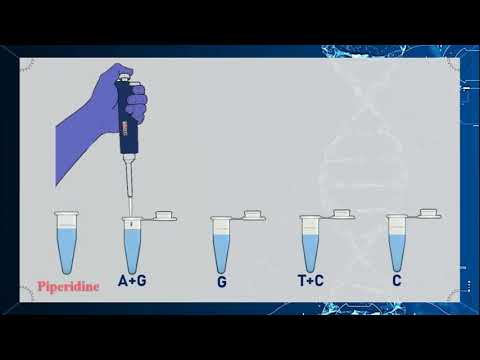
- Chemical Reactions: Using specific chemicals, you break those small pieces at certain bases (the building blocks of DNA). Depending on what chemical you use—like hydrazine or dimethyl sulfate—you can target different nucleotides. This gives you fragments that vary in length depending on where they break.
- Gel Electrophoresis: After breaking them up, you load these fragments onto a gel and apply an electric field. This forces the pieces to move through the gel, separating them by size. Shorter pieces move faster than longer ones because they can squeeze through tiny pores in the gel more easily.
- Visualizing Results: Finally, after running the gel for a while, you expose it to X-ray film. The radioactive tags leave dark spots on the film that correspond to your DNA fragments’ lengths. By looking at these spots next to a marker lane (full of fragments of known sizes), you can figure out exactly which nucleotide each spot corresponds to!
This whole process allows scientists to read sequences based on where these markers show up on the X-ray film. It’s like a game of connect-the-dots but with tiny molecules! You follow this trail to figure out what comes first and what comes next in your DNA strand.
Here’s an interesting bit: while Maxam-Gilbert sequencing was a major step forward, it eventually took a back seat as newer methods emerged—most notably Sanger sequencing—which became more popular due to its simplicity and efficiency.
The Maxam-Gilbert method isn’t just some forgotten footnote in history books either; it taught us foundational techniques about manipulating and analyzing genetic material! Many principles from this approach still echo through modern biotechnology today—like understanding how we can cut and analyze genes.
It’s kind of wild when you think about how much has changed since then; but without those original breakthroughs by Maxam and Gilbert, who knows where we’d be now in molecular biology? Just goes to show that every great discovery rests on previous knowledge and creativity!
Exploring the Advantages of Maxam-Gilbert Sequencing in Molecular Biology
Maxam-Gilbert sequencing is one of those classic techniques in molecular biology that can feel like a stepping stone into the DNA world. It’s a method used to determine the sequence of bases in DNA, and it had its big debut in the 1970s, thanks to two scientists named Allan Maxam and Walter Gilbert. They brought something fresh to the table at a time when things were pretty basic.
So, what’s the deal with this method? Well, unlike other sequencing methods that are more popular now, Maxam-Gilbert relies on some cool chemistry rather than just amplifying DNA. You start with some labeled DNA, then you treat it with chemical reagents that cut the DNA at specific bases. This means you can end up generating fragments that help you figure out which nucleotides (A, T, C, G) are present in your sample.
One of the biggest advantages is precision. The Maxam-Gilbert technique gives you a really detailed look at your DNA sequence because it doesn’t depend on amplifying the DNA beforehand. That’s huge when you’re dealing with complex samples where amplification could introduce errors or biases.
But wait, there’s more! Flexibility is another strong point here. You can tweak the chemical treatments to target different bases selectively. This ability allows researchers to design experiments tailored to specific questions they might have about their genetic material. Need to explore a weird mutation? Just adjust how you handle those bases!
Now let’s talk about some practical sides too. It doesn’t require fancy machinery like modern sequencers do! All you need are basic laboratory supplies and that sweet chemistry magic. While this doesn’t mean it’s for everyone—because handling chemicals requires caution—it does make this approach accessible for labs that may not have all the high-tech gadgets.
However, it’s important to mention its drawbacks too. The process is somewhat labor-intensive and requires careful handling of hazardous materials—so safety first! Moreover, it has mostly been overshadowed by next-generation sequencing techniques due to their speed and efficiency.
Still, for those who appreciate the historical context, Maxam-Gilbert played an essential role in shaping molecular biology as we know it today. It paved the way for many advancements and still finds its niche in certain applications where precision matters most.
In summary, exploring Maxam-Gilbert sequencing is like taking a trip down memory lane while also appreciating how far we’ve come—and how we got here! Its precision and flexibility make it a unique tool even if newer methods are all the rage now. So next time someone brings up this old-school technique at a party or lab meeting, you’ll be ready with some fun insights!
So, genetics—it’s like the ultimate blueprint of life, right? Maxam and Gilbert sequencing played a real game-changing role in how we look at DNA. Back in the 1970s, when they came up with their method, it was like giving scientists a new pair of glasses to see the world of genes more clearly.
I mean, think about it. Before this came along, sequencing was pretty much in its infancy. People were just beginning to scratch the surface of understanding how our DNA works. The excitement must’ve been palpable! Like when you finally piece together that tricky puzzle you’ve been working on forever; that feeling of “whoa, I can see the whole picture now!”
Maxam and Gilbert’s method isn’t as widely used today compared to newer techniques like Sanger sequencing or Next-Generation Sequencing, but it really laid the groundwork for modern genetics. Their technique involved some pretty intricate chemistry where they would break DNA into fragments by using specific chemicals—kind of like cutting a string of beads at different spots to see what colors you have.
The beauty of their work lies in its precision. They could pinpoint specific sequences within DNA with such accuracy! This opened doors for researchers everywhere who wanted to understand everything from diseases to evolution and beyond. Suddenly, we weren’t just looking at traits; we were diving into the very code that defines life itself.
But here’s a thought: imagine being one of those researchers back then; it must’ve felt surreal to be part of such a transformative moment in science! You’re standing on the edge of something monumental, knowing your work could unravel mysteries people have wondered about for centuries.
Sure, nowadays we have faster methods allowing us to sequence entire genomes in hours instead of weeks or months. But it’s important not to forget those early pioneers who took those first bold steps into uncharted territory. They taught us that understanding our genetic makeup is essential—not just for science but for society as well.
So every time you hear about advancements in genetics today—CRISPR gene editing or personalized medicine—think about how far we’ve come since Maxam and Gilbert were mixing chemicals in their labs. It’s amazing how every small step can lead us closer to big discoveries that change our lives!