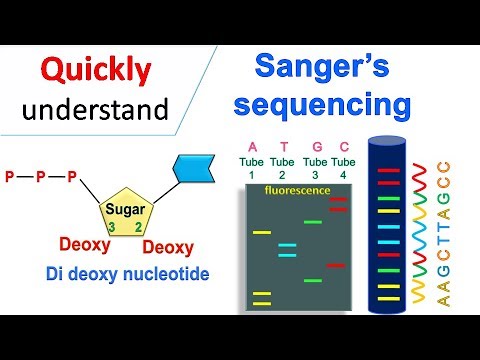
So, picture this: you’re at a family reunion, and your quirky uncle starts rattling off all the wild stuff he’s done. Along comes a conversation about DNA, and he casually mentions Sanger sequencing like it’s just another party trick. You can’t help but chuckle.
But seriously, this technique is way cooler than it sounds. It’s like DNA’s backstage pass to unraveling life’s secrets. And trust me, without it, the world of genetics would look so different.
Sanger sequencing has been around for a while now—like your uncle’s favorite dad jokes—but its impact on modern genetics is anything but outdated. It’s helped us decode everything from the human genome to figuring out disease patterns.
Let’s dig deeper into how this whole thing works and why it matters today!
Exploring the Relevance of Sanger Sequencing in Modern Genomics
So, let’s talk about Sanger sequencing. You might have heard of it if you’ve ever delved into genetics or biotechnology. It’s like the grandparent of DNA sequencing methods, and it’s still super important in today’s world of genomics.
This method was developed back in the 1970s by Frederick Sanger, and it was groundbreaking at the time. Basically, what he did was create a way to read the genetic code—that is, the order of nucleotides in DNA. This is crucial because understanding this code helps us unlock insights into how living organisms function.
Now, you may be wondering why Sanger sequencing still matters today, especially with all these newer technologies popping up. Well, here’s the thing:
- Accuracy: Sanger sequencing is known for its reliability. In an age where precision is key—like when you’re diagnosing diseases or checking for genetic mutations—you want methods that won’t give you false readings.
- Length of Reads: It can read longer stretches of DNA compared to some newer methods. This is especially useful when you’re trying to piece together complex parts of a genome.
- Applications: It’s widely used in clinical settings! For example, checking for specific genes linked to genetic disorders often relies on this technique.
- Simplicity: The whole process isn’t that complicated compared to some high-throughput methods used nowadays. You can do it in a lab with less fancy equipment.
I remember my first time watching a lab tech run Sanger sequencing: It felt like magic! They mix DNA with chemicals that allow them to ‘read’ it. At that moment, I realized how powerful this technology could be for things like gene therapy or cancer research.
One of the amazing things about Sanger sequencing is its role in projects like the Human Genome Project. This monumental project aimed to map out all human genes, and guess what? They used Sanger sequencing as one of their key methods for gathering data!
You might also see Sanger being used in forensic science. If there’s a crime scene and they need to identify someone from their DNA sample—it could be done using this approach. It’s also important in microbiology, where identifying different strains of bacteria relies on careful genetic analysis.
If you’re curious about future applications: even with fancy new ways to sequence genomes rapidly (like next-generation sequencing), many labs still validate results using Sanger because it just gets the job done right!
The takeaway is that while we’ve advanced so much since Sanger first introduced his technique, his method remains relevant today because it balances accuracy with simplicity—something you don’t want to overlook when you’re handling something as delicate as genetic data!
So next time someone mentions those crazy sequencers out there, just remember dear old Sanger, making waves and still playing a vital role in modern genomics!
Exploring the Impact of DNA Sequencing on Modern Taxonomy in Biological Sciences
So, let’s talk about DNA sequencing and how it’s shaking up modern taxonomy in biological sciences. If you’ve ever wanted to dig deeper into the genetic makeup of living things, Sanger sequencing is a big player in this field. Basically, it’s a method that allows scientists to read the genetic code—think of it as translating an ancient script.
Sanger sequencing was developed back in the 1970s by Frederick Sanger, who, fun fact, won not one but two Nobel Prizes for his work! This technique lets researchers figure out the order of bases (the building blocks of DNA) by creating copies of DNA fragments. It’s kind of like putting together a puzzle; you can see how everything fits together to make up an organism’s entire genetic blueprint.
Now here’s where the magic happens: modern taxonomy—the science of naming and classifying organisms—has really embraced this technology. With Sanger sequencing, scientists can analyze the DNA of different species and determine their evolutionary relationships more accurately. This means they can create what we call phylogenetic trees, which are like family trees for living organisms.
- Species Identification: Using DNA instead of just physical traits helps with tricky cases. For example, two insects might look alike but are actually different species! With sequencing, researchers can sort that out quickly.
- Ecosystem Understanding: Sequencing helps us explore biodiversity within ecosystems. By identifying species present in an area through their DNA, researchers get a clearer picture of ecosystem health.
- Conservation Efforts: Knowing exact species identities aids conservationists in protecting endangered species. If you know what you’re dealing with genetically speaking—like if two populations are genetically distinct—you can tailor your conservation methods accordingly.
You might be thinking—yeah but why does this matter? Well, think about how we interact with biodiversity every day—like in food or medicine! When researchers sequence plants or animals, it opens doors to discovering new uses for them.
A little story from my own life: I once found a flower during a hike that looked familiar but not quite right. Later I learned they had sequenced its DNA and discovered it was a new species! Imagine my surprise when I realized what I saw was something never labeled before! That’s the power of sequencing — revealing life we didn’t even know existed.
Sanger sequencing has paved the way for more advanced methods too, like next-generation sequencing (NGS), which allows us to sequence millions of pieces at once. But don’t worry; Sanger isn’t going anywhere soon—it still has its place in confirming findings and smaller projects where accuracy is key!
In summary, DNA sequencing, especially through Sanger’s method, is revolutionizing taxonomy by allowing for precise classification and understanding of life on Earth. It’s helping us solve mysteries in nature that were once shrouded in confusion due to limited techniques!
The Impact of DNA Sequencing on Modern Plant Classification in Botanical Science
So, let’s talk about DNA sequencing and how it’s really shaking up the way we classify plants in botanical science. You might think, “What does DNA have to do with plants?” Well, a lot actually! It’s all about understanding what makes each plant unique.
First off, DNA sequencing is like reading the genetic blueprint of an organism. For plants, this means we can peek into their molecular structure and discover their relationships to one another. The traditional ways of classifying plants were based mostly on their physical characteristics—like flower shape or leaf structure. But those features can be pretty misleading sometimes!
With Sanger sequencing, one of the first techniques developed for sequencing DNA, scientists could break down the genetic information piece by piece. This method allows researchers to determine the order of nucleotides in a given segment of DNA. Think of it as deciphering a secret code! And once you know the code, you start to see patterns and connections that were previously invisible.
Now, let’s get into some key points on why this matters so much:
- Accuracy: Sequencing gives us a more accurate picture of how closely related different species are.
- Diversity: It helps in identifying new species by comparing genetic data instead of just relying on visual traits.
- Evolutionary Insights: By looking at DNA, scientists can unravel evolutionary histories which tell us how plants adapted over time!
A little while back, I was chatting with a friend who loves horticulture. He was trying to identify some local wildflowers but kept getting confused because two different flowers looked almost identical! Once he learned about DNA sequencing, he discovered that those flowers belonged to entirely different genera. That’s when it hit him—looks can be deceiving!
One fascinating example comes from studying orchids. There are thousands of orchid species out there and many look alike but are genetically distinct. Thanks to advances in Sanger sequencing and newer methods like next-generation sequencing (NGS), researchers have pinpointed specific genes that define various species. This not only helps in proper classification but also aids conservation efforts because now we understand which species need protection.
So yeah, thanks to these high-tech tools and methods like Sanger sequencing, botanists can classify plants with way more accuracy than they ever could before. We’re not just looking at pretty flowers anymore; we’re digging deep into what makes each plant tick at a molecular level! And who knows? The next time you see a flower that catches your eye, there might be an entire world hidden in its DNA waiting to be discovered!
Sanger sequencing, huh? It’s kind of one of those unsung heroes in the world of genetics. Imagine sitting in a lab, excited and a little nervous, as you wait for the results that could change everything. That feeling is something scientists experienced back when this technique was developed in the 1970s by Frederick Sanger. It was a game changer, opening up whole new worlds in genetics!
So, what’s the deal with Sanger sequencing? Well, it’s a method used to determine the exact sequence of bases—those little building blocks like adenine (A), thymine (T), cytosine (C), and guanine (G)—in a strand of DNA. Basically, it tells you what letters are making up that genetic code. Why does this matter? Because this code carries all the instructions for life itself! From how our bodies grow to how we respond to diseases—it’s all tucked away in there.
I remember reading about a study where researchers used Sanger sequencing to figure out the genetic basis for cystic fibrosis. I mean, picture families waiting anxiously for answers about their health. The moment they discovered mutations linked to the disease—it must have felt like finally getting closure on a long-standing mystery! That’s what makes this technology so powerful, you know?
Now, let’s talk about its role today. Even though newer methods like next-generation sequencing have come onto the scene and can analyze millions of sequences at once, Sanger’s technique still holds its ground as a gold standard for validation. Whenever new findings pop up from those high-throughput techs, researchers often go back to good ol’ Sanger sequencing just to double-check their work.
And here’s an interesting twist: even though we live in an age where whole genomes can be sequenced quickly and cheaply now, Sanger really set things in motion back in its day. It made it possible for us to step into this wave of exploration—discovering new genes related to conditions like cancer or even personalized medicine approaches that tailor treatments based on someone’s unique genetic makeup.
So yeah, while it might seem old-fashioned now compared to what’s out there today, Sanger sequencing is still very much part of our genetic story. And every time someone looks at their genes or tries to understand a health condition better because of breakthroughs from these methods—a little piece of that original spark from Frederick Sanger is still shining through!