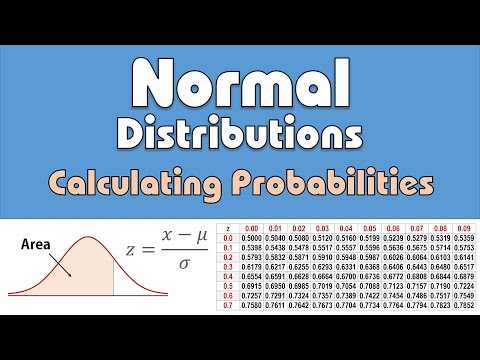
Alright, let me tell you this. I once tried to bake a cake for my buddy’s birthday, right? I totally got distracted and added way too much sugar. The cake turned out all kinds of weird—like a sweet brick! That got me thinking about averages and how, sometimes, things can go a bit out of whack.
So, speaking of averages, have you ever heard about the mean in statistics? It’s kind of like the “Goldilocks” of numbers—not too high, not too low, but just right! When you dig into normal distribution, that mean becomes your best friend.
It’s crazy how this simple concept helps us make sense of everything from test scores to heights. Whether you’re deciding if you’re tall or short or just trying to survive your data class—it’s pretty important stuff. So come hang with me; let’s chat about the mean and why it matters in the world of stats!
Understanding the Role of Normal Distribution in Statistical Analysis within Scientific Research
So, let’s chat about this thing called **normal distribution**. You know, that bell-shaped curve you’ve probably seen in schools or even on TV? Well, it’s a big deal in statistics and can help scientists make sense of data.
First off, basically every scientist has to deal with data sometime, right? That’s where this normal distribution comes into play. It describes how values are spread out around a mean (which is just the average, if that makes sense). Like, if you took all the heights of people in a room and averaged them out, that would be your mean.
Now here’s the cool part: in a normal distribution, most of the values cluster around that mean. So you get lots of people who are close to average height and fewer who are really tall or really short. This creates that symmetrical bell shape we’re talking about!
One major reason researchers care so much about normal distribution is its **predictability**. When your data follows this pattern:
- About 68% of your values will fall within one standard deviation from the mean.
- About 95% are within two standard deviations.
- And nearly all—like 99.7%—of your values will be within three standard deviations!
This tells you something important: if you were to sample people randomly from a population, most of them will resemble that average group. This helps scientists make reliable predictions and decisions based on their findings.
Let’s say you’re studying students’ test scores. If you find out those scores follow a normal distribution:
– You’d know most students scored around the average.
– A handful did exceptionally well or poorly.
This insight can guide educators on how to support both ends of that spectrum—maybe by offering advanced classes for high achievers or extra help for those struggling.
Another thing worth mentioning is the **Central Limit Theorem**. It’s pretty neat! It tells us that when we take multiple samples from any population (even if it’s not normally distributed), their means will tend to form a normal distribution as long as those samples are large enough. It’s like magic! So even if your initial data looks all kinds of chaotic, when you keep averaging stuff out, eventually your results smooth out into that lovely bell curve.
Now let me share something personal—a bit ago, I was part of a project where we had to analyze environmental data from different forest areas. Our measurements were all over the place at first but guess what? After some careful averaging and consideration of our sample size—bam! We found our results began showing signs of that classic normal distribution pattern! It felt like uncovering a little secret hidden in the woods.
Finally, it can be good to remember not every dataset is perfect and follows this magical shape exactly—but many do! So when scientists see similar patterns in their results, they lean on these statistical principles for analysis.
In short, understanding how the mean fits into our picture with normal distributions allows scientists to interpret data much more effectively. It gives them confidence when drawing conclusions or making recommendations based on their findings in research!
Understanding the Mean of Normal Distribution in Statistical Analysis: A Scientific Perspective
So, you’ve probably heard the term normal distribution tossed around in discussions about statistics, right? But what does it actually mean? Well, let’s break it down together. Imagine you’re looking at a big pile of data—like the heights of everyone in your school. If you were to graph those heights, most people would cluster around an average height, with fewer folks being really short or super tall. That bell-shaped curve you see on the graph? That’s normal distribution!
Now, at the heart of this lovely bell curve lies something called the mean. This is basically just another word for “average.” To find the mean of a dataset, you’d add up all the values and then divide by how many there are. For instance, if five friends have the ages 10, 12, 12, 14, and 16 years old, you’d add those up for a total of 64. Then you might think: “Alright! Now divide that by 5.” Which gives us a mean age of 12.8 years.
The cool part is that in a normal distribution, this mean also serves as its centerpiece. This means that if you were to draw a line right down the middle of your bell curve (let’s say it’s for test scores), that line would sit precisely at where most people scored—so it’s sort of like where everyone’s aiming when taking an exam.
- Symmetry: One interesting thing about normal distribution is that it’s perfectly symmetrical around that mean. This means half of your data points will fall below this point and half above it. Pretty neat!
- Standard Deviation: Another important factor here is what we call standard deviation, which tells us how spread out our data points are from that mean. If most scores are pretty close to each other and to our average (like in a class where everyone studied really hard), then you’ll see a smaller standard deviation.
- Z-scores: And speaking of standard deviations—ever heard of z-scores? They’re like little markers showing how far away any score is from the mean in terms of standard deviations.
You know what’s even cooler? The properties we can infer from knowing just the mean and standard deviation! Because normal distributions are so predictable, once you’ve got those two pieces sorted out, you can estimate other probabilities related to your data: like how likely someone is to score above or below average on their test!
I remember back in high school during finals week; everyone was sweating bullets over math tests. We got our averages back later and realized something amazing: despite all our freak-outs over studying differently or panicking about problems—we had actually performed quite similarly! That comforting bell curve reassured us we were all in this together.
The bottom line is this: understanding the mean within normal distributions gives you powerful insights about any given dataset you’re examining. It helps make sense not just of averages but spreads too—so when facing any challenge with numbers again (like predicting outcomes or analyzing results)—you’ll be well-equipped!
You see? Stats don’t need to be scary; they can actually lend clarity! And who doesn’t want that?
Understanding the 68%-95%-99.7% Rule: Key Insights in Statistics and Science
So, let’s chat about the 68%-95%-99.7% Rule, also known as the Empirical Rule. You might have heard about it if you’ve ever dipped your toes into statistics or science. It relates to how data behaves in a normal distribution—a fancy way of saying it’s shaped like a bell curve.
In a normal distribution, most values cluster around the mean—the average value—while fewer values appear as you move away from it in either direction. So you’ve got this beautiful symmetry going on. Here’s the kicker: this is where those percentages come in!
- 68% of the data falls within one standard deviation from the mean.
- 95% of the data is within two standard deviations.
- 99.7% is all about three standard deviations.
Imagine you’re back in school, and you just took a math test. You scored pretty well! Let’s say you got a 70 out of 100, which happens to be around the average for your class (the mean). If we assume that scores are normally distributed, then:
– About 68% of your classmates scored between 63 and 77.
– Moving out a little more, around 95%, means digging deeper into that score range—between 56 and 84.
– Finally, stretching even further gives us that glorious 99.7%, covering scores from 49 to 91.
What does this all mean? Well, it helps us understand how typical or unusual our scores are compared to everyone else. So if you score below that lower range? That might raise some eyebrows—maybe there was something off with your studying!
Let’s break this down further with what standard deviation even means! Think of it as a measure of spread in your data set; it tells you how far on average each score is from the mean. A small standard deviation means your scores are closely packed together, while a larger one shows they’re more spread apart.
So when we say “within one standard deviation,” we’re really saying these scores are pretty typical—you know? And if someone tells you they scored outside that range? It could be cause for concern or maybe just an incredible achievement!
And here’s something cool: this rule isn’t just for scores; it applies broadly across many fields! From heights and weights to test results or even daily temperatures—it helps paint a picture of what “normal” looks like.
Despite its simplicity, this rule has huge implications! It’s used in quality control in manufacturing, psychology studies, and pretty much any place where understanding variability is key. Plus, mathematicians and statisticians love to use these principles when making predictions because they can spot anomalies more easily when they know what “normal” looks like.
So next time you’re diving into some data or charts, keep an eye out for that bell curve. And remember those percentages—they’re not just numbers; they’re keys to unlocking what lies beneath those stats!
So, let’s chat about the mean of normal distribution and why it matters so much in statistics. Imagine you have a bunch of friends who love to play basketball. Every time you all meet up, you keep track of how many points each person scores. You’re probably curious to know who’s got the average score, right? That’s where the mean comes in.
The mean is like the heartbeat of any data set, especially in a normal distribution. In simple terms, it’s just the average of all your scores. You add up every single point scored and divide by how many friends were playing. If everyone had a great game, the mean will be higher; if someone had an off day (sorry, Jake), it might drag it down a bit.
Now, what makes normal distribution special? Picture this: if you graphed everyone’s scores on a bell-shaped curve, most of your friends’ scores will cluster around that mean point—so basically, if you’re wondering where most people land on this curve… that mean is going to be right smack in the center! It makes it super handy because then you know what typical looks like for your little basketball crew.
But here’s where things get really interesting: this mean can help you predict outcomes. Say you start tracking other games or other sports too—knowing that average score gives you a baseline to compare against over time. If suddenly someone starts scoring way above that mean, like if Sarah hits three-pointers all night long? Well, now you’re talking about something unusual—maybe she’s been practicing her shots or has discovered a new technique.
Here’s a quick personal story: I remember once trying to improve my own basketball skills. After tracking my scores for several weeks with my buddies—it was eye-opening! I realized I consistently scored below average at first but used that knowledge to motivate myself. Knowing that mean gave me something tangible to aim for.
In summary, the mean in normal distribution doesn’t just tell us about averages; it’s like having a guiding star in statistics! It helps us make sense of data and gives context when things seem off or when you’re trying to understand trends over time. So next time you’re analyzing some data or keeping track of your sports crew’s scores—remember that little hidden gem called the mean!