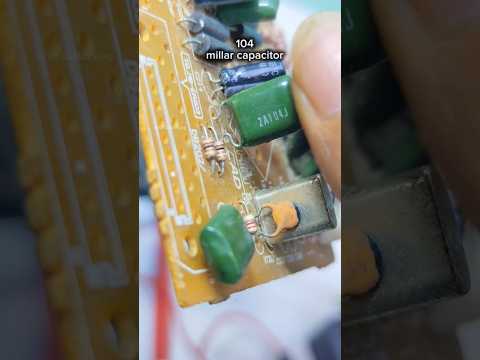
You know those shiny balloons you see at parties, the ones that float around and bring a smile? They’re made of Mylar! But here’s the kicker: this same stuff is also hiding in your gadgets, working behind the scenes like a tech ninja.
Imagine crunching some numbers or jamming to your favorite tune. You probably don’t think much about what makes all that happen. But trust me, Mylar capacitors are a big deal in modern electronics. Seriously! They’re like the unsung heroes keeping everything running smoothly.
From audio equipment to video games, these little wonders play a huge role. It’s crazy how something so simple can impact so much! So let’s chat about what makes Mylar capacitors tick and why they’re everywhere today.
Exploring the Applications of Mylar Capacitors in Scientific Research and Technology
Mylar capacitors are a pretty cool piece of tech that you might not think about much, but they play a big role in electronics and scientific research. If you’re wondering what these things really do, let me break it down for you.
So, Mylar, which is actually a brand name for a kind of polyester film, is used to make these capacitors because it has some neat properties. It’s lightweight, durable, and has great electrical insulation capabilities. These characteristics are super important in applications where efficiency and reliability matter.
One of the key reasons Mylar capacitors are widely used is their stability over temperature variations. This means they don’t go haywire when things heat up or cool down. Imagine working on an experiment that relies on precise measurements—if your components could suddenly misfire just because they got warm? That would be a headache!
Applications in Science and Technology:
- Audio Equipment: In high-fidelity audio systems, Mylar capacitors help deliver clear sound without distortion. They maintain signal integrity while keeping the size manageable.
- Aerospace Technology: When you think about satellites and space probes flying around in the harshness of space, you’ll find Mylar capacitors help manage energy effectively and reliably.
- Power Supplies: These capacitors are often used in power supply circuits to smooth out voltage fluctuations. A stable voltage means better performance for all electronic devices involved.
- Sensors: Mylar capacitors can improve sensor precision by maintaining consistent performance across varying conditions.
But there’s more!
In research settings like electronics labs or universities, finding the right components is essential for experiments to succeed. Scientists often use Mylar capacitors due to their long lifespan. Think about it: nobody wants to replace components every few months if they can avoid it!
Oh! I remember hearing about this project where researchers were developing a new type of sensor for environmental monitoring. They chose Mylar capacitors specifically because they needed something reliable that wouldn’t distort their readings—especially since they were measuring ultra-sensitive data!
Now let’s chat about cost-effectiveness because that’s another point worth mentioning. While there are more advanced materials out there, sometimes sticking with tried-and-true options like Mylar makes way more sense from both reliability and budget perspectives.
In addition to all this technical stuff, it’s also crucial to note that Mylar itself is recyclable! So if you’re passionate about sustainability—or just want future generations to have clean tech—this little detail can add some feel-good vibes to using Mylar capacitors.
So yeah, when it comes down to it, Mylar capacitors are a great example of how simple materials can have complex roles in our technological world. By offering stability, reliability, and even sustainability, they’re making life easier for scientists and engineers everywhere!
Exploring the Key Applications of Capacitors in Electronics and Their Role in Modern Science
Capacitors are seriously cool little components in electronics that you might not think about often, but they play a huge role in how devices work. Basically, they store and release electrical energy, kind of like a battery but with a quick “charge and discharge” action. You can find them almost everywhere—from your smartphone to big industrial machines.
So, what exactly do they do? Let’s break down some key applications:
- Energy storage: Capacitors hold energy for short periods. They can charge up quickly and then release that energy all at once when needed. This is super useful in things like camera flashes or power tools.
- Smoothing voltage: When you hear about power supply circuits, think capacitors. They help smooth out fluctuations in voltage, making sure your devices run smoothly without hiccups.
- Tuning circuits: In things like radios or televisions, capacitors are used to tune into specific frequencies. It’s like trying to find the right radio station; the right capacitor helps you get there!
- Decoupling: You know how sometimes things get noisy? Well, capacitors help filter out that noise from the power supply lines in electronic circuits, making sure everything runs cleanly and efficiently.
Now when we zoom into one specific kind of capacitor—Mylar capacitors. These guys are made with polyester film. Yep, that shiny stuff often seen in packaging! Their strength lies in their stability and reliability. Here’s where they shine:
- Precision applications: Mylar capacitors are great for precision tasks because they have low tolerances and can handle high voltages without breaking a sweat.
- Aging stability: Unlike some other materials that can degrade over time, Mylar stays stable for long periods. This makes it ideal for equipment that needs longevity.
- You’ll find them in: audio equipment (to keep sound clear), timers (for accurate timing), and even some medical devices (where precision is key).
I remember working on a small DIY project back in school where we built a simple radio receiver. The moment I soldered that Mylar capacitor into place was magical! Suddenly, you could hear music coming through the static—it was like I had unlocked something amazing.
In modern science and technology, these tiny components allow us to design more efficient circuits leading to better performance across various devices. Think smartphones with longer battery life or cars with advanced navigation systems—capacitors are at work behind the scenes.
So next time you plug something into the wall or crank up your favorite song on the radio, just remember those little unsung heroes doing all the heavy lifting!
Evaluating Mylar Capacitors for Optimal Performance in Audio Circuit Applications
Mylar capacitors, you know, they’re pretty fascinating little components in audio circuits. They’re made from a polyester film called Mylar, which gives them some unique characteristics. If you’re diving into audio electronics, it’s essential to evaluate their performance for the best sound quality.
To start with, Mylar capacitors are known for their stability. This means they can maintain their performance over time without much drift. In an audio application, that’s crucial because you want your sound to remain consistent. You wouldn’t want your guitar solo to sound different every time you played it, right?
Now let’s think about capacitance values. These capacitors come in various sizes and values, typically ranging from a few picofarads to microfarads. The choice of capacitance affects how signals pass through your circuit. For instance:
- If you’re working on coupling circuits (that’s when connecting two stages of an amp), you might opt for larger capacitance values.
- For tone controls or filters, smaller capacitances can work wonders.
Another point worth considering is dielectric absorption. It refers to how well a capacitor can hold onto charge after being discharged. Mylar has pretty low dielectric absorption compared to some other materials, which helps keep your audio signals clearer and less muddy.
Also, check out the temperature coefficient. This basically tells you how much the performance changes with temperature variations. Mylar capacitors generally have a stable temperature coefficient, making them more reliable in varying environments.
You should also pay attention to voltage rating. It’s important to select a capacitor that can handle the voltage levels in your circuit without risk of breakdown or failure. To put it simply: if you exceed the voltage rating, the capacitor could fail suddenly, which isn’t good for anyone!
And hey! In terms of applications outside of coupling and filtering: many folks use Mylar capacitors in crossover networks for speakers. If you’ve ever heard those crisp highs or defined bass tones from a speaker setup, there’s a good chance Mylar played a role there.
In summary: if you’re evaluating Mylar capacitors for an audio project—look at aspects like stability over time, capacitance values tailored for your specific needs, low dielectric absorption for clear signals, temperature tolerance for reliability under different conditions and voltage ratings for safety.
So when you’re piecing together your next audio circuit and trying to get that perfect sound—you know what to keep an eye on!
So, let’s chat about Mylar capacitors. You know, those little guys in electronics? At first glance, they might seem pretty boring—just another component on a circuit board. But you’d be surprised at how essential they are these days!
I remember tinkering with my first radio as a kid. I had no idea what went where, but I was fascinated! The sounds it made whenever I turned the dial were like magic to me. Fast forward to now, and here we are living in a world where electronics surround us—phones, computers, even appliances depend on this stuff. And that’s where Mylar capacitors come into play.
Basically, Mylar is just this fancy name for a polyester film that helps make these capacitors super efficient. Why do we care? Well, it’s all about stability and reliability. In many electronic devices, these capacitors help store energy and filter signals without introducing too much noise or distortion. Imagine trying to listen to music with static in the background—yeah, no one wants that!
Now think about your smartphone or your gaming console: they need clean signals to work right. It’s kind of wild when you think about how something so small can have such a big impact on our daily lives! Mylar capacitors shine bright especially in audio equipment and high-frequency circuits because they handle those tricky signals way better than some other types.
And get this! They’re also used in power supplies and even in some medical devices like heart monitors. It gives me chills just thinking about how these tiny components play such vital roles in keeping everything running smoothly.
But hey, it’s not all sunshine and rainbows; there are challenges too! While they’re great for most uses, they’re not always the best fit for every application—temperature changes can affect their performance over time. So engineers really have to think carefully about when and where to use them.
In the end, Mylar capacitors are just a small part of this crazy electronic landscape we live in today. They’re like the unsung heroes quietly making our technological lives easier without us even noticing most of the time. And honestly? That’s pretty cool if you ask me!