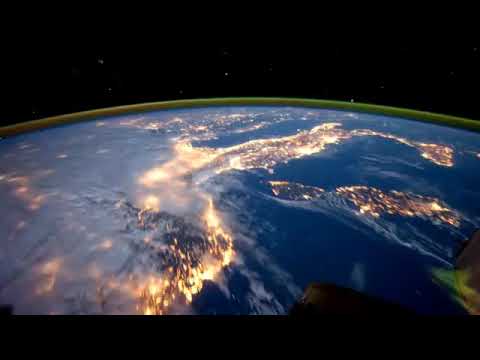
So, imagine this: you’re a kid, lying in your backyard, staring up at the stars. You’re convinced there’s a spaceship waiting for you out there. You get all excited thinking about aliens and galaxies far away. Now, flash forward to today—NASA’s out there making those dreams a tad more real.
I mean, how cool is that? They’re exploring Mars, searching for signs of life on other planets, and sending tiny robots out to places we can only dream of. It’s like sci-fi coming to life!
But wait—it’s not just about rockets and astronauts floating in space suits. NASA is all about inspiring people like us. Their discoveries spark curiosity, creativity, and maybe even a little bit of that childhood wonder we once had.
You know what? This journey isn’t just for science nerds. It’s for everyone who’s ever looked up at the night sky and thought “What’s out there?” So buckle up; let’s ride this space wave together!
Exploring the Cosmos: Unveiling NASA’s Greatest Scientific Discoveries and Accomplishments
Exploring the cosmos has always sparked our imagination. I mean, who hasn’t stared up at the night sky and wondered what’s out there? NASA has been at the forefront of this cosmic curiosity. They’ve made some seriously cool discoveries that not only help us understand our universe but also inspire generations.
First off, let’s talk about the **Apollo program**. Remember those iconic moonwalks? In 1969, Neil Armstrong and Buzz Aldrin landed on the Moon. This was a major leap for mankind! They didn’t just plant a flag; they brought back rock samples that told us a lot about how the Moon formed and its history.
Then there’s the **Hubble Space Telescope**. Launched in 1990, Hubble has given us breathtaking images of galaxies, nebulae, and other cosmic wonders. It’s like having a super-powered binoculars in space! One of its most famous discoveries was finding that galaxies are moving away from us–which supports the Big Bang theory. That’s pretty mind-blowing!
Don’t forget about **Mars rovers**! Rovers like Spirit, Opportunity, and Curiosity have been exploring the Martian surface for years now. Curiosity found evidence of ancient water on Mars which raises questions about whether life ever existed there. Can you imagine what that means? They were exploring what used to be a wet world!
NASA’s **Voyager missions** also deserve a shout-out here. Launched in 1977, Voyager 1 and Voyager 2 have traveled farther than any human-made objects in history—past Jupiter, Saturn, Uranus, and Neptune! They even sent back stunning images of these planets and their moons. And guess what? Voyager 1 is now in interstellar space! Talk about wandering far from home.
And let’s not forget about **Kepler**, which revolutionized our understanding of exoplanets (that’s planets outside our solar system). It discovered thousands of these distant worlds by monitoring star brightness for slight dips caused by planets transiting their stars. Some might be in that sweet spot called the “Goldilocks Zone” where conditions could be just right for life.
Then there’s NASA’s collaboration with international partners on projects like the **International Space Station (ISS)**. The ISS serves as a huge laboratory orbiting Earth where astronauts conduct experiments across various scientific fields—from biology to physics to astronomy. It’s been continuously inhabited since 2000!
Lastly, let’s highlight how NASA is tackling climate change through missions like **SAGE III** on the ISS, which studies aerosols in Earth’s atmosphere or **Landsat satellites** that provide invaluable data for tracking changes in land use and habitat loss.
So yeah, NASA’s achievements are more than just high-tech gadgets; they’re gateways to understanding our place in this vast universe—and they inspire countless people to look up at those stars with wonder and hope! Each mission is like turning another page in an epic story we’re all part of as humanity explores what lies beyond our reach yet so deeply influences us right here on Earth.
How NASA Inspires Innovation and Curiosity in the Field of Science
So, NASA. Just the name kinda brings to mind rockets, space shuttles, and maybe even that classic moon landing footage, right? Well, it goes way beyond that. NASA is like this gigantic spark plug for innovation and curiosity in science. Seriously. They inspire people all around the globe – not just scientists, but also kids dreaming about being astronauts or engineers one day.
First off, let’s talk about **inspiration through exploration**. When NASA sends missions into deep space or lands rovers on Mars, it’s like saying to everyone: “Look at what we can do!” The **curiosity rover**, which has been exploring Mars since 2012, has sent back stunning images and important data about the planet’s surface. But more than that, it gets people asking questions like “Is there life out there?” or “What’s it like on another planet?” That’s huge!
Another point is their approach to **education**. NASA provides tons of resources for teachers and students alike. Their educational programs are designed to engage young minds in STEM (science, technology, engineering, and mathematics). I remember once going to a local science fair and seeing kids present projects inspired by NASA missions! One kid made a model of the International Space Station—he was so excited explaining how astronauts live up there. Can you picture how motivating that is?
Also important is their **partnership with private companies**. Through programs like Commercial Crew Program, they work with companies like SpaceX to develop new technologies for space travel. This collaboration isn’t just about getting stuff done; it sparks innovation in ways you might not expect! Imagine all the engineers and tech wizards working together—people start thinking out of the box!
Then there’s the whole concept of **solving real-world problems** through space research. Sounds kinda lofty? But think again! Research done on things like water recycling systems on the International Space Station has led to advancements here on Earth too! Those systems help provide clean drinking water in places where it’s scarce.
And don’t forget about global collaboration! NASA often teams up with other countries’ space agencies for missions and research—like working together on the Hubble Space Telescope project. It opens up dialogue and exchange of ideas across cultures. Talk about a beautiful unity!
Lastly, let’s touch upon their ability to create a sense of **wonder** and possibility. Just think back to when you first saw an image from deep space—an endless galaxy filled with stars you’ve never seen before! It makes you realize there’s so much out there waiting to be discovered.
In summary:
- Exploration inspires curiosity: Look at missions like Curiosity Rover.
- Education initiatives: Engage young scientists.
- Public-private partnerships: Innovation through teamwork!
- Real-world solutions from space research.
- Global collaboration: Unity in exploration!
- Sparking wonder: Images from deep space ignite imaginations.
So yeah, NASA isn’t just about rocket launches; it’s a whole ecosystem that fuels scientific curiosity and pushes boundaries every day! It’s pretty inspiring if you ask me.
Exploring NASA’s Groundbreaking Discoveries: Transformative Advances in Space Science
Sure, let’s unpack some of the groundbreaking discoveries NASA has made that have really changed the game in space science. So, you know how we often look at the stars and wonder what’s out there? Well, NASA’s been doing some serious exploring to help us understand just that.
Mars Exploration has been one of NASA’s biggest focuses. Remember those cool rovers like Curiosity and Perseverance? They’ve been zipping around the Martian surface, uncovering secrets about the planet’s past. These little robots are like our scientific detectives! They’ve even found signs that Mars once had liquid water—how wild is that?
Then there are exoplanets. Basically, these are planets outside our solar system. NASA’s Kepler Space Telescope was a real game changer here. It spotted thousands of these bad boys! And some of them are pretty interesting because they’re in what scientists call the “Goldilocks Zone.” This is the sweet spot where conditions might be just right for life. Can you imagine finding a planet with aliens just chilling?
And let’s talk about black holes. These cosmic beasts are pretty mysterious, right? Well, thanks to missions like LIGO (Laser Interferometer Gravitational-Wave Observatory), NASA helped confirm that black holes actually collide and create ripples in spacetime. It’s like throwing a rock into a pond but on a cosmic scale! That discovery opened up an entirely new way for scientists to observe the universe.
Don’t forget about The Hubble Space Telescope. It’s been orbiting Earth since 1990 and has provided us with mind-blowing images of distant galaxies and nebulae. Seriously, you can get lost just staring at those stunning photos—it feels like peeking into another world!
Then there’s the Artemis program, which aims to return humans to the Moon by 2024 and even establish a sustainable human presence there. That means astronauts could live on the Moon for longer periods—how cool is that? Plus, they plan to use this as practice for future missions to Mars.
NASA isn’t only about distant planets and black holes; they’ve also made amazing strides here on Earth by studying climate change using satellite data. This info helps us understand how our planet is changing over time—which is super important for everyone!
So yeah, every one of these discoveries feels like opening up a new chapter in understanding our universe. Every mission or satellite can feel like a step towards connecting us with something larger than ourselves, making all those late-night stargazing moments feel even more special.
You know, whenever I think about NASA, I feel this wave of excitement. It’s like a little spark lights up inside me. Remember that feeling of staring up at the night sky as a kid, wondering what’s out there? Well, NASA kind of turns that wonder into a reality!
From sending the first astronauts to the Moon to launching rovers on Mars, their journey has been nothing short of epic. I mean, can you imagine being those astronauts? Floating weightlessly among the stars and looking down at our beautiful blue planet? That’s something straight outta a sci-fi movie! It makes you realize how tiny we are in the grand scheme of things.
But it’s not just about the flashy rockets and space suits. It’s about pushing boundaries and asking questions that some people might think are crazy. Like, just a few decades ago, who would’ve thought we’d send a probe past Pluto? And yet here we are! They even found some wild stuff about ancient oceans on Mars! How cool is that?
I remember when I was younger and saw images from the Hubble Space Telescope. Man, they blew my mind! I could spend hours looking at those swirling galaxies and colorful nebulae. It felt like each photo had its own story to tell—like they were whispers from the universe saying, “Hey! Look closer!”
And let’s not forget how NASA inspires people everywhere. Whether it’s kids dreaming of becoming astronauts or scientists working on groundbreaking discoveries back on Earth—it connects us all through curiosity and exploration. Those big dreams motivate young minds to pursue STEM fields, leading to innovations we couldn’t have imagined before.
So yeah, NASA’s journey is much more than rockets and robots; it’s about sparking imagination and wonder in generations to come. I really hope they keep reaching for the stars because every mission brings us one step closer to understanding our place in this vast universe—and that just feels so inspiring!