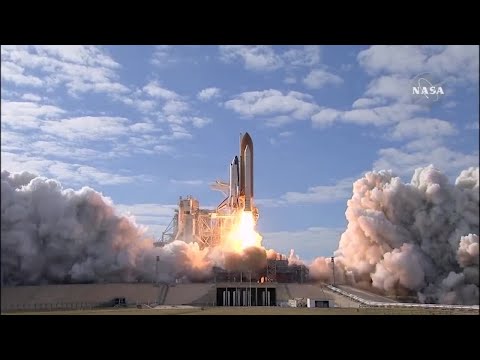
You know that moment when you look up at the stars and realize just how tiny we are? It’s kind of mind-blowing, right? Well, here’s a fun fact: while you’re contemplating your place in the universe, NASA is up there doing some serious work on climate change.
Yeah, that’s right! The same folks that send rockets to space are also keeping an eye on our planet. Imagine astronauts floating around in zero gravity while gathering data about melting ice caps or rising sea levels. Sounds like a sci-fi movie plot?
The thing is, it’s not all about shiny spacecraft or moon landings. NASA plays a huge part in advancing our understanding of climate change. When you think about it, they’re like the ultimate weather nerds with super fancy tech! So grab a snack and let’s chat about how they’re helping us tackle this massive challenge together.
NASA’s Impact on Global Climate Change Research: A Comprehensive PDF Guide
Sure! Let’s chat about NASA and its big role in climate change research. Seriously, you don’t need to be a scientist to appreciate how much work they’ve put into understanding our planet.
NASA’s work in climate change isn’t just about rockets and space; it goes deep into the science of Earth itself. With their satellites orbiting high above, they’re like the ultimate watchers. They collect data on everything from temperature changes to sea level rise and even greenhouse gas emissions. This information is absolutely crucial for scientists all over the world who are trying to understand how human activities impact climate.
One major way NASA contributes is through Earth-observing satellites. These gadgets help monitor things like ice sheet melting in Antarctica or forest coverage changes over time. Imagine looking down at Earth from space and seeing how it evolves! It’s pretty eye-opening.
Now, let’s talk about some specific programs:
- MODIS (Moderate Resolution Imaging Spectroradiometer): This satellite measures essential factors like land surface temperatures and vegetation cover.
- ICESat-2: Launched in 2018, this satellite is all about measuring ice thickness. It helps track how polar regions are changing.
- SMAP (Soil Moisture Active Passive): It gauges soil moisture levels worldwide. Why is that important? Well, soil moisture impacts agriculture and water management.
What happens next with all this data? Researchers use it to create climate models. These models simulate future scenarios based on current trends, helping policymakers make informed decisions. You can think of these models as simulations for what could happen if we keep doing what we’re doing or if we make changes.
And here’s something cool: NASA collaborates with other organizations too! They share data with the National Oceanic and Atmospheric Administration (NOAA) and the European Space Agency (ESA). By pooling resources and knowledge, they increase accuracy when forecasting climate patterns globally.
You might wonder how this impacts our daily lives? Well, knowing more about climate change can influence everything from local agriculture practices to global energy policies. If farmers know when droughts or floods are likely to hit based on satellite data, they can prepare better. Or you might think differently about energy consumption if scientists predict harsher weather due to climate shifts—who wouldn’t?
Just picture a kid growing up today—because of all this research and data shared by organizations like NASA, they’ll have a greater understanding of what’s at stake for their future compared to previous generations. Isn’t that hope-inducing?
In summary, Nasa’s role in advancing global climate change science is massive! Their satellites gather crucial data that supports research worldwide, leading to better predictions, informed policy-making, and ultimately a more sustainable planet for everyone. That’s some powerful stuff right there!
NASA’s Pioneering Contributions to Global Climate Change Science in 2022
NASA has been a big player in understanding climate change. In 2022, they kept pushing the boundaries of climate science. Their missions and studies have given us crucial insights into our planet’s health. Let’s break down some of the cool stuff they did that year.
Satellite Observations
One of NASA’s strongest suits is its fleet of satellites orbiting our planet. These machines collect tons of data about the atmosphere, ocean, and land surface. For example, the Earth Observing System Data and Information System (EOSDIS) provided essential climate data that scientists use to track changes over time. It’s like having a high-tech eye in the sky watching over us.
Global Climate Models
In 2022, NASA also focused on improving models that simulate Earth’s climate systems. These models help predict how different factors like greenhouse gas emissions affect global temperatures. You know how you can get a weather forecast? That’s kind of what these models do but for long-term climate trends instead!
Wildfire Monitoring
With wildfires becoming more frequent and intense due to climate change, NASA developed tools to track them better. The Aqua satellite, for instance, helped monitor smoke plumes and their impact on air quality across vast regions. This information is super important for public health and safety.
Climate Change Awareness
NASA didn’t just gather data; they worked on spreading awareness too! They launched campaigns to communicate findings more effectively. By breaking down complex data into easy-to-understand visuals and messages, they made it easier for people—like you and me—to grasp what’s going on with our planet.
Agriculture and Food Security
Another fascinating contribution was through studying how climate change affects agriculture. Using satellite images, NASA analyzed crop yields while considering changing weather patterns across different regions. This helps farmers adapt their strategies to ensure food security as conditions evolve.
Collaboration with Other Organizations
Lastly, NASA partnered with various organizations worldwide to enhance global efforts in combating climate change. Collaborating with institutions like NOAA (National Oceanic and Atmospheric Administration) allowed them to combine expertise and resources in tackling this massive challenge together.
So yeah, there you have it! In 2022 alone, NASA was out there doing some serious work in understanding climate change from multiple angles—making the invisible visible through technology and teamwork!
Top 10 Scientists Challenging Climate Change Consensus: Diverse Perspectives in Environmental Science
Sure, let’s talk about some scientists who have thrown a wrench into the gears of mainstream climate change consensus. It’s like a little counter-narrative dance happening in the world of environmental science. So here goes!
1. Richard Lindzen
He’s a retired atmospheric physicist from MIT. Lindzen has questioned the severity of climate models and is known for his skepticism about how sensitive our climate is to CO2 increases. He suggests natural variability could play a bigger role than we think.
2. Judith Curry
This former chair of the School of Earth and Atmospheric Sciences at Georgia Tech has raised doubts about climate models’ accuracy, advocating for a more nuanced perspective. She argues for the importance of considering uncertainties in climate predictions.
3. William Happer
A physicist and professor emeritus at Princeton, Happer has often challenged the narrative that CO2 is a primary driver of global warming. He believes that increased CO2 could even be beneficial for plant life.
4. John Christy
An Alabama-based climatologist, Christy focuses on satellite data to analyze temperature trends. He claims there’s a disconnect between observed temperatures and those predicted by many climate models.
5. Patrick Michaels
This former research professor at the University of Virginia has been vocal about his belief that climate change isn’t as dire as presented by many scientists. He looks at historical climate patterns, suggesting we’ve seen similar fluctuations before.
6. Roger Pielke Sr.
Pielke argues that policymakers often overlook how socio-economic factors can complicate our response to climate issues. His work highlights how adaptation might be just as important as mitigation strategies.
7. Michael Mann, ironically!
Wait, what? Yes, Mann is best known for developing the “hockey stick” graph showing rapid temperature rise in recent years, but he also listens to those questioning extreme predictions, promoting scientific debate rather than shutting it down.
8. Bjorn Lomborg
A statistician and economist, Lomborg takes a unique stance by stressing cost-effectiveness when addressing environmental issues like climate change. He questions whether we’re investing our resources wisely—even if we agree that action is needed.
9. Ken Caldeira
Working with carbon cycle dynamics at Stanford, Caldeira offers insights on geoengineering as a potential method to combat warming effects if they become severe enough—this opens up discussions about diverse solutions rather than just sticking with traditional routes.
10. Steven Earle.
Focusing on natural resource management and sustainability studies, Earle leans into how community resilience can mitigate some impacts without necessarily subscribing fully to mainstream narratives about catastrophic repercussions from global warming.
So yeah, these scientists bring diverse perspectives to an incredibly complex topic! While NASA plays an essential role in advancing global climate science through data collection and modeling—providing us with evidence-based insights—their work keeps evolving alongside other scientific views out there: pointing out that science thrives on debate and differing opinions!
In any case, it’s important to dig deeper into these different voices instead of blindly accepting any one narrative—it makes you appreciate the layers behind such critical conversations!
You know, when we think about NASA, it’s easy to get lost in the excitement of rockets and space missions. I mean, who doesn’t love a good launch video? But what really blows my mind is how NASA has been hustling behind the scenes to tackle something super crucial—climate change.
I remember a while ago, sitting on my porch during one of those ridiculously hot summer evenings. The air was thick with humidity, and it hit me just how wild the weather had become over the years. It felt like we were living in a science fiction novel where the planet was turning up the heat. That’s when I realized how vital organizations like NASA are in helping us understand these shifts in our climate.
So here’s the deal: NASA doesn’t just gaze at stars. They’ve got satellites zooming around Earth that collect all sorts of data. Think about it—those floating machines monitor temperature changes, sea level rise, greenhouse gas emissions, and even deforestation! It’s like having a super detective squad for our planet’s health. And this information? It isn’t just for scientists to geek out over; it’s shared globally to help countries make informed decisions about how to combat climate change.
And here’s something really cool—you’d be surprised by how they collaborate with international agencies! Like, they’re part of this wide network that includes everybody from government bodies to non-profits. Everyone’s trying to put together the puzzle pieces of climate science so we can predict what might happen next and develop solutions.
Now imagine being part of a global team where every bit of data you provide could potentially save lives or spark new policies. That’s what these scientists are doing daily! They publish their findings and work closely with leaders across various sectors because climate change isn’t just an “us” problem or a “them” problem—it’s everyone’s issue.
Sure, some might argue that space exploration is more exciting or gets more funding (can’t blame them—it is thrilling!). But honestly? When you think about future generations growing up on a planet that’s bearing the brunt of climate change—we really need this kind of innovation and commitment from agencies like NASA now more than ever.
So yeah, next time you see news about space or satellites whizzing past Mars, take a moment to appreciate what they’re also doing right here at home for Earth. Seriously, without their contributions to understanding our changing climate, who knows where we’d be headed? It’s pretty inspiring stuff if you ask me!