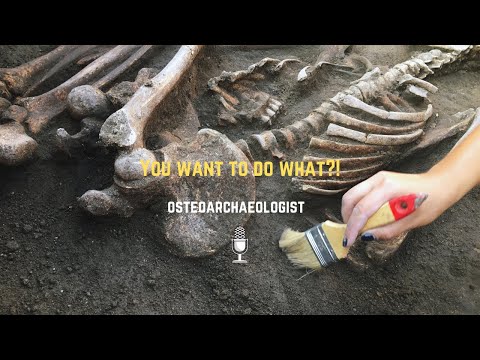
So, picture this: You’re at an archaeological dig, right? Everyone’s busy brushing away dirt, and suddenly someone shouts, “I found a skull!” Cue the excitement! But wait, it’s not just any old skull—it’s got stories to tell.
That’s where human osteoarchaeology comes in. It sounds fancy, but basically, it’s like being a detective for bones. You can learn about how people lived, what they ate, and even how they died just from studying their remains. Can you imagine?
Every little crack or mark on a bone is like a clue in a mystery novel. Seriously! For instance, I read about this ancient dude who had a broken leg—everyone thought he was done for back then. But guess what? He lived for years afterward! What does that tell us about survival?
So grab your imaginary magnifying glass and let’s dive into the fascinating tales hidden within our ancestors’ bones. Who knows what we’ll discover together?
Understanding Human Osteoarchaeology: Exploring the Intersection of Anthropology and Archaeological Science
When you think about bones, you might just picture a skeleton in a science class, right? But there’s so much more to it! Human osteoarchaeology is like a fascinating puzzle where archaeologists and anthropologists team up to uncover the stories hidden within our ancestors’ bones. Seriously, every little fragment can tell us something important.
So, what exactly is this field all about? Well, basically, it combines osteology—the study of bones—with archaeology. This means examining human skeletal remains that have been unearthed from archaeological sites. These remains can reveal details about how people lived, what they ate, their health, even how they died. Wild, right?
The thing is, when specialists look at these bones, they don’t just focus on how they’re shaped or where they were found. They explore all kinds of things:
- Age and sex estimation: By looking at specific features in the skull and pelvis, scientists can guess how old someone was when they died and if they were male or female.
- Disease and trauma: Bones can show signs of past injuries or diseases. A broken arm that healed badly tells a story about life challenges.
- Cultural practices: Burial styles can indicate beliefs. For instance, if someone was buried with artifacts or specific positioning of the body.
- Diet analysis: By investigating isotopes in bone collagen, experts can understand what people ate. Imagine figuring out ancient diets—like who loved fish or grains!
One moment that really sticks with me is when researchers discovered the remains of a Viking warrior in Sweden. They found not only his bones but also clues suggesting he was part of an elite group of fighters who rode into battles on horseback! Can you imagine the excitement around that?
In addition to answering questions about individuals or groups from the past, osteoarchaeology also links to bigger themes like migration patterns over time or shifts in environmental conditions. For example, changes in bone structure may hint at adaptations due to new climates as communities moved.
Plus, as technology evolves—the introduction of methods like DNA analysis, for example—it opens up even more avenues for understanding our history through these remains. By extracting genetic material from bones found at different sites and comparing them across regions, we uncover migration routes and relationships between ancient populations.
So really think about this: every time we dig up a grave site or find an ancient burial ground; we’re getting to peek into lives long past. Each bone has tales waiting to be told—of joy, struggle, community events…everything! It’s astonishing how much importance lays beneath our feet!
In short, human osteoarchaeology isn’t just about studying old bones; it’s essentially exploring lifetimes worth of stories hidden away over centuries. You’re not merely piecing together skeletons but reviving histories that shape us today. And honestly? That’s pretty amazing!
Understanding Bioarchaeology vs. Osteoarchaeology: Key Differences and Scientific Significance
So, let’s talk about bioarchaeology and osteoarchaeology. They sound super technical, huh? But don’t worry; I’ll break it down for you. The thing is, both fields are all about studying human remains, but they focus on different angles of the story those remains tell.
Bioarchaeology is the study of human bones within the context of cultural practices. Imagine digging up ancient graves and finding not just skeletons, but clues about how people lived, what they ate, and even their social structures. Bioarchaeologists look at things like how trauma affected life expectancy or how nutrition influenced health in different populations. They are basically detectives figuring out life stories from skeletons!
On the other hand, osteoarchaeology zeroes in on the bones themselves. This field dives deep into understanding skeletal biology—think anatomy and pathology. Osteoarchaeologists analyze things like age at death, sex estimation, and identifying diseases that might’ve plagued individuals or populations. So, while bioarchaeologists are telling you where someone fit into society, osteoarchaeologists are more focused on what their body reveals about them physically.
Now let’s get into some key differences between these two fields:
- Focus: Bioarchaeology combines archaeology with biological anthropology to understand culture through remains.
- Skeletal Analysis: Osteoarchaeology emphasizes detailed examination of skeletal structures.
- Cultural Context: Bioarchaeologists consider the broader societal factors influencing individuals.
- Health Insights: Osteoarchaeology often highlights individual health issues rather than communal health trends.
You know what’s interesting? Both these disciplines can really complement each other! Take a burial site from centuries ago—bioarchaeologists might examine grave goods and burial styles to piece together rituals. Meanwhile, osteoarchaeologists could investigate bone abnormalities to determine if certain stressors were common in that community’s diet or living conditions.
It reminds me of this time I heard about researchers who discovered an ancient society where most individuals showed signs of malnutrition. The bioarchaeological side revealed that they likely relied heavily on agriculture but faced challenges due to climate change during that era. The osteoarchaeological analysis showed specific markers on bones that pointed to chronic illness related to their diet! Pretty eye-opening how both sides come together for a fuller picture.
In a nutshell, bioarchaeology and osteoarchaeology have distinct roles but share a common goal: uncovering the narratives hidden within our ancestors’ remains. Understanding both helps us appreciate not only who they were as people but also how their lives shaped human history over time. Seriously cool stuff when you think about it!
Okay, so let’s talk about human osteoarchaeology for a minute. It sounds super fancy, right? But really, it’s just the study of human bones from archaeological sites. And you might be thinking, “What’s so interesting about that?” Well, trust me, there’s a whole lot more to it than just dusty old skeletons piled in the ground.
Imagine walking through an ancient site and uncovering bones that tell stories—like real-life narratives from people who lived hundreds or even thousands of years ago. When I first learned about this field, I was genuinely blown away. It hit me that each bone is like a tiny time capsule filled with memories and experiences of individuals who faced challenges we can only imagine.
For example, think about a young warrior from centuries back. You find his bones in a burial site. The wear on his joints might tell you he fought hard battles or maybe even fell victim to an injury that changed the course of his life. There’s something really powerful about piecing together these little clues to understand who he was—not just as a soldier but as a person. Like, did he have dreams? Was there someone he loved? Did he have hopes for the future? Seriously, it can get pretty emotional.
And the thing is, it’s not only about big warriors or kings; it includes everyone—children, artisans, the elderly—every single person has a story etched in their remains. Take an older woman whose bones show signs of arthritis; she lived through hardships yet likely had wisdom to share with her community. Or how about children whose burial sites give insight into the health challenges they faced growing up? These aren’t just numbers or statistics; they’re lives lived fully.
But what makes this even cooler is how osteoarchaeologists use modern techniques like DNA analysis and isotopic studies to add depth to their findings. So when they analyze bones for signs of diet or where someone might have traveled from, it’s like unearthing pieces of the puzzle that connect us all across time and space.
You know what I love most about this field? It forces us to confront our own humanity—the struggles we face are not so different from those in the past. By unraveling these stories hidden in bones, we come face-to-face with our shared history and shared experiences as humans.
So yeah, next time you hear someone mention human osteoarchaeology—even if it sounds all academic—remember it’s really all about diving into rich stories that remind us we’re part of something much bigger than ourselves. It’s pretty incredible when you think about it!