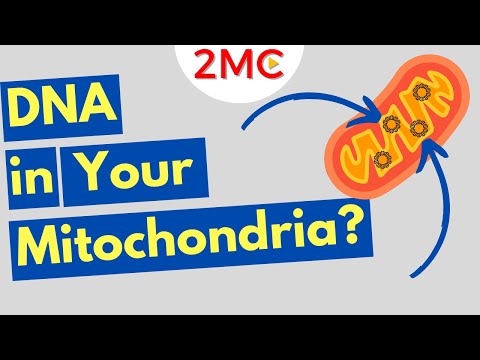
You know what’s kind of wild? If you took all the mitochondria in your body and lined them up, they’d stretch thousands of miles! Yeah, those tiny powerhouses are no joke.
So, here’s the deal: mitochondria are like the little engines that keep our cells running. They’re not just hanging out doing nothing; they’re busy turning food into energy. But there’s more to the story than just busting out energy for us.
Ever heard of the mitochondrial genome? It’s like a secret blueprint for these tiny guys. And trust me, it has its own set of mysteries, myths, and even a bit of drama! Come on a little journey with me as we dig into this fascinating world. You might just find it’s more interesting than your last Netflix binge!
Understanding Mitochondrial DNA: Do White Individuals Possess Unique Genetic Markers?
Mitochondrial DNA, or mtDNA for short, is a super interesting topic if you’re curious about genetics. This little piece of our genetic puzzle is found in the mitochondria, the energy factories of our cells. Unlike the DNA in our cell nuclei, which we inherit from both parents, mtDNA comes only from your mom. Pretty wild, right?
Now, when we talk about unique genetic markers in white individuals or any other group, it’s important to dive into how mtDNA actually works. Mitochondrial DNA is a circular molecule containing genes that help produce energy and play roles in metabolism and cell function.
So here’s the thing: different populations have variations in their mitochondrial DNA sequences. These variations can sometimes suggest ancestral links. For example, researchers often study mtDNA to trace lineage and migrations of humans over thousands of years. Different populations may carry specific haplogroups—essentially branches on a family tree based on shared mutations.
Let’s say you’re looking at individuals with European ancestry. They might share some common markers due to their shared ancestry but it doesn’t mean every white person has a unique set of mtDNA. It’s more like they belong to broader groups with similar traits.
In fact, there’s ongoing research into whether these markers can tell us anything about health or susceptibility to diseases. Some studies suggest that variations in mitochondrial genes could be linked to certain conditions like diabetes or heart disease.
But remember! This is still an emerging field; we’re trying to figure things out together! Not all scientists agree on every point regarding genetic diversity and health implications.
The relationship between an individual’s mtDNA and their ethnic background isn’t as straightforward as “this group has this!” Instead, think of it as a colorful tapestry woven from multiple threads—each person’s genetic makeup contributes to a bigger picture where differences reflect shared stories across generations.
So basically, while there are unique markers found within different groups—including white individuals—those markers are part of a larger fabric. They tell us about migration patterns rather than defining strict boundaries between people based solely on race or ethnicity.
There’s still so much more to explore with mitochondrial DNA! Each discovery helps connect the dots about who we are as humans and where we come from—like pages ripped from the book of humanity itself. So let curiosity guide your journey through this captivating world!
Exploring the Unexpected Discoveries of the Human Genome Project: Implications for Modern Science
The Human Genome Project was a massive scientific endeavor that aimed to map all the genes in the human genome. It took years of teamwork and millions of dollars, but boy, it opened up a world of unexpected discoveries!
One fascinating aspect is the insight it provided into our own mitochondrial DNA. You might know this already, but mitochondria are often called the powerhouse of the cell. They’re like tiny energy factories inside us! When scientists studied mitochondrial DNA, they found that it has some unique features that set it apart from nuclear DNA.
For starters, mitochondria are inherited only from our mothers. So basically, your mitochondria come straight from your mom—no dad involved! This maternal inheritance means scientists can trace lineage and study genetic disorders that affect energy production more efficiently. Pretty cool, right?
Also, researchers discovered that mitochondrial mutations can contribute to a range of health issues. For instance, they’ve been linked to conditions like diabetes and neurodegenerative diseases. Imagine having a tiny change in that little piece of DNA affecting your entire body’s energy levels—it’s mind-blowing!
Furthermore, the Human Genome Project revealed how diverse human DNA is across different populations. This diversity plays a big role in how we respond to diseases and treatments. Researchers can now use this knowledge to create more personalized medicine tailored to specific genetic makeups.
Now let’s talk about another unexpected twist: non-coding regions of our genome, often dubbed “junk DNA,” aren’t just there taking up space as many thought before! Some non-coding regions have vital roles in regulating gene expression. In fact, they can influence whether certain genes are turned on or off depending on environmental factors or cellular needs.
But wait; there’s more! The discoveries made during this project have implications far beyond human health alone. They’ve sparked conversations about evolutionary biology too—how we evolved and adapted over time based on our genetic makeup.
In summary:
- The Human Genome Project mapped all human genes and revealed surprising insights about mitochondrial DNA.
- Mitochondrial mutations can lead to various health issues.
- Diversity in human genetics influences disease responses and treatment effectiveness.
- Non-coding regions have important regulatory functions.
- Impacts evolutionary biology discussions by tracing adaptations over time.
So you see? The Human Genome Project didn’t just give us a blueprint for humans; it opened doors to new questions and deeper understanding across many fields like medicine and evolutionary science! Who knew mapping our genes could lead us down such an intriguing path?
Exploring the Mother’s Curse: Understanding Mitochondrial Inheritance and Its Impact on Genetics
So, let’s talk about this intriguing topic—Mother’s Curse. It’s like a hidden chapter in our genetic story, and it all revolves around **mitochondrial inheritance**. You might be thinking, “What’s that all about?” Well, here’s the deal.
You see, mitochondria are these little powerhouses in our cells. They play a huge role in generating energy. But here’s the twist: unlike most of our genes, which we inherit from both parents, **mitochondrial DNA** (mtDNA) comes exclusively from your mother. So when you think of where your mitochondria come from, it’s basically a direct connection to her lineage.
Now, this can lead to some interesting genetic situations known as “Mother’s Curse.” The term refers to how some mutations in mitochondrial DNA can be passed down through generations from mothers but have detrimental effects on sons. Basically, these mutations might be harmful to male offspring while being harmless or even neutral for females. Crazy, right?
Here are some key points about mitochondrial inheritance:
- Mitochondrial DNA is inherited only from the mother: This means any mutations here will directly affect her kids.
- Mutations can have different effects: It impacts males and females differently because males don’t pass on their mitochondrial DNA.
- Implications for evolution: This can shape how diseases spread within families through generations.
Think of it like this: if a mother has a mutation that affects energy production negatively for her son but not for her daughter, that son might struggle with certain health issues later on while his sister may not face the same challenges.
And here’s something emotional—imagine a family where the mother knows she carries such mutations and feels guilt because it could cause problems for her sons. I mean, that emotional weight can be heavy! It really shows how intertwined genetics are with our lives and feelings.
Another aspect worth mentioning is how scientists study these mitochondrial lineages to trace ancestry or even study population genetics over time. By looking at mtDNA variations among different populations around the world, researchers uncover migration patterns and historical connections among people—like little breadcrumbs left by our ancestors!
It also turns out that mitochondrial mutations play a role in various diseases—think diabetes or certain types of neurodegenerative disorders. That just adds another layer to this whole story.
So yeah, understanding mitochondrial inheritance gives us insight into both health and history. It’s pretty amazing stuff when you think about how deeply interconnected we all are through something as seemingly small as mitochondria!
You know, whenever I hear the word “mitochondria,” I can’t help but think back to high school science class. Remember that buzzing feeling when you first learned that mitochondria are like tiny powerhouses inside our cells? They were described as the “power producers,” and honestly, it felt sort of magical. But there’s way more to them than just generating energy.
So, mitochondria have their own little set of DNA called the mitochondrial genome. Unlike the bulk of your DNA, which is found in the nucleus of your cells and inherited from both parents, mitochondrial DNA comes exclusively from your mom. Kinda wild, right? This tiny strand holds a treasure trove of information about not just your energy production but also your ancestry. It’s like a genetic time capsule passed down through generations.
What gets me is that this genome is smaller and has a different structure compared to nuclear DNA. It’s circular—think of it like a doughnut rather than those long spirals you see in movies! This unique setup can actually tell scientists loads about human evolution, migration patterns, and even some diseases. It’s like reading a history book written by our ancestors.
But here’s where it gets really interesting: some researchers have been looking into how changes or mutations in this mitochondrial DNA might relate to certain health conditions. I remember hearing about someone who discovered they had a mitochondrial disorder after years of feeling unwell, kind of heartbreaking when you think about it. The connection between our mitochondria and our health highlights just how crucial these tiny structures are in understanding ourselves better—not just biologically but even culturally.
And speaking of culture—every time you start thinking about your own family roots or cultural background, remember those mitochondria are whispering stories from generation to generation. So next time someone mentions mitochondria at a party (and honestly, who wouldn’t want to chat about that?), you’ll know they’re not just talking about boring biology; they’re actually diving into the depths of human history itself!
It’s fascinating stuff—how something so small can hold pieces of stories and secrets from so many lives before ours. Honestly makes you appreciate every little function happening inside your body!