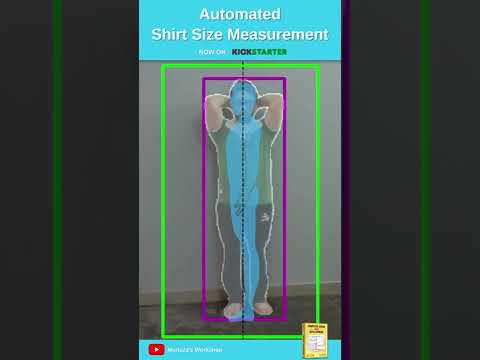
You know, the other day, I was watching a nature documentary—those ones where the camera zooms in on a tiny insect and suddenly, it feels like you’re staring at an alien. Crazy, right? Well, that’s where OpenCV comes in!
It’s this awesome tool that helps researchers see the world in totally new ways. Think of it like giving your computer superpowers to analyze images and videos. Scary cool, huh?
So, whether it’s tracking wildlife or decoding ancient texts, OpenCV is changing how scientists work. Seriously! It’s not just code; it’s changing the game in scientific research. Curious about how? Let’s unpack some of these wild applications together!
Revolutionizing Scientific Research: Innovative Applications of OpenCV on GitHub
OpenCV, or Open Source Computer Vision Library, is this super cool tool that’s been shaking things up in scientific research. I mean, we’re talking about a library that’s packed with hundreds of algorithms for image processing and computer vision—crazy, right? It’s like giving researchers a Swiss Army knife for analyzing images and videos. So, let’s break down some of the innovative ways this tech is making waves.
1. Medical Imaging: Imagine doctors using Opencv to analyze X-rays or MRIs faster and more accurately. Instead of staring at images for hours, algorithms can help spot tumors or fractures almost instantly. It’s like having a second pair of eyes that don’t get tired!
2. Environmental Monitoring: Opencv has made it easier to track changes in ecosystems. For instance, scientists use drones equipped with cameras to monitor forests, rivers, and even wildlife populations. By analyzing video feeds from these drones with OpenCV, they can assess plant health or animal behavior without disturbing the environment.
3. Robotics: Researchers are also getting wild with robotics! They’re using OpenCV to help robots see and understand their surroundings better. For example, robots equipped with cameras can detect obstacles while navigating through complex environments—like your kitchen! This is super handy for automation tasks.
4. Astronomy: Believe it or not, astrophysicists are getting into the game too! By applying OpenCV to process images from telescopes, they can identify new celestial bodies or track asteroids speeding through space. It’s all about making sense of those vast images filled with stars.
Now let’s talk about GitHub. You might be wondering what that has to do with all this innovation. Well, GitHub has become a massive hub where developers share their code related to OpenCV projects. So researchers can easily find tools others have created—like pre-built functions or even entire applications that they can adapt for their own experiments.
This collaborative aspect is game-changer because it encourages community contributions and rapid development of new solutions. Plus, researchers don’t have to start from scratch; they can build upon existing work and share their findings back on GitHub!
So when you think about how OpenCV paired with platforms like GitHub is revolutionizing scientific research—it’s inspiring! From healthcare breakthroughs to automated environmental systems and deep-space discoveries—these innovations can’t be underestimated!
So yeah, the next time you hear about some cool new research using computer vision tech like OpenCV, just know it’s part of a larger movement towards open collaboration in science!
Exploring OpenCV Applications in Scientific Research: Real-World Examples and Innovations
OpenCV, or Open Source Computer Vision Library, is like the Swiss Army knife for computer vision projects. It’s packed with tools that can help scientists analyze images and videos in ways that used to take hours or even days. The flexibility of OpenCV means it’s found its way into a ton of scientific fields, making research faster and often more accurate.
One big area where OpenCV shines is in biology. Imagine you’re a researcher studying tiny microorganisms under a microscope. With OpenCV, you can automate the process of counting and categorizing these organisms. Instead of squinting through lenses and manually recording data, you set up a program that processes the images in real-time. This not only saves time but also reduces human error.
Another fascinating application is in environmental science. Scientists tracking wildlife can use camera traps to capture images of animals in their natural habitat. With OpenCV’s object detection capabilities, they can automatically identify species from thousands of photos without having to look through each one manually. It’s like having an extra set of eyes on the job!
In materials science, researchers are using OpenCV to analyze microstructures in metals or polymers. They can observe how these materials change under different conditions by analyzing image patterns over time. This kind of analysis helps in improving materials for everything from electronics to construction.
Healthcare is also seeing innovative uses. For instance, machine learning algorithms powered by OpenCV are being used to detect diseases from medical images such as X-rays or MRIs. Think about how much quicker doctors can get reliable results without relying solely on manual assessments! It’s like having a really smart assistant working alongside them.
Then there’s astronomy—so cool! Astronomers utilize OpenCV to process images from telescopes to identify celestial objects or track space debris. The exact nature of those images often requires precision; even slight errors could lead to misidentifications.
So what does all this mean for researchers? Well, OpenCV not only enhances efficiency but fosters innovation. Researchers aren’t just crunching data; they’re spending more time understanding implications and pushing boundaries in their fields.
It’s pretty amazing when you think about it! The evolution of tools like OpenCV has essentially democratized image analysis in research. It empowers scientists who might not have coding skills but still want to harness technology for their work.
Overall, whether it’s tracking animals in the wild or discovering new materials for tech gadgets, the applications are endless—and growing every day! Science is becoming more connected with technology than ever before; that synergy could lead us down some truly exciting paths ahead.
Comprehensive Guide to Deep Learning Techniques for Computer Vision: PDF Resource for Scientific Research
When it comes to deep learning techniques in computer vision, the landscape is pretty exciting! You know, it’s like diving into a massive ocean of possibilities. Let’s break down some of the key concepts and techniques.
Deep Learning Basics
Essentially, deep learning is a subset of machine learning that uses neural networks with many layers. Think of these layers as a series of filters. They help in recognizing patterns in data—like images! So when you feed an algorithm a bunch of photos, it learns to identify features such as edges or colors.
Convolutional Neural Networks (CNNs)
A big player in computer vision is the CNN. These specialized neural networks are designed to process grid-like data, such as images. What makes them cool? They use convolutional layers that apply filters over input data, allowing the network to learn spatial hierarchies of features.
- Pooling Layers: They reduce the dimensionality of feature maps while retaining important information.
- Activation Functions: These introduce non-linearity into the model which helps in learning complex patterns.
To put this into context, say you’re training a CNN to recognize cats and dogs in photos. During training, each layer starts identifying simple shapes (like round ears) and progresses to more complex features (like fur texture)!
Transfer Learning
Another fascinating technique is transfer learning. Basically, you take a pre-trained model—one that’s already been trained on a massive dataset—and fine-tune it for your specific task. It’s like taking short cuts! Instead of starting from scratch, you leverage existing knowledge. For instance, if you want to identify different types of plants using images but lack tons of data, using a pre-trained model could save time and resources.
OpenCV in Research
Now let’s talk about OpenCV—a powerful open-source library for computer vision projects. It provides tools that make working with images easier. With OpenCV, researchers can implement various algorithms without reinventing the wheel!
- Image Processing: You can perform basic operations like resizing or filtering out noise from images easily.
- Stereo Vision: This allows depth perception by comparing two images taken from slightly different angles.
- Anomaly Detection: In scientific research, OpenCV can help spot outliers in datasets effectively!
I remember once working on an environmental project analyzing satellite imagery for deforestation detection using OpenCV and CNNs—it was amazing seeing how effective these techniques were!
The Future Ahead
As research continues to evolve, combining deep learning with computer vision opens new doors for innovation—from medical imaging analysis to autonomous driving systems.
So when you’re looking through resources—like PDFs—on deep learning techniques and OpenCV applications, keep your eye out for examples that illustrate these concepts clearly. They’re invaluable for understanding how all these complex ideas come together!
That’s just scratching the surface! Seriously though—it can get complicated fast—but remembering fundamentals helps make things manageable and way more exciting!
So, OpenCV—it’s this pretty cool open-source computer vision library that has been shaking things up in the science world lately. I mean, think about it: scientists can now see things differently thanks to all the neat stuff you can do with image processing and computer vision. It’s like giving your research a superpower.
Picture this: a marine biologist wanting to monitor coral reefs. Instead of diving in every time, they set up underwater cameras that capture footage of these vibrant ecosystems. OpenCV comes into play by analyzing those images, tracking changes over time, or even counting fish species in specific areas. It’s not just about tedious counting anymore; it’s like having a tech-savvy sidekick!
And there’s more! Think medical imaging. Doctors and researchers are using OpenCV to analyze X-rays or MRIs quickly and accurately. It’s kind of mind-blowing when you realize how much faster it gets to spot abnormalities or tumors. You might picture a stressed out doctor flipping through loads of scans, but with the right algorithms from OpenCV, that job transforms into something way more efficient and precise.
But it’s not just limited to biology or medicine; you have environmental scientists using it for tracking pollution levels by analyzing satellite images or even urban planners monitoring traffic patterns for smarter cities! Isn’t that fascinating? It seems like every day there are new ways this technology is helping us understand our world better.
I remember reading about this researcher who used OpenCV for an experiment on plant growth under different light conditions. With some clever coding, they could analyze plant images daily and measure growth rates pretty much automatically! That’s hours saved on data collection so they could focus on analysis instead.
At the heart of it all is collaboration too; scientists around the globe share their findings, codes, and algorithms based on OpenCV. This open-source vibe creates an atmosphere where innovation thrives—it’s like everyone is lifting each other up!
You know what? The possibilities feel endless with OpenCV in scientific research. It opens doors we haven’t even thought about yet. Honestly, it’s exciting to think where we’ll be in a few years as more scientists embrace tools like this one!