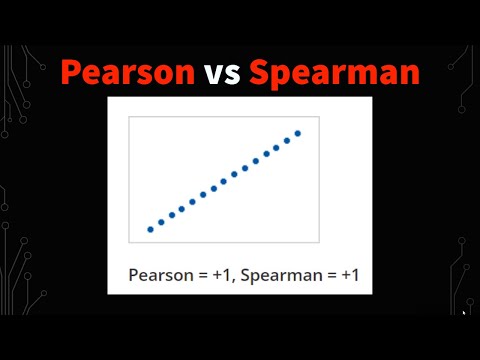
You know how sometimes you just click with someone? Like, you both laugh at the same jokes and finish each other’s sentences? That kind of connection is what researchers aim for when they’re diving into data!
Now, imagine trying to find out if two things are related. Like, does eating more pizza really make you happier? (Spoiler: it might.) This is where Pearson correlation struts onto the scene.
It’s that handy little tool in R that helps us figure out if two sets of numbers have a bond—like your love for fries and ketchup (*seriously, who doesn’t love that combo?*).
Using it can feel a bit intimidating at first. But don’t sweat it! With some simple steps and maybe a pizza break in-between, you’ll be crunching those numbers like a pro in no time.
Understanding the Application of Pearson R Correlation in Scientific Research: Key Considerations and Timing
Understanding how Pearson R correlation fits into scientific research can feel a bit daunting at first. But don’t worry; it’s not as complex as it sounds. Let’s break it down step by step so you get the hang of it, alright?
Pearson R correlation is basically a statistical measure that helps us see if two variables are related and to what extent. It gives you a number between -1 and +1. If the number is close to +1, that means there’s a strong positive relationship. A negative number (close to -1) shows a strong negative relationship. Zero means no relationship at all, which is, let’s say, pretty boring in terms of data.
But here’s the deal: just because two things are correlated doesn’t mean one causes the other. Like, think about ice cream sales and drowning incidents in summer—both go up, but eating ice cream doesn’t cause drowning! This is where timing comes into play. You have to consider whether the data you’re looking at was collected over time or if there’s a clear sequence that indicates causation.
Now, when you’re applying Pearson R in your research, there are key considerations to keep in mind:
- Data Type: You need interval or ratio data for this test to be valid. So if you’re measuring something like height in centimeters or temperature in Celsius, you’re good.
- Linearity: The relationship should be linear; meaning if you plotted your data points on a graph, they should roughly form a straight line.
- No Outliers: Outliers can really mess with your results. They can skew the correlation coefficient making everything look off.
- Normality: Your data should be normally distributed for Pearson R to give reliable results.
When’s a good time to use Pearson R? It’s particularly useful during exploratory phases of research when you want to identify potential relationships worth investigating further—like when you’re figuring out how strongly related study hours are to exam scores among students.
Let me tell ya about an example from my own life: I was once part of a study that looked at how sleep affects student performance. We collected data on hours slept and grades received and ran the Pearson correlation test. The result? A strong positive correlation! Now we were pumped because it hinted that more sleep might actually help improve grades! But we knew not to jump too quickly into conclusions without digging deeper into other factors like study habits or stress levels.
So yeah, using Pearson R can definitely shed some light on relationships between variables in research, but remember—it’s just one tool in your toolbox! Always contextualize your findings with caution because numbers alone don’t tell the whole story!
Understanding the Applications of Pearson R: Essential Guidelines for Researchers in Scientific Studies
So, let’s chat about the Pearson correlation coefficient, often just called Pearson R. It’s a handy tool for researchers in the world of science, especially when you’re trying to figure out if there’s a relationship between two variables. Basically, it helps you see if changes in one thing are associated with changes in another. You follow me?
Pearson R: What Is It?
Pearson R gives you a value between -1 and 1. A score of 1 means that as one variable increases, the other does too—like when ice cream sales go up on hot summer days. A score of -1 means it’s the opposite; as one variable increases, the other decreases. And if it’s around 0? That means there’s no linear relationship at all.
Why Use It?
Researchers love using Pearson R because it’s easy to calculate and interpret. When you’re digging into data and want to understand how two things are connected—like hours studied and test scores—Pearson R can shed some light.
How Do You Calculate It?
If you’re coding in R (the programming language, not the pirate talk), calculating Pearson correlation is pretty straightforward. You can use the `cor()` function! Just plug in your two sets of data, and voilà! Guidelines for Effective Use
Here are some things to keep in mind when using Pearson R:
- Linearity: Make sure your data has a linear relationship. If you plot it out and see a straight line forming? You’re golden.
- No Outliers: Outliers can really mess with your results. Like if one person scored way higher than everyone else—it might skew your findings.
- Normal Distribution: Ideally, your data should be normally distributed for more accurate results.
- Causation vs Correlation: Just because you see a strong correlation doesn’t mean one causes the other. Remember that ice cream example? It doesn’t mean eating more ice cream causes higher temperatures!
Real-World Applications
Researchers often use Pearson R to explore relationships across various fields—psychology for studying behavior patterns or biology to analyze species interactions. For instance: imagine you’re investigating how sunlight affects plant growth; Pearson could help you correlate sunlight hours with plant height measurements.
There’s this moment I remember from my college days when I was working on my thesis about social media usage’s effect on mental health among teens. I collected tons of data and calculated correlations using Pearson R. Seeing those numbers come to life really opened my eyes—it was like connecting dots I never thought were related!
So there it is! Understanding how to apply Pearson R can truly elevate your research game while exploring fascinating connections in your data!
When Not to Use Pearson Correlation: Key Considerations in Scientific Research
When it comes to science, understanding relationships between variables is key, right? One popular way to do this is the Pearson correlation coefficient. But there are situations where using it isn’t the best idea. Let’s break it down.
First off, Pearson correlation measures the strength and direction of a linear relationship between two continuous variables. Seems simple enough, but there are important caveats.
One major consideration? The data must be normally distributed. If you’ve got skewed data or some wild outliers, Pearson can give you misleading results. Picture yourself at a party where everyone is dancing except one person doing cartwheels in the corner. That cartwheeling makes it look like the dance floor is more active than it really is!
Another thing to think about is that Pearson only captures linear relationships. So if your data looks more like a U-shape rather than a straight line, you’re in trouble! Grab your visual tools—like scatter plots—to see what’s really going on before you jump into calculations.
Now let’s talk about measurement scales. Pearson requires that both variables be on an interval or ratio scale. In simpler terms, you can’t use it with nominal or ordinal data. Like, if you’re comparing people’s favorite colors (nominal) or their rankings of pizza toppings (ordinal), Pearson isn’t the right fit for those cases at all.
There are also concerns about homoscedasticity, which means that the variability of one variable should be roughly constant across all levels of another variable. If your data has uneven spread—say some points clustered tightly on one side and loose on another—you might wanna reconsider using Pearson.
And hey, correlation does not imply causation! Just because two things are correlated doesn’t mean one causes the other. The classic example here would be ice cream sales and drowning incidents—they rise and fall together in summer months, but eating ice cream doesn’t make people drown! Always keep your critical thinking hat on.
Finally, when working with time series data, Pearson correlations can sometimes lead to erroneous conclusions due to trends or cycles over time that may influence relationships artificially.
So yeah, before jumping into calculations with Pearson correlation in R or anywhere else, check these points thoroughly:
- Data Distribution: Is your data normally distributed?
- Nature of Relationship: Are you checking for linearity?
- Measurement Scales: Are your variables measured correctly?
- Homoscedasticity: Is there consistent variance across levels?
- Causation vs Correlation: Remember they are not the same!
- Time Series Data: Be cautious with trends affecting results.
These considerations help prevent missteps in statistical analysis. It’s all about being aware of what tools work best for what kind of data! So next time you’re exploring relationships in your research, keep these tips in mind to get reliable insights.
So, let’s chat a bit about Pearson Correlation and how it fits into research, especially when you’re working in R. You might have heard about this method before—it’s pretty popular for understanding the relationships between two variables. Like, maybe you want to see if there’s a link between hours of study and exam scores. You know how sometimes you just kinda feel like there’s a connection? Well, Pearson Correlation gives that feeling some concrete math to back it up.
I remember the first time I used it in my research. I was freaking out about analyzing my data. The thought of diving into all those numbers made me anxious. But once I figured out how to run the correlation test in R, it was like opening a door to a new world! Those simple commands suddenly turned those daunting numbers into meaningful insights.
The thing is, with Pearson Correlation, you get this value ranging from -1 to 1. If it’s close to 1, that means there’s a strong positive relationship (more study hours mean higher scores). If it’s around -1, then it’s a strong negative relationship (more study hours actually lead to lower scores—yikes!). And if it’s around 0? Well, basically no relationship at all.
But here’s where it gets tricky: correlation doesn’t mean causation! Just because two things move together doesn’t mean one causes the other. Like when summer comes along—ice cream sales go up and so do drownings! It doesn’t mean eating ice cream causes drownings; it’s just that both happen more when the weather’s hot.
In R, applying Pearson Correlation is pretty straightforward—you load your data and then use the `cor()` function. Boom! Fast results! Just remember to check your data first; if it isn’t normally distributed or if there are outliers messing things up, you might not get the clearest picture of your variables’ dance together.
So yeah, using Pearson Correlation can really light up your research journey—just keep its limitations in mind while you’re at it. It adds depth without drowning you in complexity—perfect mix for any curious mind diving into scientific waters!