You know how sometimes you find two things that just seem to vibe together? Like peanut butter and jelly or, uh, socks and sandals (just kidding on that last one).
Well, in science, there’s this neat little thing called the R correlation coefficient. It’s kind of like a friendship score for data. Seriously! It helps researchers figure out how closely two variables are dancing together.
Picture this: you’re studying whether people who drink more coffee are really more productive. The R value shows you if they’re just besties or if they’re more like distant acquaintances.
So, let’s chat about what the R correlation coefficient actually is and why it matters in the wild world of scientific research!
Understanding the Correlation Coefficient R: Its Significance and Application in Scientific Research
The correlation coefficient, known as R, is like the secret sauce when it comes to understanding relationships between two variables. Picture this: you’re looking at how the number of hours students study affects their exam scores. R helps you measure that relationship.
So, how does this work? Well, R ranges from -1 to 1. If R equals 1, it means there’s a perfect positive correlation—like the more hours you study, the better your scores. If R equals -1, that’s a perfect negative correlation. In other words, the more you study, the worse your scores—which is rare but can happen in some cases! And if R is 0? That means there’s no correlation at all. They just don’t have anything to do with each other.
Now let’s talk about significance. In scientific research, knowing that two things are related is important, but understanding how strong that relationship is can change everything. You might find out that studying longer correlates positively with better scores—but how strong is that link? That’s where R shines! A high R value can give researchers confidence in their conclusions.
Think about a scientist who studies climate change and its effects on polar bear populations. If they run an analysis and find an R value of 0.85 when comparing temperature rises to polar bear population decreases, they’ve got strong evidence of a relationship! This kind of data can drive policies or conservation efforts.
But here’s something to keep in mind: correlation doesn’t mean causation! Just because two variables are linked doesn’t mean one causes the other. Let’s say you notice a high R between ice cream sales and drowning incidents during summer months; it doesn’t mean buying ice cream causes drownings! They’re both just influenced by warmer weather.
In practical terms:
- Data Analysis: In research papers and data studies, R gives us a quick way to glance at relationships.
- Hypothesis Testing: It helps scientists develop or reject theories based on observed data.
- Predictive Modeling: Researchers use it in models forecasting outcomes based on other variables.
So next time you hear about someone discussing a correlation coefficient in their research, remember—it’s not just nerdy jargon; it’s crucial stuff! It gives us insights into how different aspects of our world interact with each other—just like those long study sessions leading up to exam day!
Understanding Correlation Coefficients: Insights for Researchers in Scientific Analysis
Alright, let’s talk about correlation coefficients. You might have heard about them in research papers or statistics classes. They’re these nifty little numbers that help you understand how two things relate to each other. Think of it as trying to figure out if studying more really leads to better grades—correlation coefficients help in that quest for answers.
The most popular one is the R correlation coefficient. It ranges from -1 to 1. Crazy, right? A value of 1 means a perfect positive correlation, which is like saying if one thing goes up, the other does too. If you had a graph showing ice cream sales and temperature, they’d both go up together in summer—perfect positive correlation! Now, on the flip side, -1 means a perfect negative correlation. Imagine that graph again: if we looked at ice cream sales and the number of snowmen built, we’d probably see one go down as the other went up. Wild!
And then there’s zero. A value of zero suggests no correlation at all. Like trying to find a connection between eating cereal and your shoe size—there’s just no link there.
When you’re analyzing data, it’s crucial to note that correlation doesn’t mean causation. Just because two things are correlated doesn’t mean one causes the other. Take a classic example: when ice cream sales rise, so do drowning incidents. Sounds alarming but think about it! It’s not that eating ice cream makes people drown; it’s just that both tend to happen more during hot summer days.
- Correlation Coefficient R: R values closer to 1 or -1 indicate strong relationships.
- Causation vs Correlation: Always keep in mind that one doesn’t necessarily cause the other.
- No Correlation: An R value around 0 means those variables are likely unrelated.
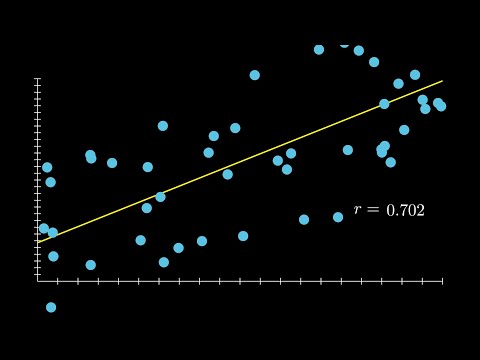
You can often visualize correlations using scatter plots where each point represents paired data. When plotted out, you can see how closely they fit along a straight line—it’s like seeing who your friends connect with at a party! The tighter those points are around an imaginary line? The stronger your correlation!
Anecdote time: I once worked on a project analyzing student performance across different schools. We found a strong positive correlation between attendance rates and test scores. The more kids showed up, the better they did—nothing surprising there! But then we noticed some schools had high test scores even with lower attendance rates! This made us dig deeper into what factors might be affecting those scores aside from just attendance—like teaching quality or resources available.
This kind of analysis is where understanding R can shine for researchers like you! You can explore valuable insights but always remember—it’s essential to think critically about your findings instead of jumping to conclusions based purely on numbers.
The bottom line here is clear: get comfy with your R coefficient; it’s going to help untangle complex relationships in research data—just don’t forget those important caveats about causation!
Exploring the Importance of Correlation in Scientific Research: Unlocking Insights and Driving Discoveries
Correlation is one of those concepts in science that gets tossed around a lot, but what does it really mean? Simply put, it’s a statistical measure that describes the strength and direction of a relationship between two variables. Imagine you notice that when you water your plants more, they seem to grow faster. That’s correlation at work—you’re seeing a potential link between watering and plant growth.
Now, let’s talk about the R Correlation Coefficient, or simply “R”. Picture R as a club bouncer for relationships between numbers. It ranges from -1 to 1. If R is close to 1, it means there’s a strong positive relationship; as one variable increases, so does the other. If it’s close to -1, that’s a strong negative relationship—one goes up while the other goes down. And if R is around 0? Well, that’s basically saying there’s no meaningful relationship at all.
But why should you care about this stuff? Understanding correlations can lead to some serious breakthroughs. For example, researchers might find a correlation between exercise and happiness. They pour over data and see that people who exercise regularly report feeling happier than those who don’t. This doesn’t mean exercise causes happiness directly—it could be something else entirely—but it sparks questions and pushes further research. You follow me?
Sometimes though, people get mixed up about correlations versus causation. Just because two things correlate doesn’t mean one causes the other. Like chocolate sales going up during summer months might correlate with increased swimming pool activity—ice cream sales may cause both! It’s like connecting dots without knowing if they belong to the same picture.
When scientists report findings using the R value, they often pair it with something called p-values. This helps inform whether their correlation is statistically significant—that is, whether it’s likely due to chance or not. Combine these tools thoughtfully and bam! Researchers can draw insightful conclusions about trends in everything from health studies to climate change data.
In practice, applying correlation isn’t just academic mumbo-jumbo; it has real-world implications too! For instance:
- Public Health: Understanding correlations allows health officials to spot disease outbreaks quickly by examining data from hospitals.
- Economics: Economists can analyze correlations between unemployment rates and consumer spending for policymaking decisions.
- Sociology: Sociologists explore how different social factors correlate with crime rates or education levels.
So here you go—a little peek into why correlation matters in science! It opens doors for new discoveries while helping us understand complex relationships in our world better. Science thrives on these insights as they drive continuous learning and exploration into areas we haven’t even thought of yet.
Next time someone mentions correlation coefficients at dinner (because let’s face it—who doesn’t love nerd out during meals?), you’ll know what they’re talking about and why it matters!
So, you know how sometimes you’re trying to figure out if two things are related? Like, does eating more veggies really make you feel better? Or maybe, how does studying more hours relate to grades? Well, that’s where the R correlation coefficient comes into play. It’s like this cool little tool that helps scientists and researchers see if there’s a relationship between two variables.
Imagine you’re back in school, and you’ve got a huge project on your hands. You gather a bunch of data—like test scores and number of study hours. Then, when it comes time to analyze it all, saying “I think there’s a connection” just isn’t enough. You want numbers! That’s where R steps in. It gives you a number between -1 and 1 that tells you how strongly two things are related.
If R is close to 1, like say 0.85 or something—that means there’s a strong positive relationship. So yeah, the more hours spent studying might really boost those grades! If it’s around -0.85 though, well… yikes! Then the relationship is still strong but negative—maybe the more time someone spends on social media negatively impacts their study time. And if it’s around 0? Yeah, that suggests no real connection at all.
I remember once being part of this group project where we were tasked with understanding factors influencing anxiety in college students. We collected tons of surveys about sleep patterns, caffeine intake—basically anything that could relate to stress levels. Using R correlation coefficient helped us not just throw random ideas around but actually show what was linked and what wasn’t. It felt super rewarding when we spotted significant correlations as we presented our findings.
But there’s a catch! The thing is, correlation doesn’t equal causation. Just because two things are related doesn’t mean one causes the other; it’s like saying that ice cream sales go up during summer because they cause hot weather—totally wrong! You gotta be careful with interpretations.
So anyway, next time you’re looking at research or even doing your own little experiments—remember R correlation coefficient can help clear some of the fog around relationships between data points! It really is an essential tool for folks diving deep into scientific research or just curious about our world.