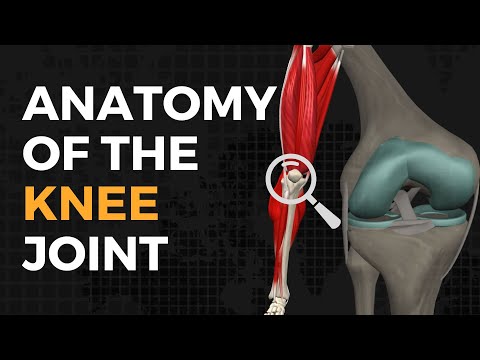
You know that moment when you trip over absolutely nothing and your knee feels like it just auditioned for a horror movie? Yeah, we’ve all been there. The knee is one of those joints we kinda take for granted until something goes wrong.
It’s like the unsung hero of our leg! Seriously, it supports you when you walk, run, or even just stand there looking cool. But do you ever stop to think about what makes this joint so special?
The thing is, knee anatomy is super complex! There are bones, ligaments, cartilage—you name it. Each piece plays its part in helping you move smoothly or, well, sometimes not so smoothly. So let’s break down this amazing structure and see how it keeps us up and running…literally!
Exploring the Anatomy and Biomechanics of the Knee: Structure and Function in Human Physiology
The knee is like one of those amazing mechanical wonders in our body. Seriously, it’s not just a simple joint; it’s a complex structure that helps us move, run, jump, and even squat down to tie our shoes. Let’s break it down a bit.
First up, the anatomy! The knee is mainly made up of bones, cartilage, ligaments, and tendons. You’ve got three main bones forming the knee joint: the femur (that’s your thigh bone), the tibia (the big bone in your lower leg), and the patella (the kneecap). These bones work together to allow movement while keeping everything stable.
- Bones: The femur connects with the tibia at the knee, while the patella sits in front to protect that space.
- Cartilage: There are two types here: articular cartilage covers the ends of bones so they glide smoothly against each other. Then there’s meniscus cartilage—these two C-shaped pads between your femur and tibia help absorb shock and stabilize your knee.
- Ligaments: Think of these as strong bands that connect bone to bone. The anterior cruciate ligament (ACL) and posterior cruciate ligament (PCL) control forward-backward movement of the femur on the tibia.
- Tendons: These connect muscles to bones. The quadriceps tendon connects your thigh muscles to your patella, which then connects via the patellar tendon to your tibia.
Nobody talks about biomechanics enough! The way all these parts work together is crucial for how we move. Basically, when you bend or straighten your leg, multiple forces are at play.
When you bend your knee while walking or running—let’s say when you’re jogging after a bus—the muscles around it contract. This creates tension in those tendons and pulls on the bones at different angles. At this moment, you’re using something called joint kinetics, which refers to how forces generate motion around joints.
Imagine this: every time you come down from a jump or even start running after sitting still for a while, there’s a whole choreography in play! Your knees flex and extend smoothly because of that meniscus cartilage absorbing shock and preventing wear-and-tear on those smooth surfaces we talked about.
The range of motion is impressive too! Your knees can flex (bend) about 135 degrees or so when everything’s working perfectly—think about squatting down deep or sitting cross-legged without issues. But if something goes wrong—like an injury or arthritis—it can seriously mess with how well that range works.
Ever heard someone say “I twisted my knee”? Well, twisting can stress those ligaments or tear cartilage—and trust me; that’s no fun! It reminds me of my friend who sprained her ACL trying to show off her moves on the dance floor… let’s just say she wasn’t dancing much afterward!
So basically, understanding how our knees function is super important for athletes who might push their limits or anyone dealing with daily activities—like simply getting up from a chair! It helps us appreciate every bend and stretch we take for granted.
Now you’re all set with some insight into **the anatomy** and **biomechanics** of this incredible joint! Keep moving but be kind to those knees—they do a lot for you!
Anatomical Movements of the Knee: A Comprehensive Overview in Human Anatomy
The knee is one of those amazing joints in our body that really does a lot of work, you know? It’s like the unsung hero of human movement. You might not think about it much until you’re trying to chase after a bus or dance at a party. So let’s break down what this joint actually does and how it moves!
Knee Structure
First off, let’s talk about the basic structure. The knee is made up of three main bones: the femur (that’s your thigh bone), the tibia (your shin bone), and the patella (that cool kneecap). These bones are held together by some pretty strong ligaments and tendons, which help with stability and movement.
Types of Movements
You might be wondering, “Okay, but what kind of movements can the knee actually do?” Well, it can perform several key actions:
- Flexion: This is when you bend your knee. Think about sitting down or kicking your leg back. Flexion usually happens between 0° to about 130°.
- Extension: This is when you straighten your leg out after bending it. It basically goes from that bent position back to full straightness. Super important for walking!
- Rotation: Your knee can also rotate a little bit, mainly when it’s bent. So if you’re ever in that awkward position trying to dodge someone while running—yeah, that rotation helps!
Now you probably know that our knees don’t operate solo; they definitely work with surrounding muscles too! For flexion, think about your hamstrings—those are the muscles on the back of your thigh. They help pull your leg up towards your butt when you bend.
And for extension? That’ll be all about your quadriceps—the muscles at the front of your thigh! They straighten out the leg after it’s been bent and help stabilize everything.
Knee Stability
Another thing to note is that while these movements are essential for activity, stability is equally crucial. The ligaments in and around the knee provide support during each step we take. You’ve got:
- The ACL (anterior cruciate ligament): Helps keep everything stable when you change direction suddenly.
- The PCL (posterior cruciate ligament): Works alongside the ACL but sort of does its own thing when it comes to preventing backward motion.
- The MCL (medial collateral ligament): Provides support on the inner side of your knee—super important for side-to-side movements.
- The LCL (lateral collateral ligament): Keeps things stable on the outer side.
If any of these ligaments get injured? Oof! That can really put a damper on activities like running or even just climbing stairs.
Anecdote Time!
I remember once I tried out for this local soccer team—you know, just wanted to relive my glory days! Anyway, I thought I was still as spry as I used to be until I misjudged my kick and twisted my knee awkwardly. Yikes! It hurt so bad; turns out I strained one of those ligaments! Let me tell ya, understanding all those anatomical movements suddenly became incredibly relevant!
So there you have it—the comprehensive lowdown on your knees! They do way more than just sit there; they facilitate loads of movement while keeping us stable on our feet—as long as we treat them right! Keep moving; just don’t forget to take care of those joints!
The Primary Function of the Knee in Human Movement: A Scientific Exploration
The knee is, like, one of the most important joints in your body. Seriously! It plays a huge role in how you move around every day. Let’s explore its structure and function without getting too technical or boring!
First off, the knee connects your thigh bone, known as the femur, with your shin bone, called the tibia. It also includes a smaller bone called the fibula and the kneecap, or patella. All these parts work together to support movement.
Now here’s where it gets interesting: The knee mainly helps with **flexion** and **extension**. That means it lets you bend (like when you squat down) and straighten your leg (when you stand up again). Imagine going for a run or kicking a soccer ball — your knee makes all that smoother.
Stability is another key function of the knee. It keeps everything aligned while you’re moving. Think about how you might trip or stumble — without a stable knee, that would happen all too often! Thanks to ligaments like the anterior cruciate ligament (ACL) and posterior cruciate ligament (PCL), we have extra support to keep everything in place.
But there’s more! The knee also acts as a shock absorber. When you walk or run, this joint takes a beating from all those impacts. Your knees cushion those impacts thanks to cartilage — a smooth tissue that reduces friction between bones. This helps prevent injury over time.
So let me tell you about something real quick! A few years back, I tried rock climbing for the first time. Ugh! I didn’t know how important my knees were until I had to scramble over some boulders and my legs started giving out on me. At that moment, I really appreciated what my knees do for me every day!
Another awesome thing about the knee? It permits rotational movement too, though not as much as your hips or shoulders. When you’re twisting your body—like when you’re playing basketball or dancing—a little rotation happens at the knee joint. Just enough to help with balance!
In summary:
- The primary functions of the knee are flexion and extension.
- The joint provides stability during movement.
- It absorbs shock to protect against injuries.
- The knee allows some degree of rotation.
That’s basically how essential this joint is for human movement! So next time you take a step or hop around, take a moment to appreciate those hardworking knees of yours—they’re doing more than you might think!
You know, the knee is such an interesting joint. It’s this fascinating little hinge that does a lot more than you might think. Seriously, it connects your thigh bone to your shin bone and lets you do everything from running to jumping, even just standing up. Have you ever taken a moment to think about all the things your knees do for you?
So, let me take you back to a time when I was playing basketball with friends. I was all pumped up, running down the court, when suddenly—bam! My knee twisted awkwardly during a jump. Ouch! That pain? Yeah, that’s when I realized just how critical my knees are for movement.
Now, the anatomy of the knee itself is super neat. You’ve got three main bones involved: the femur (that’s your thigh bone), tibia (the larger bone in your lower leg), and fibula (the smaller one). Then there are these cool things called ligaments—think of them like strong rubber bands holding everything together, keeping your knee stable while allowing it to move.
Let’s talk about cartilage too! It acts as a cushion between those bones so they don’t grind together every time you bend or straighten your leg. It’s kind of like having shock absorbers in your car; they help you take smooth turns without bumping around too much.
But here’s where it gets really interesting: each movement we make involves our knees working in sync with other parts of our body. Whether you’re walking, running, or even dancing—yeah, people really underestimate those dance moves—the knee plays a starring role. When you run, for instance, as one foot strikes the ground, your knee absorbs shock and transfers energy through to propel you forward.
And here’s something unexpected: your knee is not just a passive player in all this; it’s also involved in balance and coordination. Imagine trying to walk on uneven ground without properly functioning knees—it’d be pretty tricky! Just think about how often we take our knees for granted until something goes wrong!
So next time you’re out doing something active or even just sitting on the couch binge-watching shows (hey, that counts too), spare a thought for those hardworking knees of yours. They’re not just joints; they’re key players in our daily adventures!