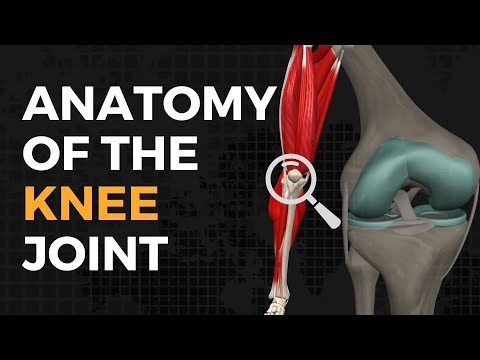
You know that moment when you try to stand up after sitting for too long and your knees crack like a bag of chips? Yeah, I’ve been there! It’s kinda funny, but also not—it makes you start thinking about what’s actually going on inside those joints.
Knees are pretty amazing, honestly. They help us do all the things we take for granted, like walking or making that epic leap to grab a cookie from the top shelf. Seriously, they’re like these little hinges that keep everything moving smoothly. But have you ever really thought about what’s happening in there?
The medial part of your knee—it’s like this unsung hero. You don’t think much about it until something goes awry. It’s got its own structure and function that deserves some love and attention!
Let’s break down how this part works while you’re on the move, right? You might just walk away with a new appreciation for those snappy knees of yours!
Exploring the Medial Structures of the Knee: Anatomy, Function, and Significance in Orthopedic Science
The knee is one of the most complex joints in your body, you know? Seriously, it’s not just a simple hinge. It does a ton of things that allow you to walk, run, jump, and play sports. So when we talk about the medial structures of the knee, we’re diving into some crucial stuff that keeps everything working smoothly.
First off, let’s break down what we mean by medial structures. Basically, when we say “medial,” we’re referring to the inner side of the knee—like the part closest to your other leg. There are several key components here:
- Medial Collateral Ligament (MCL): This ligament is a big deal! It runs along the inner side of your knee and helps stabilize it. Think of it as a supportive guy that prevents your knee from bending too far inward.
- Medial Meniscus: This is a C-shaped cartilage that acts like a cushion between your femur (the thigh bone) and tibia (the shin bone). It not only absorbs shock but also helps distribute weight evenly across the joint.
- Medial Plica: Okay, this one’s interesting. The plica are folds in the lining of your knee joint. While they don’t get as much attention, they can sometimes cause issues if they get inflamed or irritated.
So what do these structures do in terms of function? Well, they all work together to provide stability and mobility. Imagine you’re playing basketball; when you pivot to make a quick move, your MCL and medial meniscus are there keeping everything in place. If you didn’t have them functioning properly? Yikes! You’d be at risk for injuries like sprains or tears.
An emotional moment for me was when my friend injured his MCL during a soccer match. One minute he was sprinting down the field like an absolute champ; the next minute he was on the ground in pain. Watching him go through rehab really highlighted how critical these medial structures are for athletes and everyday folks alike!
The significance of understanding medial knee anatomy goes beyond just knowing how it looks—it’s essential for orthopedic science too! Doctors need this knowledge to diagnose issues accurately and recommend treatments effectively. When people suffer from chronic pain or injuries in their knees, understanding these anatomical features helps surgeons decide whether surgery is necessary or if therapy might do the trick.
If you’ve ever had an issue with your knees or know someone who has, then you’ve seen firsthand how important these medial structures can be! Staying informed about them not only helps us appreciate our bodies but also empowers us to take better care of ourselves.
The anatomy of our knees tells us stories about function and movement. Medial structures may seem small compared to bigger bones or muscles, but their roles are so vital! Keeping them healthy can make all the difference between running that extra mile or sitting on the sidelines nursing an injury.
Understanding the Functional Anatomy of the Medial Collateral Ligament (MCL) in Musculoskeletal Science
The medial collateral ligament, or MCL, is quite the important player in your knee anatomy. It’s like a sturdy guy holding the whole thing together on the inside. You know, when you twist your knee funny or take a hard hit while playing sports? That’s when the MCL often gets stressed.
So, what does this ligament really do? Well, you could say its main job is to keep your knee stable during movement. It connects your thigh bone (femur) to your shin bone (tibia). By doing this, it helps prevent your knee from bending inward too much—a bit like the way a fence keeps out unwanted guests.
Let’s talk structure for a sec. The MCL is made up of thick connective tissue. This means it’s really strong and can handle some pressure while still allowing for movement. The ligament itself has two parts: the superficial layer and a deeper layer that’s attached to the joint capsule. They work together to give you that sweet stability.
Now, imagine you’re out playing soccer. Every time you change direction quickly, that’s where the MCL comes into play! It acts like a safety net, helping to absorb some of that force and protect against injuries. If it gets torn or stretched too much—which can happen if you land awkwardly—that’s when you might start feeling pain on that inner side of your knee.
But here’s something interesting: Not all knees are created equal! For instance, some athletes have more flexibility in their MCL due to training techniques or even genetic factors. This can sometimes make them more prone to injuries if they’re not careful.
And let’s not forget about that connection with muscles! You’ve got muscles around your thigh and calf working in tandem with the MCL. When these muscles are strong and fit, they help take off some pressure from the ligament while you’re moving around.
Recovery from an MCL injury isn’t just about resting it; it also involves physical therapy to help strengthen those surrounding muscles so they can support your knee better next time around. It’s kind of like rebuilding a wall after it crumbles—stronger bricks make for a stronger structure!
In summary, understanding how the medial collateral ligament works gives us profound insight into our own movement and stability—it plays such an important role in keeping everything balanced during dynamic activities! So next time you’re running or jumping around, just think about how this little yet mighty ligament keeps everything intact while you’re having fun!
Understanding the Anatomy and Mechanics of Knee Structure and Movement in Human Physiology
So, let’s talk about your knees. It’s one of those things we often take for granted until they start complaining, right? Well, the knee is like this super cool mechanism made of different parts that work together to give you movement. Let’s break it down a bit.
The Structure
At the center of it all is the femur, which is your thigh bone. Below it sits the tibia, your shin bone, and just off to the side is the fibula. These bones are connected by a group of ligaments which act like strong cables holding everything together. In your knee, there are two main types of ligaments:
- Cruzado Ligaments: They cross each other in the middle of your knee. There’s an anterior cruciate ligament (ACL) and a posterior cruciate ligament (PCL). They control forward and backward motion.
- Collateral Ligaments: These are on either side of your knee—the medial collateral ligament (MCL) on the inner side and the lateral collateral ligament (LCL) on the outer side. They help stabilize your knee when you move sideways.
Then there are these lovely little pads called menisci. You’ve got two – one on each side between your femur and tibia. They’re shaped like crescent moons and act as shock absorbers when you jump or run.
The Mechanics
Alright, so how does all this stuff actually help you move? When you’re walking or running, your knee bends and straightens thanks to muscles called quadriceps at the front and hamstrings at the back. Basically:
1. When you want to straighten your leg, the quadriceps contract, pulling on the patellar tendon attached to your kneecap.
2. To bend it, the hamstrings kick in, and they pull from behind.
This coordinated effort allows for smooth movements during activities like walking, jumping, or even just standing up from a chair.
Now here’s where things get interesting—have you seen someone change direction rapidly while playing a sport? That’s where those ligaments do their magic! They’re constantly working behind the scenes to keep everything in line as we twist and turn.
Knee Health
But hey, with all this action going on down there, knees can be prone to injuries like sprains or tears—especially if you play sports or aren’t careful while exercising. It’s really crucial to warm up before activity and strengthen those muscles around your knees!
When I was younger, I had this friend who twisted his knee playing basketball because he didn’t pay attention while cutting left suddenly. The poor guy was sidelined for weeks just because he took his knee for granted!
So yeah, understanding how our knees work can help us take better care of them—and that means less pain down the road! Keep them strong with some good workouts focused on balance and flexibility; they’ll appreciate it!
So, let’s talk about the medial knee anatomy, shall we? You know, it’s one of those things that we kinda take for granted until something goes wrong. I remember when my buddy Alex tripped during a soccer game. He fell hard, and when he got up, he was limping like he’d just stepped on a Lego. It turned out to be a minor injury to his knee, but it made me think about how essential that joint is for movement and how intricate its structure really is.
Now, if you dig into the medial side of the knee—basically the inner part—you’ll find some key players. There’s the medial collateral ligament (or MCL if you wanna sound cool), which helps stabilize your knee while you run or change direction. It connects your thigh bone (the femur) to your shin bone (the tibia). You can think of it as a sturdy rope holding two trees together in the wind.
Then there are the menisci—these little C-shaped cartilages that sit between your femur and tibia—acting like shock absorbers. They’re super important because they help distribute weight and reduce friction when you’re moving around or getting fancy with your footwork at a dance party! If those guys get torn, you might feel like one of those old squeaky toys instead of a smooth machine.
And don’t forget about the articular cartilage! This slippery stuff coats the ends of your bones where they meet in the knee joint. Imagine sliding down a smooth slide versus rubbing against rough ground—it makes all the difference in how comfy your movements are.
But here’s where it gets interesting: all these structures don’t work in isolation. They’re like a well-rehearsed dance crew making sure everything flows smoothly while you’re out there jogging or chasing after an ice cream truck. When one part is off—like if you sprain your MCL—the whole operation feels it. You start favoring one leg, which can throw off your hips and even mess with your back!
So yeah, understanding this anatomy isn’t just for sports therapists or doctors; it’s essential for anyone who uses their legs! Just think about how often we push our knees through various activities without even realizing what goes on behind the scenes.
When I see someone running effortlessly or even standing still without pain, I can’t help but appreciate all those tiny details at work beneath their skin. The next time you bend down to tie your shoes or leap up to grab something from a high shelf, remember that behind every movement there’s this intricate system doing its job quietly but effectively! Pretty cool, right?