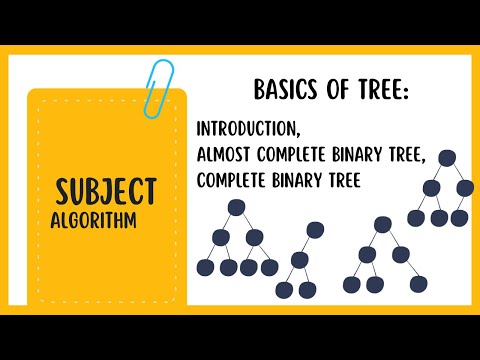
Have you ever tried to build the perfect sandwich? Like, you know, one where every layer is just right? It’s kinda like that with perfect binary trees in science. Sounds weird, huh?
But stick with me for a sec. These trees are all about balance and structure. Imagine a tree where each branch splits into two, perfectly. It’s neat and tidy, and as a math geek, I find it super satisfying!
I remember my first encounter with them — it was during a late-night study session in college. I was deep into understanding algorithms when a friend said, “Check this out!” He showed me how these trees can organize data so efficiently. Mind blown!
So yeah, let’s take a closer look at what makes these structures so cool and why they matter in the world of science and tech.
Understanding Perfect Binary Trees: A Comprehensive Guide in Computational Science
Alright, let’s chat about perfect binary trees. They might sound all fancy and complicated, but they’re really just a specific kind of structure in computer science. Basically, a perfect binary tree is one where every internal node has exactly two children and all the leaf nodes are at the same level. Neat, right?
You can imagine it like a pyramid made up of squares. At the top, there’s one square (the root), then right underneath it, there are two squares (the first level), followed by four squares beneath that (the second level), and so on. Each level doubles the number of squares from the previous level. Here’s how it stacks up:
- Level 0: 1 node (the root)
- Level 1: 2 nodes
- Level 2: 4 nodes
- Level n: 2n nodes
The beauty of these structures is often in their balance. Since they are perfectly balanced, you can search through them pretty efficiently—think of it as diving straight to the point without swimming around aimlessly.
A real-world example? Picture a family tree where each parent has exactly two kids; you can easily trace back to find great-grandparents because everyone is neatly lined up! Now, let’s break down how perfect binary trees relate to some important concepts in computer science.
- Efficiency: Searching through these trees takes a minimal number of steps. For instance, if you have a tree with height h, you can search for an item in O(h) time.
- Storage: Perfect binary trees use space efficiently because they maintain that full structure; if there are n leaves, you’ve got 2n – 1 total nodes.
- Simplicity: They make coding algorithms easier because you know exactly how many levels there are—no surprises!
If you think about traversing these trees—like picking fruit at different levels—they can be done in different ways too: pre-order (visit root first), in-order (left child first), and post-order (both children before visiting root). It’s almost like walking through your favorite neighborhood park: sometimes you want to stop and smell the roses before heading home!
The downside? Perfect binary trees might not be so practical in real life since data isn’t always perfectly balanced. But hey, understanding them gives you insight into more complex structures like AVL trees or Red-Black trees that try to maintain balance while allowing for faster insertions and deletions during data operations.
If you’re ever sifting through data structures or programming algorithms, just keep this guy in mind—a perfect binary tree might not pop up every day, but knowing how it works gives your brain a workout and helps with deeper concepts down the line!
You see? Perfect binary trees are not just abstract ideas; they’re integral building blocks that help us understand more complex systems in computational science! So next time someone brings them up at dinner or over coffee—boom! You’re ready to impress.
Exploring the Most Efficient Tree Structures: Insights from Scientific Research
Tree structures play an important role in computer science, mathematics, and even nature. Think of a tree you see outside. It has a trunk, branches, and leaves. In the world of data, trees are organized structures that help store and access information efficiently. One fascinating type of tree is the perfect binary tree.
So, what’s a perfect binary tree anyway? Well, it’s a specific kind of binary tree where each node has zero or two children. This means every level of the tree is fully filled. You can imagine it as a super-organized family tree where everyone has two kids—no single child or half-empty branches.
Here’s why these structures are so cool:
- Balance: Perfect binary trees are always balanced. This means that search operations—or finding something in the tree—are faster compared to other types.
- Height Efficiency: The height of perfect binary trees grows logarithmically with respect to the number of nodes. This means if you double the nodes, you only add one extra level.
- Space Savings: Space is well-utilized since every node contributes equally, preventing situations where some parts of the structure are overloaded while others sit empty.
Now think about computer algorithms! They often use these trees for operations like sorting and searching data effectively. When coding, if you’re using search algorithms like *binary search*, knowing your underlying structure is crucial for performance.
Let’s take an everyday example: consider searching for your favorite recipe in a digital cookbook app that uses a perfect binary tree structure. Because this type of organization allows quick access to data (like recipes), you can find what you want without sifting through everything—a real time-saver!
And here’s another thing: these trees aren’t just theoretical constructs; they show up in real-world applications too! For instance, data compression, like how MP3 files shrink music tracks down without losing much quality, often involves similar structured approaches to keep things efficient.
But hold on; it’s not just all about efficiency! There’s something quite elegant about how these structures mirror patterns found in nature—like how certain plants grow branching outwards symmetrically or how animals adapt their movement patterns based on environmental factors.
So there you have it! Perfect binary trees may seem technical at first glance but understanding them opens up insights into greater efficiency and balance both in technology and nature alike. And who knows? Maybe next time you’re out for a walk and see those perfectly shaped trees outside, you’ll think about the fascinating world behind those simple branches!
Exploring Unique Binary Trees: Concepts and Applications in Computer Science
Binary trees are, like, a super cool concept in computer science. Imagine a family tree but with nodes and branches instead of relatives. Each node represents a data point and can have **at most two children**: a left child and a right child. This structure allows for some seriously efficient data management.
Now, when we talk about **perfect binary trees**, we’re diving into a specific kind of binary tree where all the interior nodes have two children, and every leaf node is at the same level. Picture this: it’s like a neatly trimmed bush where every little branch is the same height, making it look super organized.
Here are some key points about perfect binary trees:
- Height and Nodes: A perfect binary tree with height h has exactly 2^(h+1) – 1 nodes. So if you think about it, each increase in height doubles the number of possible nodes.
- Easier Traversal: Because of their structured nature, traversing these trees—like searching for or sorting data—is more efficient compared to other structures.
- Memory Efficiency: These trees make good use of memory since they fill all levels completely before moving on to the next one.
- Theoretical Use: Perfect binary trees are often used in algorithms related to **data sorting**, **searching**, or even game development for decision structures.
A while back, I was working on a project that involved organizing some massive amounts of data. We tried using different kinds of structures but stumbled upon perfect binary trees. It was like flipping on a light switch! The way they allowed us to sort through information so quickly was almost magical.
You might wonder why you should care about this stuff? Well, here’s the thing: in real life, whether you’re building apps or creating efficient databases—binary trees help streamline the process immensely. They’re kind of like the unsung heroes behind the scenes in programming.
Applications: Beyond just organizing data neatly, these structures also play well with things like machine learning models and network routing protocols—where efficiency is king! Perfect binary trees can help algorithms make quick decisions based on minimal comparisons.
If you’re getting into programming or computer science at any level, understanding how these trees work will give you an edge in your projects. The world runs on code that needs organizing; perfect binary trees offer a method that’s not just effective but also elegant.
The next time you hear someone mention them or get stuck trying to sort data points, just remember how these unique structures could save your day!
So let’s chat about perfect binary trees for a sec. I mean, if you’ve ever stumbled into the world of computer science or even just had to deal with data organization, you might have heard this term floating around. But what’s the deal with them anyway?
Imagine you’re at a family reunion, and everyone’s got to find their place at the dinner table. A perfect binary tree is kinda like that—everyone has exactly two kids (nodes) until the next generation, and every parent shows up fully equipped with a full set of those kids. It creates this neat little structure where everything fits together seamlessly.
When I first learned about these trees in college, it kind of blew my mind! I was sitting in class, half-dozing off when suddenly, the professor started drawing one on the whiteboard. He had this way of explaining things—it was like he opened a door to a whole new perspective. The way he connected it all back to real-world problems made me sit up straight; it felt like I could practically see how these structures were everywhere around us.
You see, perfect binary trees are not just pretty shapes; they help computers manage data efficiently! They make searching and sorting super fast because each level only adds two options to consider—like quickly narrowing down your choices at that family dinner when someone says “no one gets seconds until we know who wants dessert.” It keeps things orderly.
What’s really interesting is how these trees relate to other areas in science too—think genetics or organizational hierarchies. They pop up in algorithms for inserting and deleting data as well as optimizing tasks in artificial intelligence. It’s wild how something so simple is so critical!
In essence, perfect binary trees represent an ideal order amidst chaos—a beautiful symmetry that reminds us that sometimes the simplest solutions are hiding right under our noses. And honestly? It makes me think about life itself; finding balance can be tough but when we do manage it, well…things just seem to flow better!