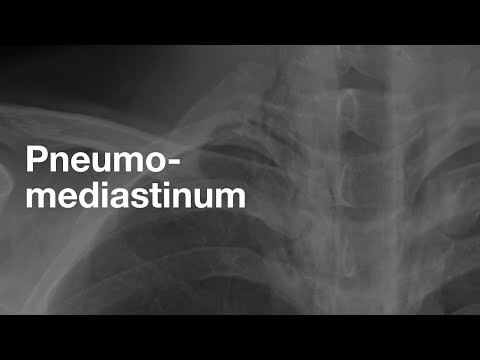
Did you know that sometimes, air can sneak into places in your body where it’s really not supposed to be? I mean, how wild is that? Imagine being at a party, sipping your drink, and someone suddenly tells you there’s air hanging out in your chest cavity. Like, what?
That’s basically what pneumomediastinum is—a fancy term for air hanging around in the mediastinum, which is this central part of your chest. You might be thinking, “Why should I care about some weird chest air?” Well, let me tell you: understanding this bizarre phenomenon can tell doctors a lot about what’s going on in your body.
Radiology has come a long way with imaging techniques. They’re getting super good at spotting it. We’re talking about all kinds of cool advances that help identify when that sneaky air shows up and what the implications really are.
So grab a drink because we’re diving into this fascinating topic!
Understanding the Triad of Pneumomediastinum: Key Insights in Medical Science
So, let’s talk about something that might sound a bit complicated at first: pneumomediastinum. It’s like a mouthful, right? But it’s really not as scary as it sounds. Basically, this condition happens when air gets into the mediastinum, which is the space in your chest between your lungs that houses your heart, trachea, and lots of blood vessels. Imagine it like an unexpected air pocket that settles down where it’s not supposed to be.
You might wonder how this air even gets there. Well, there are a few common reasons:
- Trauma: Sometimes a hard hit to the chest can create tears in the airway or lungs, letting air escape.
- Medical procedures: Certain treatments like surgery or even endoscopic exams can introduce air into the mediastinum.
- Spontaneous occurrences: Believe it or not, sometimes people just get pneumomediastinum without any obvious cause. It can happen in young folks usually, often after intense coughing or straining.
The symptoms? They can range from mild discomfort to more serious signs like chest pain or shortness of breath. I remember once hearing about a friend who had severe chest pains after an intense workout; he was convinced he was having a heart attack! Turned out he had pneumomediastinum from all the heavy lifting. Crazy how things can be mistaken for something much worse!
Diagnosis typically involves imaging techniques like X-rays or CT scans. Doctors check for those pesky air pockets around the structures in your chest. The presence of these pockets tells them what’s happening inside you and helps them decide what comes next.
The clinical significance of understanding pneumomediastinum is pretty huge! It’s important for several reasons:
- Treatment decisions: Knowing if someone has pneumomediastinum helps doctors determine whether they need surgery or other interventions.
- Monitoring: In some cases, they might just keep an eye on things because many people actually recover without any major issues.
- Predicting complications: If left unchecked, it could potentially lead to more severe problems like tension pneumothorax—where pressure builds up dangerously fast—so being aware is crucial!
The advancements in radiology have made catching pneumomediastinum earlier and with more accuracy than ever before. With better technology and techniques emerging all the time—including improved imaging methods—doctors are getting sharper at spotting these issues quickly. This means treating patients faster and often with better outcomes.
If you ever hear someone talking about their “chest air” experience or “air trapped,” now you know they might just be facing some pneuomediastinum! And hopefully, you’ll have a better grasp on this condition and its implications in medical science than most folks do!
Optimal Imaging Modalities for Diagnosing Pneumomediastinum: A Comprehensive Review
Pneumomediastinum is basically the presence of air in the mediastinum, which is that central compartment in your chest. It can be a bit alarming and is often associated with things like trauma or certain medical conditions. But when it comes to spotting it, choosing the right imaging modality is key. So let’s break down some of the best ways to diagnose this condition.
Chest X-ray is usually the first step in looking for pneumomediastinum. It’s quick, easy, and can show air around the heart or major blood vessels. You might see what looks like a dark line outlining these structures, which indicates that air is present. However, it’s not super sensitive; sometimes smaller cases get missed.
Then there’s CT scans. These are like the superheroes of imaging! They’re way more detailed than X-rays and can give you a clear view of where that pesky air is hanging out. A CT scan can even highlight potential causes, like ruptured esophagus or lung problems, all in one shot. It’s so precise that you could basically spot a pin drop if it were lying on a mediastinal surface!
Another great method is ultrasound. While not as commonly used for this specific issue, it can be pretty handy in certain situations—especially with kids or pregnant women where minimizing radiation exposure is essential. Ultrasound can detect air collections quite well but has its limitations in terms of depth.
There are also advanced imaging techniques being explored. For instance, MRI might come into play sometimes because it doesn’t use radiation and provides excellent soft tissue contrast. However, it’s not typically first-line due to prolonged scan times and cost.
Let’s consider how this all fits together:
- Chest X-ray: Fast but misses subtle cases.
- CT Scan: The go-to for detailed visualization.
- Ultrasound: Useful in specific patient populations.
- MRI: Great for soft tissue but less common due to logistics.
So how do doctors decide? They consider things like patient history and symptoms. For example, if someone comes in after an injury with symptoms suggesting pneumomediastinum, they might go straight for a CT scan instead of wasting time on an X-ray.
As I think about this topic, I remember when my uncle had some chest issues—a scary time! They started off with an X-ray which showed something odd but then quickly moved to a CT scan for clarity. It was such a relief when they pinpointed what was happening without unnecessary delay.
In summary, each imaging modality plays its part depending on the situation at hand. While X-rays are good starting points and CT scans usually seal the deal with their detail and depth from various angles, knowing when to use ultrasound or MRI adds even more value to diagnosing pneumomediastinum accurately and efficiently.
Exploring Common Triggers of Spontaneous Pneumomediastinum: Insights from Medical Science
So, spontaneous pneumomediastinum, huh? Sounds like a mouthful! But it’s basically when air gets trapped in the space between your lungs and your chest wall, known as the mediastinum. Usually, it’s not super common, but there are some situations that can trigger it.
To give you a clearer picture, think of it like blowing up a balloon too fast or too much. You might just pop it! That’s kind of what happens here. Air can escape from your lungs into that space, often without any clear reason.
Here are some common triggers:
- Heavy lifting or strenuous exercise: When you push yourself physically too hard, you could create pressure that forces air out.
- Severe coughing: Ever had one of those uncontrollable coughing fits? Yeah, they can really create a lot of pressure in your chest.
- Bariatric procedures: Sometimes surgeries for weight loss lead to complications that might cause this issue.
- Asthma attacks: An asthma flare-up can make your airways swell up and burst open a bit.
And really, any activity that suddenly changes pressure in that area—like sneezing or even vomiting—can potentially lead to pneumomediastinum. Crazy how our bodies work sometimes!
Now, let me tell you about an experience I had once where I thought I was having major chest issues after running up some stairs. My heart was racing and I had trouble catching my breath. It turned out to be just fatigue, but man did my mind race to all those “What ifs?” If only I’d known about spontaneous pneumomediastinum back then!
Then again, spontaneous pneumomediastinum is often self-limiting. Like most things in life that sound scary at first—think of it as getting through the tough part until you hit the smooth sailing.
From a medical perspective:
- X-rays and CT scans are essential tools for diagnosing this condition. They help doctors visualize the air pockets and understand what’s going on.
- Treatment: It usually involves monitoring rather than aggressive intervention since most cases resolve on their own.
So yeah, while spontaneous pneumomediastinum might sound alarming at first—it’s often more of an inconvenience than something really dangerous. Although it might have medical jargon wrapped around it like a burrito, understanding its triggers helps demystify what can happen when our bodies surprise us!
Alright, let’s chat about pneumomediastinum and what’s been happening in the world of radiology. So, pneumomediastinum is this condition where air gets trapped in the mediastinum, which is basically the space between your lungs. It sounds a bit freaky, right? Imagine air not where it’s supposed to be! But here’s the kicker—it can sometimes just be a symptom of something else going on or even happen after some heavy-duty coughing or a little incident during exercise.
Now, I remember this one time when my buddy woke up coughing like crazy after trying to mimic a rockstar at karaoke. He thought he just had a really bad sore throat, but turns out his chest felt tight, and he was breathing weirdly. A trip to the hospital revealed some air in his mediastinum! Crazy stuff! Thankfully, it was just one of those harmless cases that sorted itself out.
Anyway, when it comes to diagnosing this condition nowadays, radiology has really upped its game. We used to rely heavily on chest X-rays—trust me; they’re still important—but CT scans have become the superstar here. They give doctors such detailed images of what’s going on inside; you can almost feel like you’re peering into another world! This tech helps in figuring out not just if there’s air lurking where it shouldn’t be but also why it’s there.
And here’s something cool: with advances in machine learning and artificial intelligence (AI), radiologists are finding that they can spot these issues way faster than before. Like having a super-smart buddy who nudges them when they miss something important! It makes me think about how technology keeps evolving and helping us figure out complex medical puzzles more efficiently.
But there’s more to it than just technology. The clinical significance of detecting pneumomediastinum early can’t be overstated. While it can be benign at times, it might also hint at more serious underlying conditions like an esophageal tear or trauma—so catching it early could save someone from serious complications down the road.
To wrap up our little chat: pneumomediastinum isn’t just a weird term thrown around medical textbooks; it reflects a fascinating intersection between human anatomy and cutting-edge technology. And hey—next time you hear someone cough like my buddy did, you might think twice before brushing it off as just another cold!