So, here’s a fun thought: imagine if your favorite tomato could just, like, grow itself without needing all that fuss about pests and weird weather. Crazy, right? Well, thanks to some pretty cool advancements in QTL genetics, that dream might not be so far-fetched!
You know how we’ve been modifying crops for years? It’s like nature’s little makeover session! But now we’re getting way more precise. Seriously, scientists are zeroing in on the tiniest bits of DNA to boost things like yield and resilience.
And I’ve gotta say, figuring out how plants work at this level is kinda mind-blowing. It’s like getting to read their secret diary! Imagine the potential for crops that can survive anything—droughts, floods—you name it.
Stick around and let’s chat about how these advancements are changing the game for farmers everywhere!
Exploring Innovations in Plant Breeding: Transforming Agriculture Through Scientific Advancements
So, let’s talk about plant breeding. You might think it’s just about picking which plants look good or taste better, but it’s way more than that! It’s a science, and in recent years, it has taken some pretty cool turns thanks to new technology and research. Seriously, the way we improve crops these days is something else!
At the heart of this innovation is a fancy term called QTL genetics, which stands for Quantitative Trait Loci. This basically means scientists can pinpoint specific spots on chromosomes that control important traits in plants. Think of it like having a map to find treasures buried deep in the genetic code of crops.
Let’s break it down a bit. When breeders want to make crops better—like increasing yield or resistance to diseases—they look for these QTLs. They can actually identify which genes are responsible for desirable traits. So, if you’re out there growing corn and you find a variety that grows taller and has fewer bugs munching on it, well, researchers have figured out how to trace those traits back to specific genetic locations!
- Precision Breeding: Traditional breeding involves cross-pollinating plants with desirable traits over many generations. QTL mapping speeds things up by allowing scientists to select parents that already have the right genes.
- Disease Resistance: By focusing on known QTLs associated with disease resistance, farmers can grow varieties that stand strong against pests without relying heavily on chemicals.
- Climate Adaptation: With the climate changing all over the world, finding QTLs for drought tolerance or heat resistance is critical. It’s like giving our crops a superhero cape so they can thrive in tough conditions!
Now you might be thinking about how this impacts farmers directly. Well, consider my friend Jake from down south. He runs a small farm and always struggled with using too much water for his crops during dry seasons. Thanks to advances in QTL genetics, he was able to switch to a variety of tomatoes that are drought-resistant! His yields improved while using less water—saving him both time and money.
The data comes from years of research and collaboration between agronomists and geneticists who look at plant traits through advanced tools such as genomic selection. This approach helps breeders make more informed decisions based on genetic information instead of just guesswork.
This evolution in plant breeding isn’t just beneficial for farmers or one area; it’s pivotal for food security worldwide! As the global population keeps rising like crazy (it’s projected to hit 10 billion by 2050), we need clever ways to produce enough food without breaking the planet.
And here’s an interesting twist: many people still picture plant breeding as putting two pretty flowers together until they make another beautiful one! But now? It’s like crafting a playlist—selecting songs (or traits) from different artists (plants) based on data-driven choices rather than random picks.
The future looks bright as we harness technology alongside traditional practices in agriculture through smart innovations like QTL genetics. It’s not just transforming farming; it’s reshaping how we think about growing our food and taking care of our planet!
Comprehensive Guide to Molecular Markers in Plant Breeding: Techniques, Applications, and Innovations (PDF Download)
Plant breeding might sound like a pretty niche subject, but it’s super interesting, especially when you throw in the concept of **molecular markers**. These little biological clues are game-changers in figuring out which plants have the best traits for farming. So let’s break this down step by step, shall we?
Molecular markers are specific sequences in DNA that help identify particular traits in plants. Think of them as little flags waving on the chromosomes that tell you where to find specific genetic information. They allow breeders to track the inheritance of traits without having to wait for plants to grow and produce seeds.
Now, let’s get into some key techniques used for identifying these markers:
- RFLP (Restriction Fragment Length Polymorphism): This method breaks down DNA into smaller pieces and looks for variations in those pieces. If there’s a variation, it can indicate different traits.
- SSR (Simple Sequence Repeats): Also known as microsatellites, SSRs are repetitive sequences in DNA that can vary between individuals. They’re pretty cool because just a few repetitions can lead to significant differences!
- SNP (Single Nucleotide Polymorphism): These are tiny changes in a single nucleotide—that’s just one part of your DNA code! They’re super common and can show a lot about how different plants will perform.
You know what else is fascinating? Innovations in molecular marker technology! With advancements like Next-Generation Sequencing (NGS), researchers can gather tons of data at lightning speed. Imagine trying to find a needle in a haystack—but with NGS, it’s more like finding all the needles at once, making it easier to spot useful traits.
So now let’s talk about some applications of these markers. Breeders use molecular markers mainly for:
- QTL Mapping (Quantitative Trait Loci): This helps identify regions on chromosomes linked to specific traits—like drought resistance or disease tolerance.
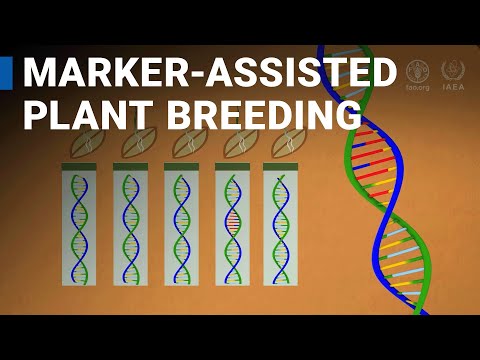
- Marker-Assisted Selection (MAS): Instead of waiting several generations for results, MAS lets breeders pick parents based on their genetic makeup right away! Imagine being able to choose the best parents for your future plant offspring based purely on their genomes.
These applications are leading us toward better crop improvement strategies and ultimately making agriculture more sustainable.
Oh! I remember this one time during my studies when I was knee-deep in plant genetics research. We had this project where we wanted to enhance disease resistance using molecular markers. The thrill of actually seeing the plants thrive while using insights from molecular biology was just mind-blowing! It felt like we were rewriting nature’s script.
The future is looking bright with these technological advances—there’s so much potential waiting to be tapped into. Innovations continue emerging, letting us explore even more sophisticated techniques for crop improvements using **molecular markers**.
So yeah, molecular markers might seem tiny and technical, but they’re seriously shaping the future of agriculture! Keep an eye on this space; it’ll only get more exciting from here!
Understanding the Limitations of Marker-Assisted Selection in Scientific Research
Marker-assisted selection (MAS) is like having a cheat sheet in the world of genetics, especially when it comes to improving crops. Basically, it allows scientists to use specific gene markers as signposts—kind of like GPS—pointing them toward valuable traits in plants. But, you know, even with all its cool advantages, MAS has some real limitations that can be pretty tricky.
One big limitation is that MAS relies on knowing where these markers are located in relation to the traits we want to improve. Traits like drought resistance or disease tolerance are super important for crop survival and yield. But here’s the catch: many of these desirable traits are controlled by multiple genes scattered across the plant’s genome. This means that sometimes, the markers we’ve identified don’t perfectly link up to those traits, making it difficult to select for them accurately.
Another issue with MAS is the environment’s role. Plants don’t live in a vacuum; they grow in real-world conditions that can vary widely from one location to another—or even from one season to the next. This variability can influence how traits are expressed. Here’s where things get a bit complicated: a marker might show a strong association with a specific trait in one environment but not in another. So what happens? Well, scientists may end up making selections based on data that doesn’t hold true everywhere.
Then there’s the cost and resources needed. Implementing MAS requires access to sophisticated technology and labs, which isn’t always feasible for every research team or farmer out there. Picture this: You’re trying to plant new crop varieties but find out you need expensive genetic testing just to make sure you picked the right seeds! It’s kind of frustrating when money stands between innovation and what could potentially help feed people better.
Also, let’s talk about the potential for unintended consequences. When you start playing around with genes, there can be side effects you weren’t planning on. For instance, if you focus too much on enhancing yield without considering other factors like flavor or nutritional value, farmers could end up with crops that look good on paper but aren’t great for consumers or ecosystems.
And what about the complexity of polygenic traits? Many useful characteristics in plants—like taste or quality—aren’t governed by just one gene but by many working together. Tracing all those interactions can feel like trying to untangle a ball of yarn after your cat’s had a go at it! MAS often simplifies this process too much and misses out on these complex interactions.
So while marker-assisted selection sounds awesome—and don’t get me wrong; it really is—it does have its hurdles. The science behind it is fascinating and constantly evolving, but understanding its limitations helps researchers avoid pitfalls along the way as they work toward better crops for everyone. It’s all about refining our approaches while keeping an eye on both the big picture and those intricate details!
You know, I’ve been thinking about how far we’ve come in agriculture, especially with genetics. It’s kind of mind-blowing! I remember visiting my grandma’s farm as a kid. She’d proudly show off her vegetable garden, and I’d just be amazed at how different each plant looked. Little did I know, there was so much science behind those differences.
So, when we talk about QTL genetics—quantitative trait loci—it’s all about pinpointing specific regions in the genome that influence traits like yield, disease resistance, or drought tolerance in plants. Imagine you had a map showing where to find treasure on an island; that’s sort of what scientists are working with! These QTLs help researchers identify which genes contribute to those important traits we want in crops.
Now, here’s where it gets really cool. With advancements in technology—like DNA sequencing and data analysis—we can analyze these genetic markers with incredible precision. This means that instead of waiting years to see if a new variety will thrive in certain conditions, researchers can predict outcomes much faster. It’s almost like having superpowers for breeding better plants!
But it doesn’t stop there; there’s an emotional side to this too. Think about communities that rely on farming for their livelihoods. Improving crop resilience through QTL research could mean more stability and food security for families around the globe. That’s not just science; it’s hope!
Of course, there are hurdles like public perception and ethical considerations that need addressing before all this tech can be fully embraced. But isn’t it exciting? The potential is huge! We’re looking at crops that can withstand harsh climates or resist pests without heavy pesticide use—all thanks to understanding the genetic blueprints of plants better than ever before.
So yeah, as we keep pushing forward with these advancements in QTL genetics, let’s not forget the real-world impact this could have—not just on agriculture but on people’s lives across the planet! It’s a journey worth cheering for.