So, picture this: you’re at a party, right? Everyone’s chatting, laughing, and then someone casually tosses a marble across the room. That little marble just zoomed past a bunch of people! Yeah, it’s just a game, but what if I told you that there’s way more going on when particles scatter around?
I mean, seriously! In the quantum world, stuff gets weird in the best sort of way. Things aren’t just bouncing off each other; they’re doing this funky dance influenced by fundamental forces.
Ever wondered how those tiny particles knock into one another and create all the cool stuff we see around us? Well, buckle up because the quantum theory of scattering dives into all that chaos! It helps us peek into the secrets of nature.
Let’s unravel these forces together—because who doesn’t want to get cozy with quantum mechanics over coffee? Sounds fun, huh?
Exploring the Theory of Scattering in Quantum Mechanics: Fundamentals and Applications in Modern Physics
So, scattering in quantum mechanics is pretty cool, and it’s essential for understanding some fundamental forces in physics. Basically, it’s all about how particles interact when they bump into each other. This can get a bit tricky, but hang tight, and I’ll break it down for you!
When we talk about quantum scattering, we’re usually thinking about things like electrons or photons colliding with other particles. Imagine playing bumper cars at a fairground. Each time two cars (or particles, in this case) collide, they change direction or speed. In quantum mechanics, these changes are described by what we call wave functions.
Now here’s where it gets interesting: the very act of measuring something can change its state. You know how sometimes you try to take a picture of a cute squirrel in the park and it runs away? That’s kind of like what happens in quantum mechanics; observing a particle can change its behavior! This leads us to the concept of probabilities. Instead of pinpointing exactly where a particle will go after an interaction, we calculate the likelihoods of various outcomes.
Let’s break down some key points:
- Wave-Particle Duality: Particles behave like both waves and solid objects. This duality is crucial for understanding scattering.
- Scattering Cross Section: This term basically tells us how likely two particles are to interact based on their sizes and energies.
- Potential Scattering: Think of potential energy as the “mood” influencing how particles will scatter based on their environment.
- Quantum Field Theory: A framework that helps explain how different fields interact at the quantum level during scattering events.
An interesting example is how physicists use particle accelerators to study scattering. These massive machines fling particles at high speeds and then observe the resulting interactions—kind of like smashing two atoms together to see what happens! They look at things like jets of particles that shoot out after these collisions, which helps them understand forces such as electromagnetism and even the strong nuclear force.
But wait—what’s fascinating about this whole scattering game is that it doesn’t just apply to tiny things like electrons or photons. It also has implications for understanding larger systems too! For instance, when scientists look at cosmic rays in space or study materials on Earth at very small scales, they’re using principles from scattering theory.
Oh! And let’s not forget real-world applications! The technology behind x-rays relies on scattering principles too—you know those machines we step into at the airport? They help us see what’s inside our bags without opening them up!
So there you have it! Scattering isn’t just nerdy physics jargon; it’s fundamental to our grasp of everything from tiny particles to massive cosmic events. It continues to play a huge role in advancing modern physics while helping us poke around some truly mind-bending mysteries of the universe!
Exploring the Three Fundamental Principles of Quantum Theory in Modern Science
Alright, let’s have a chat about the three fundamental principles of quantum theory and how they play into modern science, especially when we talk about scattering and fundamental forces. Buckle up!
First off, quantum theory is like the funky cousin of classic physics. It deals with the tiniest bits of matter, think atoms and particles zipping around. So, what are these three principles? Here we go:
1. Wave-Particle Duality: This principle tells us that particles, like electrons or photons, can behave both like waves and like tiny little balls. It’s a bit mind-boggling! Imagine tossing a pebble into a pond and seeing ripples spread out; that’s the wave bit. But then picture trying to catch that pebble – it’s definitely a particle! In scattering experiments, when you bombard atoms with particles, they can act like waves; they interfere with each other just like those ripples.
2. Uncertainty Principle: This one’s super famous thanks to Werner Heisenberg. Simply put, it says you can’t know both the position and momentum of a particle precisely at the same time. Think of it like trying to track your friend in a crowded party: if you focus on where they are (position), you lose track of how fast they’re moving (momentum). This principle shows up in scattering events too because every time you try to measure where something is or how fast it’s going, you’re messing with its nature.
3. Quantum Entanglement: This is where things start getting really trippy! When two particles become entangled, their states are linked regardless of distance—like magic twins! If you change something about one particle, the other changes instantly too. In scattering processes involving entangled particles, scientists can gather information about one without disturbing the other directly. It’s this spooky action at a distance thing that has huge implications for communication and computation.
In terms of modern science applications? Oh boy! Understanding these principles helps us devise new technologies—think quantum computers or advanced imaging techniques in medicine.
So next time you hear about quantum theory or see those scientists in lab coats squinting at machines filled with blinking lights, remember: they’re working with some seriously cool stuff flowing from these key ideas! Quantum theory isn’t just abstract thought; it’s behind tech that could change our world in ways we can’t even fully grasp yet.
And there you have it—a peek into the wild world of quantum mechanics! Each principle connects deeply with how we perceive nature on an atomic level and shapes many areas in science today. Fun stuff, right?
Exploring the 6 Fundamental Laws of Quantum Mechanics in Modern Science
Sure, let’s get into the amazing world of quantum mechanics! It can feel pretty out there sometimes, but it’s all about understanding the tiny building blocks of our universe. The six fundamental laws of quantum mechanics are key to unraveling the behavior of particles at the smallest scales. So, what do these laws look like? Here we go!
1. Wave-Particle Duality
So, this one’s a trip! Particles like electrons and photons can behave both like particles and waves. Imagine tossing a pebble into a pond; it creates ripples that spread out—like waves. But at the same time, this pebble is still a solid object. It’s like those moments when you can’t decide if you’re more of a wave or a rock star!
2. Uncertainty Principle
Next up is Heisenberg’s Uncertainty Principle. This law tells us that we can’t know both an electron’s exact position and momentum at the same time. If you pinpoint where it is exactly, its speed becomes fuzzy and vice versa. Think of trying to spot a fast-moving car on the highway—it’s super tricky if you’re standing right next to it.
3. Quantum Superposition
Here’s another mind-bender: superposition means particles can exist in multiple states simultaneously until measured or observed! Picture Schrödinger’s cat: until you peek inside the box, your cat is both alive and dead at once. It sounds bizarre but highlights how reality isn’t always straightforward.
4. Quantum Entanglement
Ever heard about entanglement? It’s wild! When two particles become entangled, changing one instantly affects the other, no matter how far apart they are—a bit like having a best friend who knows your thoughts even when you’re miles away!
5. Quantum Tunneling
Now let’s talk about tunneling—the phenomenon where particles “tunnel” through barriers they typically shouldn’t pass because they act as waves too! Imagine rolling a ball up a hill; sometimes it rolls back down, but in quantum land? The ball might just appear on the other side without climbing over!
6. Feynman Path Integral
Lastly, there’s Richard Feynman’s path integral formulation which suggests that particles take every possible path to get from point A to point B until observed. So essentially, every route they could possibly take exists simultaneously, which feels like having infinite options for lunch when really you only have leftovers!
So yeah, these six laws are fundamental to understanding how everything from atoms to light behaves in our universe!
And when we talk about **quantum theory of scattering**, we’re diving deeper into how these fundamental forces interact with matter on such small scales—how light scatters off electrons or how different forces play together in particle collisions.
The whole field opens up tons of questions about reality itself! Whether it’s figuring out why things happen in ways we don’t expect or finding out how these tiny rules govern everything around us—from technology to cosmic events—quantum mechanics keeps us curious and amazed each day!
You know, quantum theory can feel like a rabbit hole. One moment, you’re just trying to grasp how particles bounce off each other, and the next, you’re knee-deep in this surreal world where stuff doesn’t behave like you think it should. I remember back in college, sitting in a lecture hall filled with buzzing students, my professor started talking about scattering while swinging a tennis ball around—like that simple action could somehow explain forces at a cosmic level.
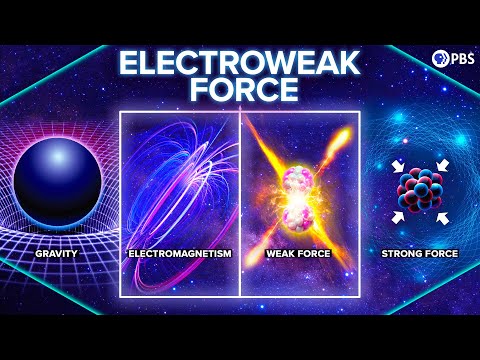
So here’s the deal: when we talk about the quantum theory of scattering, we’re diving into how particles interact—think electrons bouncing off one another or light hitting an atom. These interactions help scientists understand fundamental forces—those invisible strings that keep our universe together. Gravity’s super familiar; you know it keeps us on the ground. But what about electromagnetism? That’s what makes your hair stand up when you rub a balloon on your head! Seriously though, these forces play huge roles not just in physics but in chemistry and even biology.
Now, scattering itself is kinda cool. It’s like when you’re at a party and you throw a dodgeball into the crowd; some people might catch it or deflect it while others get hit! In the quantum realm, particles do this dance of interaction. They scatter off one another based on their properties—like charge and mass—and those interactions tell us so much about what’s happening below the surface of everything we see.
But honestly—it’s wild to think about all these particles whizzing around most of us can’t even see. It’s like trying to glimpse tiny stars swirling in an ever-expanding universe right within our own backyard! This is why physicists get so jazzed up about scattering theory—it’s not just math; it’s storytelling at its core.
Even though I sometimes still feel lost among all the technical jargon and equations (seriously!), there’s something profoundly beautiful about realizing how interconnected everything is through these forces we’re still figuring out. So next time you hear someone mention quantum scattering, maybe picture that dodgeball game again—and remember: every interaction is part of this bigger cosmic dance we call life!