You know those moments when you’re just chilling, and you pick up a rock or something shiny? Well, I once picked up this awesome quartz crystal thinking it was just cool-looking. Little did I know, it was hiding a whole world inside!
Seriously, quartz is one of the most common minerals on Earth, and it packs some serious complexity. It’s like the rock version of an onion — layers upon layers of intricate atomic structure.
People often see quartz as pretty decoration, but there’s so much more happening beneath the surface. Ever thought about what makes it sparkle? Or how its atoms are all lined up in a perfect dance?
Oh man, it gets wild! So hang tight; let’s unravel the amazing world of quartz crystals together!
Exploring Nikola Tesla’s Insights on Quartz: A Scientific Perspective
Nikola Tesla, known for his groundbreaking work in electricity and magnetism, had some pretty intriguing thoughts about quartz. Yeah, it might surprise you, but quartz isn’t just a pretty rock. It has fascinating properties that make it a big deal in science, especially in the field of crystal technology.
So, let’s get into the nitty-gritty: Quartz is basically made of silicon and oxygen, arranged in an orderly pattern at the atomic level. This structure is what gives quartz its unique characteristics. When you look at a quartz crystal, you’re seeing this stunning organization of atoms working together like a well-tuned orchestra.
What makes quartz so special? Well, its atomic structure allows it to vibrate when subjected to an electric field. This phenomenon is known as piezoelectricity—basically, when pressure is applied to certain materials (like quartz), they generate electricity. That’s why Tesla recognized its potential; he knew that if you could harness those vibrations effectively, there was a world of possibilities.
- Natural Resonance: The way atoms are arranged in quartz creates natural resonance frequencies. When these frequencies are tapped into, they can amplify electrical signals.
- Applications: This ability leads to amazing uses in technology—from watches that keep perfect time to radios that pick up signals clearly.
- Cleansing Energy: Some believe quartz can cleanse energy or promote healing due to its unique vibration patterns.
Think about it: Have you ever held a piece of rose quartz? It feels cool and smooth against your skin. And as much as it might seem like just a decorative stone, inside there’s all this action happening at the atomic level!
Tesla believed that harnessing the power of these minerals could change how we think about energy transmission and storage. He often emphasized the importance of utilizing natural resources effectively—not just for today but for future generations too.
But what does all this mean for us? Well, understanding quartz on an atomic scale gives scientists insights into not just electronics but also geology and even biology! It reflects how interconnected different fields of science can be. Plus, each time we learn more about materials like quartz and their atomic structures, we get closer to innovations that could reshape technology as we know it.
So next time you see a shiny piece of quartz or hear someone mention Tesla’s name in relation to crystals, remember it’s not just some random coincidence or cool vibe; there’s serious science behind it! It’s all about those tiny atoms working together in ways we’re only beginning to fully appreciate—and who knows what kind of future discoveries are hiding within those beautiful structures?
Exploring the Crystal Structure of Quartz: Trigonal vs. Hexagonal Systems in Mineral Science
Quartz is one of those minerals that just seems to pop up everywhere, right? It’s not only beautiful but also super interesting when you dig into its atomic structure. So, let’s chat about quartz and its crystal structure, focusing on the trigonal and hexagonal systems. You ready? Let’s break it down.
First off, quartz primarily crystallizes in the trigonal system, which is a bit like having a triangular arrangement. Imagine three equally spaced points connected by lines—that’s kind of what it looks like! In this system, the unit cell (the smallest repetitive unit of a crystal) forms a shape called the rhombohedron. This means that every corner of this little “box” or cell has an angle that isn’t quite 90 degrees. Pretty neat, huh?
Now, let’s move to the hexagonal system. While quartz is mainly trigonal, it can also show hexagonal traits in certain conditions. This system is characterized by six corners instead of three—like a honeycomb shape. In these cases, you can find quartz crystals that look more like prisms than classic pyramids. If you ever see a quartz crystal with six sides at the base—it’s likely showcasing its hexagonal nature.
- Trigonal System: Think rhombohedral shapes and angles that are all outta whack—not 90 degrees!
- Hexagonal System: Picture those six-sided prisms; they feel more spacious and open.
The beauty of quartz comes from its sio2 composition—silicon dioxide. The way these silicon and oxygen atoms bond together creates an amazing network structure that’s really strong. And guess what? This unique atomic arrangement gives quartz its awesome physical properties—like hardness! Seriously, it scores a seven on the Mohs scale, making it pretty tough.
A quick story: I remember going on a hike with friends once and we stumbled upon some stunning quartz crystals sparkling in the sunlight. We were totally mesmerized! That moment made me think about how something so seemingly simple can have such intricate under-the-surface complexity—it’s wild!
You might wonder why knowing whether quartz is trigonal or hexagonal even matters. Well, this distinction impacts how scientists classify minerals and understand their properties. It helps geologists identify different types of rocks too! So next time you see a shiny piece of quartz or even make some jewelry with it, just remember—you’re holding onto an incredible example of nature’s architectural skills.
The world of quartz is fascinating because it’s more than just pretty stones scattered around; it’s about understanding how these tiny atoms arrange themselves in patterns that give rise to beautiful structures. Seriously cool stuff!
Exploring the Unique Properties of Quartz: A Comprehensive Analysis in Geological Science
Quartz is pretty fascinating, right? It’s all around us—in the rocks beneath our feet, in watches, and even in some types of glass. What really makes quartz special is its unique properties, which stem from its intricate atomic structure. So let’s break it down.
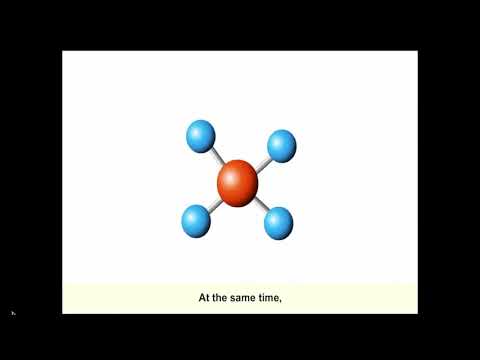
First off, quartz belongs to a group of minerals called silicates. This is because it contains silicon and oxygen atoms. The basic building block of quartz is a structure called a tetrahedron. Imagine a pyramid with four faces—yeah, that’s it! Each tetrahedron has one silicon atom at its center, surrounded by four oxygen atoms at the corners. These tetrahedra connect together in a 3D network, which gives quartz its strength and durability.
Now, if you look closely at quartz crystals under a microscope—or with just your own eyes—you might notice they have a hexagonal shape. This comes from their atomic arrangement. The way those silicon and oxygen atoms bond together creates that perfect six-sided symmetry we see in most quartz crystals. It’s like nature’s way of showing off!
Another cool thing about quartz? It has some amazing physical properties! For one, it’s incredibly hard—like, super hard! On the Mohs scale of mineral hardness, quartz scores a solid 7 out of 10. This means it can scratch most other minerals but can be scratched by only very few like diamonds. Ever tried to break a piece of quartz? Good luck with that!
Also, did you know that quartz can come in various colors? It turns out that impurities or variations in its crystalline structure can change its appearance dramatically. For instance:
- Amethyst is colored by iron impurities and radiation.
- Citrine shines bright because of iron oxidation.
- Rose Quartz, with its lovely pink hue, might have tiny inclusions that scatter light.
And here’s something crazy: quartz exhibits piezoelectric properties! That means when you apply pressure to it, it generates an electric charge. You’ve probably seen this in action if you’ve used certain types of watches or microphones—they often rely on this quality to function properly!
What’s more intriguing is how well quartz interacts with light. You may have noticed how some pieces sparkle or shine brilliantly under sunlight—this reflects how transparently they treat lightwaves. Quartz can bend light and create beautiful effects like rainbows inside other crystals.
When you consider all these aspects together—the atomic structure creating strength and symmetry; the variety in color; and unique electrical characteristics—you start to appreciate how amazing this mineral really is.
So next time you’re out hiking or even just looking at your watch, remember you’re hanging out with something ancient and intricate—quartz might just be the coolest rock around!
Alright, so let’s chat about quartz crystals for a second. You know, those beautiful, shiny rocks you might find in a jewelry store or maybe even at the beach? They look all sparkly and cool, but what’s really happening inside these gems is pretty mind-blowing.
Quartz is made up of silicon and oxygen—two elements that pair up in a specific way to form an incredible structure. You know how when you build with Lego, there are some pieces that just fit together perfectly? Well, silicon and oxygen do just that on an atomic level. They form a repeating pattern called a crystal lattice. This lattice gives quartz its striking shape and those perfect points we often see on crystals.
I remember the first time I held a quartz crystal as a kid. It was almost like holding magic in my hand! The way it caught the light and sparkled was mesmerizing. I always thought of them as just pretty things until I started looking into their inner workings. That’s when I realized how complex they really are.
The specific arrangement of atoms in quartz is what gives it unique properties. For instance, it can conduct electricity under certain conditions, which is why it’s used in things like watches and radios—they work thanks to the vibrations of those tiny atoms within! Isn’t it wild to think that something so small can have such an impact on our daily lives?
Also, there’s something comforting about knowing that this beautiful crystal has been around for millions of years. Quartz forms through processes deep within the Earth, taking its time to grow slowly over ages. So next time you pick up one of these crystals or see it sparkling in jewelry, remember there’s so much more to it than meets the eye.
In some ways, quartz crystals remind us of life’s complexities: simple yet intricate; familiar yet mysterious. Just like us humans! It makes you wonder what else lies beneath the surface of things we often take for granted—kind of poetic if you think about it!