Alright, picture this: you’re sitting at a dinner party and someone suddenly drops the bomb that DNA is like a cookbook for life. Crazy, right? Well, it kinda is!
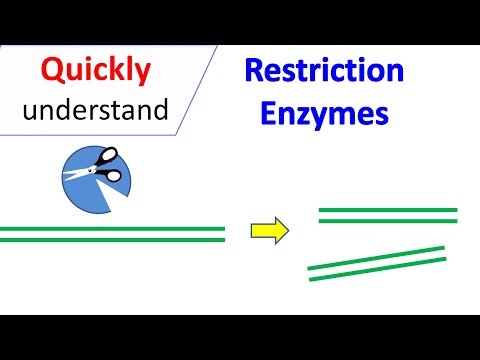
Now, imagine having a pair of scissors that can cut the recipes in just the right spots. That’s what restriction enzymes do! They’re like tiny chefs chopping up DNA with precision.
One of these clever little scissors is called BamHI. Ever heard of it? This enzyme has some serious skills when it comes to snipping DNA at specific spots—called restriction sites. And trust me, these spots are super important if you’re diving into genetic research.
So let’s take a stroll through this wild world of BamHI. You’ll see how it all fits together in the grand scheme of genetic exploration. It’s going to be an adventure!
Understanding the Role of BamHI in Genetic Engineering: Insights into Molecular Biology Applications
Alright, let’s break down this whole BamHI thing in a way that makes sense without getting too technical. So, BamHI is one of those nifty little tools scientists use in genetic engineering. It’s a **restriction enzyme**, which means it cuts DNA at specific spots. Think of it like a pair of molecular scissors!
Now, why do we need these scissors? Well, when scientists are doing genetic research or engineering, they often need to modify DNA. This could involve inserting new genes, deleting them, or even just analyzing what’s there. And that’s where BamHI comes into play.
BamHI recognizes a very specific sequence of nucleotides in DNA: it looks for the sequence “GGATCC.” When it finds that sequence, it snips the DNA right between the G and the A. This makes it super useful because you can predict exactly where it’s gonna cut.
- DNA Cloning: Imagine you’re trying to clone a gene. You can use BamHI to cut both the plasmid (the circular DNA) and the gene you want to insert at the same site.
- Gene Editing: If you’re tinkering with genes—like inserting a gene for resistance against diseases—you can use BamHI to create breaks in the DNA where you want those changes.
- Mapping Genes: Researchers can also use BamHI to help map how genes are arranged on chromosomes. By cutting at these restriction sites and analyzing the resulting fragments, they can learn more about gene structure.
Let me give you a quick story from my own experience! One day in lab class, we had this exercise where we used several restriction enzymes—including BamHI—to splice together parts of different plasmids. The goal was to create something entirely new. Watching those tiny bits of DNA come together felt like being a chef mixing ingredients for an amazing dish!
Another exciting aspect? Scientists have created whole libraries of **BamHI-cut DNA** sequences! These libraries allow researchers to explore genetic information from various organisms without starting from scratch each time.
Still curious about what happens after BamHI does its thing? After cutting, you’ve got some sticky ends on either side of that cut—those are sections of single-stranded DNA that wanna bond with other strands. It’s like they’re reaching out for connection! That lets researchers easily stick new pieces of DNA back into place.
So basically, by using enzymes like BamHI in genetic research and applications, we’re able to push boundaries and explore areas we never thought possible before! It’s pretty exciting stuff if you think about how far science has come and where it’s heading next.
Unlocking Genetic Mysteries: The Role of Restriction Enzymes in Genetic Research
When we talk about genetic research, one of the cool tools scientists use are **restriction enzymes**. These little guys are like molecular scissors, cutting DNA at specific spots. One of the most popular ones is called **BamHI**. So, what’s the deal with this enzyme and its restriction sites?
Restriction Enzymes 101: Basically, these enzymes are found in bacteria and help protect them from viruses by chopping up foreign DNA. When it comes to genetic research, they let scientists slice DNA neatly to study genes, create recombinant DNA, or even clone genes into vectors.
You see, BamHI recognizes a specific sequence in the DNA: GGATCC. When it finds this sequence, it cuts between the guanine (G) and adenine (A). This is super useful because it allows researchers to create pieces of DNA with sticky ends—little overhangs that can easily pair with other pieces of DNA.
Why It Matters: Imagine you’re building something out of LEGO. If you have special bricks that fit together perfectly, your project becomes much easier! In genetics, those sticky ends created by enzymes like BamHI help scientists join different pieces of DNA together seamlessly.
One time I was chatting with a biologist who was working on gene therapy for a rare disease. She described how using BamHI allowed her to slice out a faulty part of a gene and replace it with a healthy version. That little enzyme played a huge role in trying to fix something that could change lives!
Applications in Research: Here’s where things really get interesting. BamHI isn’t just a lab tool for fun experiments; it has real-world implications.
- Gene Cloning: By cutting plasmids and inserting desired genes into them using BamHI, researchers can make copies of genes.
- Genetic Mapping: Restriction enzymes help scientists figure out where genes are located on chromosomes.
- Genetic Engineering: Engineers often use these precise cuts to introduce new traits into organisms.
It’s pretty wild how much impact such tiny molecules can have! And there’s more: when scientists analyze the fragments left after using BamHI or any restriction enzyme, they can check if certain mutations are present or if genetic material behaves the way they expect.
In summary, understanding **BamHI** and similar enzymes is crucial for deciphering genetic puzzles. They cut DNA where needed and open up new possibilities for scientific breakthroughs—whether that’s creating genetically modified organisms or studying diseases at their roots. Who knew molecular scissors could be so revolutionary?
Identifying BamHI Restriction Sites in the pBR322 Plasmid: A Molecular Biology Perspective
So, let’s talk about BamHI and its restriction sites in the pBR322 plasmid. If you’re working with molecular biology, this is a topic you probably run into quite often. But what does it all mean? Let’s break it down together.
BamHI is an enzyme, also known as a restriction enzyme. What it does is pretty cool: it cuts DNA at specific sequences. The recognition sequence for BamHI is GGATCC. This means that every time BamHI encounters that exact sequence in a strand of DNA, it will slice the DNA right between those two Gs. It’s kind of like having a pair of scissors that only work on special paper!
Now, the pBR322 plasmid is one of those classic vectors in cloning experiments. It was among the first plasmids to be engineered for use in bacteria, and it’s still hanging around today! So where does BamHI fit into all this? First off, pBR322 contains multiple restriction sites which makes it super handy for scientists looking to insert new DNA into the plasmid.
- A key point: The pBR322 has one BamHI site located at approximately 100 nucleotides from its start.
- This site can be utilized for inserting genes of interest or other fragments you want to clone.
- BamHI’s cutting ability means researchers can generate fragments with sticky ends; these are like puzzle pieces that fit together nicely when ligating DNA.
If you put BamHI to work on pBR322, after digestion, you’ll see two sticky ends appear on either side of the cut site. This makes it much easier to ligate (or connect) new bits of DNA into your plasmid. It’s like making a new recipe: you have your base (the plasmid), and you’re adding your preferred ingredients (the genes).
A personal story? Well, I once watched my lab buddy try to insert a gene using this method. She was nervous because she didn’t want to mess up her carefully designed experiment! But after running a gel electrophoresis to check whether BamHI had successfully cut her plasmid and whether her insert was present—that moment of seeing those bands light up on the gel was just priceless!
This process doesn’t just end with cutting; there’s also some serious downstream applications! Researchers can analyze gene function or create genetically modified organisms—super important stuff. So essentially, knowing where BamHI cuts in pBR322 gives scientists valuable tools in genetic research.
In summary, if you’re digging deep into genetic engineering or molecular biology projects involving pBR322—and let’s be honest; who isn’t?—you’ll want to remember that little bit about BamHI and its snipping powers! You might find yourself getting creative with what you can insert next time you’re tinkering around in the lab.
So, let’s chat about BamHI restriction sites. Now, if you’ve ever dabbled in genetic research or even just seen some sci-fi movie where someone tries to splice genes together, you might have heard of restriction enzymes. These little guys are like tiny molecular scissors that cut DNA at specific sequences. BamHI is one of them, and it’s a pretty big deal in the world of genetics.
BamHI recognizes a specific sequence: a nice little palindrome that reads the same forward and backward—something like “GGATCC”. You know how when you say “wow,” it just feels right? That same kind of magic happens with these sequences. When BamHI cuts at this site, it creates jagged ends called sticky ends, which can be super handy when you want to combine pieces of DNA together.
Here’s where it gets personal for me. I remember my first lab session in college like it was yesterday. We were all huddled around the workbench, excitement buzzing in the air. Our professor was explaining how cutting DNA with enzymes like BamHI could create entirely new organisms! I mean, wow! The thought that something so small could lead to breakthroughs in medicine or agriculture is just mind-boggling, right?
But there’s more to it than just cutting and pasting pieces of genetic material. The role of BamHI and other restriction enzymes has helped scientists understand genetic diseases better too. By slicing through various sequences, researchers can pinpoint mutations or anomalies that lead to illnesses. It’s like solving a mystery where every clue reveals something crucial about our health.
But hold on—this isn’t without its ethical questions. With great power comes great responsibility! Manipulating DNA opens up discussions about bioengineering and what it means to play God with life itself. It’s thrilling but also kinda daunting when you think about the implications for our planet and future generations.
So yeah, BamHI might seem like just another tool in the lab toolbox, but really it’s a gateway into understanding life at its most fundamental level—and that’s pretty amazing if you ask me! Whether you’re hoping to advance technology or make life-saving medical breakthroughs, knowledge about these tiny restrictions really paves the path for the future of science. It’s a cool time to be alive when all this genetic wizardry is happening around us!