You know that feeling when you finally find the missing puzzle piece after searching forever? That rush of excitement? Well, that’s kind of what Sanger sequencing brings to the table in the world of genetics.
Imagine this: back in the 70s, there were researchers scrambling to read DNA sequences like they were trying to decode an ancient language with no Rosetta Stone in sight. Talk about frustrating! But then came along Frederick Sanger, who totally flipped the script. He developed a method that made reading DNA much easier and more precise.
Fast forward to today, and it’s still a big deal. Seriously, whether scientists are hunting for genetic markers for diseases or piecing together evolutionary histories, Sanger sequencing is often at the heart of it all. So, got your coffee? Let’s dig into how this classic technique is still making waves in modern genetic research!
Exploring the Continued Relevance of Sanger Sequencing in Modern Genomics
Sanger sequencing, named after the brilliant scientist Frederick Sanger, has been a cornerstone in genetics since the late 1970s. You might think it would be old news by now, especially with all these new fancy sequencing technologies popping up left and right. But here’s the kicker: Sanger sequencing is still super relevant today. Let’s break down why that is.
First off, accuracy is one of its biggest strengths. While newer methods like next-generation sequencing (NGS) can produce data at lightning speed, they sometimes stumble on accuracy. Sanger, on the other hand, is like that dependable friend who always delivers—its error rate is significantly lower than many NGS techniques. This makes it ideal for projects where precision matters a lot, like validating findings from NGS or when you need to sequence small regions of DNA.
Then there’s length. Sanger can read longer stretches of DNA than most NGS methods can handle easily. This becomes super handy when you’re dealing with complex regions of genomes or when you need to confirm structures that are not so straightforward. Imagine trying to build a puzzle and having pieces that just don’t fit right; longer reads help ensure every piece goes where it should!
Another key point is its application in clinical settings. Many labs still rely on Sanger sequencing for testing genetic disorders. If you’re checking for specific mutations linked to diseases—like cystic fibrosis or sickle cell anemia—Sanger’s precise approach gives clinicians definitive answers they can trust.
And don’t forget about cost-effectiveness. For small-scale projects or when working with limited samples, Sanger may actually save you some bucks compared to high-throughput methods needing more complex setups and analysis pipelines. Sometimes simpler really is better!
Also noteworthy is its role in education and research training. Many students get their first taste of genomics through hands-on experience with Sanger sequencing labs. That foundational knowledge plays a big part in developing skilled researchers who understand both historical and modern techniques.
In addition, Sanger isn’t just sitting around twiddling its thumbs while waiting for the next big thing! It’s been integrated into numerous modern workflows too. For instance:
- Sanger sequencing often follows up on initial results from NGS projects.
- It’s used in constructing reference genomes by filling gaps left by newer technologies.
- The method plays an essential role in projects aiming for high-quality assemblies or validating structural variants.
Sharing an anecdote—once I assisted a researcher who was studying a rare genetic disorder affecting only a handful of people worldwide. The team started with NGS but found some confusing results due to high variability in their data sets. Switching back to good old Sanger provided clarity and gave them reliable sequences that confirmed their hypotheses about mutation locations.
So yeah, while we hear lots about flashy new technologies these days, let’s not underestimate the continued importance of Sanger sequencing in modern genomics! It stands as a lasting legacy—an integral tool that beautifully complements newer methodologies while still holding its own at the cutting edge of science today.
Exploring the Impact of DNA Sequencing on Modern Taxonomy in Biological Science
DNA sequencing has seriously changed the game in taxonomy, the science of classifying living organisms. It’s like giving a magnifying glass to a detective! And one of the biggest breakthroughs has been Sanger sequencing, which has helped scientists understand relationships among species like never before.
So, what’s Sanger sequencing? It’s a method used to determine the precise order of nucleotides in DNA. Basically, it reads the genetic code. Before Sanger, taxonomists relied heavily on physical characteristics—like fur patterns or leaf shapes—to classify organisms. But that was like trying to figure out a puzzle with only half the pieces!
- Precision: With Sanger sequencing, researchers can accurately classify species based on genetic data. This means they can see how closely related different organisms are at a molecular level.
- Diversity Discovery: This technology also helps in discovering new species. Just think about it—when you sequence DNA from an organism that looks similar to another, sometimes you find out they’re not related at all! Like finding out your “sibling” is actually your cousin.
- Correcting Classifications: Sometimes, names get passed down through generations based on outdated or incorrect information. Sequencing helps correct these errors by providing clarity on genetic relationships.
This shift became super tangible during studies involving plants and animals found in isolated ecosystems. For instance, let’s say researchers went into a rainforest and found what looked like just another type of frog. After sequencing its DNA with Sanger methods, they might discover it’s actually part of an entirely different family than previously thought! How wild is that?
The emotional draw here? Think about conservation efforts—if scientists misidentify a species as something common when it’s actually rare or endangered due to its unique genetic makeup, that could be catastrophic for its survival.
Sanger sequencing has also influenced evolutionary biology by helping create more accurate phylogenetic trees, which show how different species are related over time. By analyzing sequences and comparing them across species, researchers can literally trace back their evolutionary paths. Imagine being able to walk back through time and see how species evolved into what they are today!
So yeah, DNA sequencing has reshaped taxonomy from a branch of biological science that used to be somewhat subjective into an incredibly data-driven field. That precision doesn’t just help scientists; it benefits all life forms by ensuring we understand and protect our planet’s rich biodiversity properly.
You see? The impact of DNA sequencing isn’t just about cold hard facts—it has real-world implications for conservation, understanding evolution, and ensuring we get classifications right so we’re not inadvertently harming nature instead of protecting it!
Unveiling the Impact of DNA Sequencing on Modern Plant Classification in Botanical Science
So, let’s chat about DNA sequencing and how it’s shaking things up in the world of plant classification. Imagine you’re a botanist, right? You’ve spent years trying to figure out how different plants are related. It can be, like, super tricky! That’s where DNA sequencing swoops in to save the day.
The Sanger sequencing method, named after the brilliant Frederick Sanger, was one of the first technologies that made it easier to decode DNA. It’s like getting an ID for each plant species! With this method, you can read the DNA sequence and understand the genetic makeup of a plant. This is huge for classifying plants accurately.
- First off, you can identify species that look super similar on the outside. For example, some orchids might look almost identical but have completely different genetic backgrounds. DNA sequencing helps unearth those hidden differences.
- Then there’s the rewrite of evolutionary history! When researchers sequence DNA from different plants, they can create phylogenetic trees. These trees show how closely related different species are based on their genetic information. Suddenly a whole new picture emerges about how plants have evolved over time.
- Another thing is that it helps in conservation efforts. By understanding which plants are actually unique species and which ones are hybrids or varieties of others, botanists can prioritize what to conserve or protect better.
You know what’s also cool? Sometimes scientists find out that a plant isn’t what they thought it was at all! There was this case with a small shrub—at first glance, it seemed like just another boring bush. But when they sequenced its DNA? Surprise! It turned out to be an entirely new species! That kind of discovery gets scientists pumped!
The challenge with Sanger sequencing is that while it opened many doors, it can be slow and costly when you’re dealing with lots of samples—like testing all those diverse plants in a rainforest. However, it laid down the foundation for newer technologies that can do this way faster now!
In essence, without techniques like Sanger sequencing paving the way for understanding genetics better, modern botany would look really different. It gives us powerful tools not only for classification but also for protecting biodiversity on our planet.
This whole journey into plant genetics sounds fun and fascinating because every little piece of DNA tells a story about life on Earth—so here’s to using science to uncover those adventures!
You know, it’s kind of cool when you think about how far we’ve come in understanding DNA. Like, not too long ago, the whole idea of sequencing our genes seemed almost like sci-fi. I mean, Sanger sequencing—named after Frederick Sanger, who, by the way, won two Nobel Prizes—is one of those breakthrough moments that opened a big door for genetic research.
I remember the first time I learned about this method in a class. The professor was explaining how Sanger came up with this technique back in the 1970s. It was all about figuring out the order of nucleotides in DNA. Just imagine! A scientific detective story where you’re unraveling the code that makes us who we are. Pretty mind-blowing stuff!
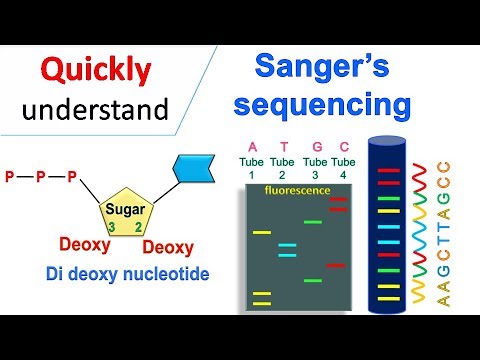
So how does it actually work? Well, basically, scientists use this clever trick involving special chemicals that help them to read DNA strands one piece at a time. They’d mix these chemicals with DNA samples and let them do their thing. It’s like putting together a puzzle where each piece is a different color based on its sequence. The end result? A pretty detailed picture of an organism’s genetic makeup.
But here’s where it gets even more exciting: Sanger sequencing paved the way for modern genetics. It played a crucial role in projects like the Human Genome Project, which was all about mapping our entire genetic code! Thanks to that grand adventure, researchers are now able to explore links between genes and diseases much more effectively.
I mean, just think about it: today’s advancements in personalized medicine owe a lot to these early techniques. When doctors look at your genetic information to recommend treatments or predict health risks—it’s definitely mind-blowing! Sometimes it feels surreal knowing that what started as a simple lab experiment has evolved into something that can change lives.
And while newer technologies have popped up since then—like next-generation sequencing—Sanger’s method still holds its ground in accuracy and reliability for smaller-scale projects or clinical settings. It reminds me of those classic movies that just never really go out of style.
Anyway, Sanger sequencing is more than just a technique; it’s kind of like an old friend that helped introduce us to an entire universe of genetic possibilities! It’s wild how something so fundamental still shapes research today and continues to illuminate paths toward understanding our health and ancestry better than ever before. Isn’t science just awesome?