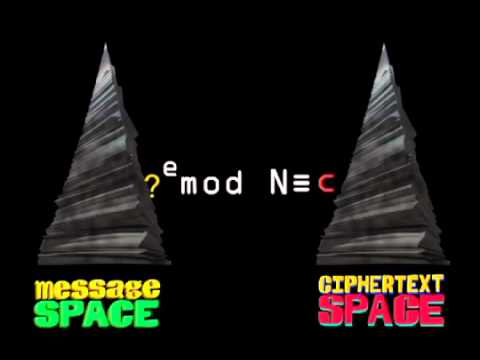
So, imagine you’re at a party. You’re chatting with friends and suddenly someone brings out a secret code. Like, “Hey, let’s talk in Pig Latin!” Everyone laughs, but then you realize it’s actually kinda fun trying to decode messages. Well, that’s sort of what the RSA algorithm does but on a way cooler level!
Back in the day when the internet was just starting to take off, people freaked out about how to keep their secrets safe online. Seriously, nobody wanted to send their credit card info into the digital void like that! Enter RSA—a fancy way of encrypting data that makes sure only the right folks get to read it.
You know what’s wild? RSA stands for the names of three brilliant minds: Ron Rivest, Adi Shamir, and Leonard Adleman. They cooked up this whole idea in 1977, and it’s still a huge deal today! So buckle up! We’re about to unravel why this algorithm is basically the backbone of modern cryptography. Exciting stuff ahead!
Exploring the Obsolescence of RSA Cryptography in Modern Scientific Applications
RSA cryptography has been a fundamental pillar in the world of digital security for decades. Developed back in 1977, it’s based on the mathematical properties of prime numbers. Basically, RSA relies on two keys: a public key, which anyone can use to encrypt messages, and a private key, which is kept secret and used for decrypting those messages. This nifty setup has powered everything from web traffic encryption to securing emails. But here’s the catch: technology progresses at lightning speed, and what was once cutting-edge can start to show its age.
So why are we even talking about obsolescence? Well, as computers get more powerful and algorithms become more sophisticated, the security offered by RSA can come under fire. Think about it like this: when you were a kid playing hide-and-seek, finding the perfect hiding spot was crucial. But if your friend got taller or smarter over time, they’d probably catch you faster than before!
And that’s happening now with RSA. The main problem lies in its reliance on large prime numbers for security. When RSA was first introduced, the primes needed were pretty hefty—around 2048 bits or more—but as computers advance and quantum computing comes into play, those bits might not be enough. Quantum computers could theoretically break RSA encryption fairly easily using an algorithm called Shor’s algorithm. It’s like giving someone a superpowered magnifying glass to look through all your secret stuff!
To break it down further:
- Key Length: The longer the bits, the better it is at resisting attacks. But longer keys mean slower computations.
- Quantum Threat: Quantum computers could crack current RSA standards much faster than classical ones.
- Alternatives: Newer algorithms are being developed that aim to be quantum-resistant—like lattice-based cryptography.
But here’s something interesting—despite these concerns around RSA becoming less secure over time, it still holds sway in many applications today! It’s widely used because it’s established and people trust it; familiarity goes a long way in tech too!
However, companies are starting to shift towards post-quantum cryptography, which is designed to withstand potential future quantum attacks. This means researchers are scrambling to revolutionize how we safeguard our information before that “superpowered magnifying glass” becomes widely available.
To wrap things up (not that I’m concluding anything here), while RSA has served us well for years as a cornerstone of cryptography, its days might be numbered if we can’t keep pace with technological advancements. So what do you think? Are we ready for this shift? It’s definitely an exciting (and slightly nerve-wracking) time in the realm of digital security!
Understanding RSA: Its Key Role in Modern Cryptography and Scientific Applications
So, let’s talk about the RSA algorithm. You might have heard about it if you’ve ever dabbled in the world of online security or cryptography. Basically, it’s one of those big deals when it comes to keeping our digital lives safe.
The RSA algorithm, named after its creators Ron Rivest, Adi Shamir, and Leonard Adleman, is a type of public key cryptography. This means it uses two keys—a public one that everyone can see and a private one that only you keep secret. It’s like having a mailbox where anyone can drop in letters (the public key), but only you have the key to open it and read what’s inside (the private key).
Wanna know how it works? Well, here’s the scoop:
- Two Large Prime Numbers: You start by picking two really big prime numbers. Like, huge! This is crucial because they need to be hard to guess.
- Multiply Them Together: Next, you multiply these two primes together. The product is part of your public key.
- Calculate Totient: Then you calculate a value called the totient. This involves using your primes to find how many numbers are coprime with your product. Don’t worry if that sounds tricky; just think of it as a fancy way to figure out how many good options you’ve got!
- Choose an Exponent: You pick another number for your public key—this has to be coprime with your totient.
- Create Private Key: Finally, you derive your private key from all this math. It stays with you while everyone else gets the public info.
This combination of steps creates a sort of mathematical lock-and-key system that’s incredibly secure—at least for now! To crack this code without knowing the private key would mean breaking down those massive prime numbers, which takes forever using today’s technology.
Now, why does this matter? Well, think about all those times you’re shopping online or logging into your bank account. Each time you send sensitive info over the internet—like passwords or credit card numbers—RSA is often working behind the scenes ensuring that nobody else can snoop in on those conversations.
You might also be surprised by its broad applications outside just securing communications! For example:
- Digital Signatures: RSA helps verify identities digitally so that when you sign things online (like contracts), others know it’s really you who signed them.
- Securing Software Updates: When an app needs an update, RSA checks that what you’re downloading is legit and not some shady version out there trying to mess up your device.
- Sensitive Data Encryption: Organizations use RSA to encrypt data files before sending them over networks so only authorized people can access them.
The cool part? As technology evolves and we get faster computers—or even quantum computing—it raises questions about whether RSA will still stay secure in the future. Scientists are already looking into new methods because staying ahead in security is always vital!
If you’ve ever marveled at how we keep our information safe online without anyone sneaking a peek—it all goes back to algorithms like RSA doing their magic every day!
Comparative Analysis of AES and RSA: Evaluating Encryption Methods in Modern Science
Encryption is like a secret code that keeps our information safe. You know, with all the data flying around these days, like in social media or online banking, we really need strong methods to protect ourselves. Two of the big players in this arena are **AES** (Advanced Encryption Standard) and **RSA** (Rivest-Shamir-Adleman). Both serve a similar purpose but do it in different ways. Let’s break it down, shall we?
AES is a symmetric encryption method. This means that it uses the same key to both encrypt and decrypt data. Imagine passing a note to your friend. You both agree on a special way to write messages so only you two can read them. If someone else finds that note without knowing your agreed method, they’re out of luck!
- Speed: AES is pretty fast because it doesn’t have to deal with complex mathematical calculations every time you want to encrypt or decrypt something.
- Key Length: AES typically uses key sizes of 128, 192, or 256 bits. The longer the key, the more secure your message—kinda like having more locks on your door.
- Use Cases: It’s widely used for things like securing Wi-Fi connections and files on your computer.
On the flip side, we have RSA, which works differently because it’s an asymmetric encryption method. Instead of using one key, RSA uses two keys: one public (anyone can see this) and one private (only you keep this secret). Think about it as sending an invitation for a party where anyone can see who’s invited, but only you know where the party is being held.
- Security: RSA relies on complex math involving prime numbers and modular arithmetic—it’s like using giant puzzles that are super hard to crack without knowing the solution.
- Key Length: RSA usually works with much longer keys—2048 bits or even more—which makes it tougher for attackers but also slower when encrypting data.
- Use Cases: Commonly used for secure web traffic (like HTTPS), signing digital documents, and securely sharing AES keys!
Okay, here’s where it gets interesting! When you compare AES and RSA, each has its strengths and weaknesses. You’ve got speed vs security on one side; AES is fast but needs a secure way to share its key since it’s symmetric. Meanwhile, RSA shines in securely exchanging keys over public channels despite being slower.
So here’s an example: Imagine if you wanted to send a super secret message over a not-so-secure network. You could use RSA to securely share an AES key first and then use that AES key for fast encryption of your actual message. It’s kinda like delivering the safe combination through a locked box!
In modern science—particularly in fields like cybersecurity—the balance between these two methods is critical. Depending on what you’re working on—maybe protecting sensitive patient data or ensuring military communications—you might pick one over the other at different times.
In summary, AES offers speed, while RSA provides robust security. Using both together allows us to harness their strengths effectively! So next time you’re online making transactions or chatting with friends about personal stuff? Just know there’s some clever coding behind keeping all that info safe!
Let me tell you a little story first. A while back, I was chatting with a friend who was having a tough time signing onto their online banking account. They were worried—like, really worried—about the security of their information. Imagine being stressed about your money just because you can’t remember a password! Anyway, that made me think about how we rely on cryptography every day, often without even realizing it.
Now, speaking of cryptography, have you heard of the RSA algorithm? If you haven’t, let me break it down for you! RSA is like this super smart lock that protects your data when it’s floating around in cyberspace. So how does it work? Well, it uses some pretty clever math involving prime numbers—you know, those numbers only divisible by 1 and themselves. The thing is, multiplying big primes is easy peasy; dividing them back into primes? Not so much! That’s basically where RSA shines.
Here’s where it gets interesting: when you send a message using RSA, you’re actually mixing up your data with these big prime numbers to create a unique key. This key is what helps keep your message safe from prying eyes. It’s kind of like putting your valuables in a safe and locking it up tight! What’s wild is that even if someone intercepts that message during transmission, they won’t easily crack the code without knowing those prime numbers.
And let’s not forget how this all came to be! Back in the late ’70s when Ron Rivest, Adi Shamir, and Leonard Adleman cooked this idea up—things were getting super digital and people were starting to worry about privacy. It was one of those lightbulb moments that changed everything! You can just imagine folks sitting around debating how to keep secrets safe in an increasingly connected world.
But here’s the kicker: while RSA has been around for decades and played a huge role in securing online communications today—like e-commerce or emails—it’s not invincible. With all these advancements in computing power (I mean hello, quantum computing), there are ongoing discussions about its vulnerabilities. So it’s kind of like we’re playing a game of cat and mouse where we constantly need new ways to outsmart potential threats.
In daily life? You probably use RSA every time you click “buy now” or log into social media—keeping things safe while making life easier. It’s incredible how something so math-heavy can affect our day-to-day routines without us ever giving it much thought.
So yeah, next time you’re scrolling through your phone or doing some online shopping, remember that behind all that convenience lies some serious number crunching working hard to keep your info secure! It’s comforting to think there are bright minds behind this tech keeping us covered—even if they might’ve spent long nights worrying about prime numbers instead of sleep.