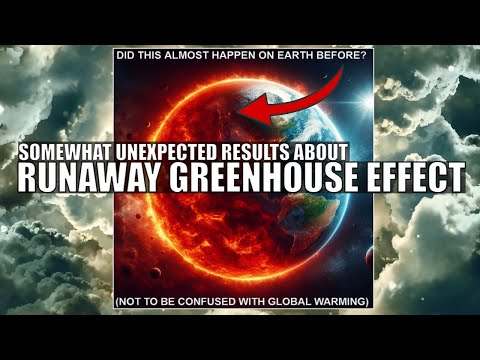
So, picture this: you’re in a sauna, and the door accidentally locks. At first, it’s all chill—nice and warm. But then things get a bit too toasty, right? You start sweating like crazy, wishing for fresh air. Well, that’s kinda what’s happening to our planet with the runaway greenhouse effect.
Now, I know “greenhouse effect” sounds all technical and boring, but trust me, it’s pretty wild. Basically, it’s like giving Earth its own cozy blanket—except this blanket is getting way too thick!
If you stay with me here for a bit, you’ll see how this whole thing works and why we should be paying attention to it. Spoiler alert: it involves some serious heat and way less snowball fights in our future!
Understanding the Runaway Greenhouse Effect: Mechanisms, Impacts, and Implications for Climate Science
So, let’s chat about the runaway greenhouse effect. You might’ve heard this term thrown around when people discuss climate change. It’s a pretty big deal in the world of climate science, and it basically describes a situation where a planet’s atmosphere traps heat so well that it leads to drastic temperature increases. Picture Venus for a moment—it’s like Earth’s evil twin who went overboard with its greenhouse gases.
The basic idea is that certain gases, like carbon dioxide and methane, hang out in the atmosphere and keep heat from escaping back into space. This is how we maintain a cozy temperature here on Earth. But if these gases increase dramatically, they can pull off a seriously dangerous magic trick where they just keep heating things up.
- Mechanism: Imagine the Earth as this big blanket. Sunlight shines down, warming the ground and oceans, and some of that warmth gets radiated back into space. Now, when there’s too much greenhouse gas around, it’s like adding another layer to that blanket. The heat gets trapped instead of escaping, leading to rising temperatures.
- Feedback Loops: Here’s where things get tricky. As temperatures rise, ice caps start melting. Ice reflects sunlight—when it melts, darker ocean water is revealed which absorbs more heat. This makes things even warmer! It’s like getting on a slippery slope; once you start sliding down, it just keeps going faster.
- Impacts: If we hit runaway conditions like those seen on Venus, we’re talking about catastrophic scenarios—think boiling oceans and super high surface temperatures making our planet uninhabitable for humans and many other life forms.
This is why scientists are so concerned about current levels of greenhouse gas emissions. Once you kick off this process, it could spiral out of control pretty quickly. It reminds me of the time I accidentally set off the fire alarm while trying to cook pasta—just one little mistake turned into chaos!
The implications for climate science are huge! Understanding these mechanisms helps us grasp what could happen if we don’t reign in our emissions soon enough. It also means we need to invest in renewable energy sources and smart technologies to cut down on those pesky gases we’re pumping into our atmosphere.
If you’re ever feeling overwhelmed by climate change news or thinking nothing can be done about it, remember: awareness is step one! By understanding how this runaway greenhouse effect works, we’re better equipped to tackle these challenges head-on—and that gives me hope!
The takeaway? Every little bit counts when it comes to reducing emissions—I mean, even avoiding unnecessary car trips can help! So let’s be mindful about our choices because we definitely want Earth to stay as habitable as possible for generations to come!
Understanding the Greenhouse Effect vs. Runaway Greenhouse Effect: Key Scientific Distinctions
Sure! Let’s break this down in a way that’s easy to get your head around.
The **greenhouse effect** is like Mother Nature’s cozy blanket for our planet. It happens when certain gases in the atmosphere, known as **greenhouse gases**, trap heat from the sun. Think of it like a car sitting in the sun. The sunlight comes in, warms up the interior, but then it can’t easily escape. So, inside the car gets really hot, right?
Now, here’s what you need to know about the main players:
- Carbon dioxide (CO2): This gas is released during activities like burning fossil fuels or even breathing! Plants help by using CO2 during photosynthesis.
- Methane (CH4): It’s way more effective at trapping heat than CO2 but sticks around for a shorter time. Sources include livestock and landfills.
- Nitrous oxide (N2O): It comes from agricultural and industrial activities and can stay in the atmosphere for years.
So, these gases are totally essential for keeping our planet warm enough to support life as we know it. But there’s a limit. If these gases build up too much, things start to get out of hand.
That brings us to the **runaway greenhouse effect**. Imagine if that cozy blanket suddenly became a sauna! In this scenario, greenhouse gases increase dramatically—think about large-scale volcanic eruptions or human activities pumping CO2 into the air at an alarming rate.
Here’s what happens next:
- You get even more heat trapped in the atmosphere.
- The planet starts heating up more than usual.
- This leads to more ice melting, which releases even more methane stored in permafrost.
This is where things can spiral out of control. A runaway greenhouse effect could push temperatures to levels that make life very difficult—or maybe impossible—for humans and many other species.
A striking example of this might be Venus—a planet that went through something similar millions of years ago. It has thick clouds filled with carbon dioxide and sits at an average temperature of about 900 degrees Fahrenheit (that’s roughly 475 degrees Celsius). Seriously scorching hot! And it didn’t start like that; Venus was once believed to have Earth-like conditions before things took a turn.
Let’s sum this whole thing up:
The greenhouse effect keeps our planet warm—just right for living organisms.
The runaway greenhouse effect? That turns up the heat way too much, leading potentially to catastrophic changes on Earth or any planet where it occurs.
So yeah, understanding these two processes isn’t just useful science trivia; it’s super crucial for figuring out how we can tackle climate change and keep our home safe and sound for future generations!
Exploring the Five Primary Causes of the Greenhouse Effect: Insights from Climate Science
The greenhouse effect is like a warm blanket around our planet. You know, without it, Earth would be super cold and life as we know it wouldn’t exist. But there’s a catch: when humans pump too many gases into the atmosphere, things get out of hand. Let’s check out the five primary causes of the greenhouse effect that climate science has identified.
1. Carbon Dioxide (CO2): This one’s the big player in the greenhouse game. When you burn fossil fuels like coal, oil, and natural gas for energy, CO2 is released. Think about driving your car or powering your home—those activities kick out a lot of this gas into the air. In fact, since the Industrial Revolution, CO2 levels have skyrocketed!
2. Methane (CH4): Next up is methane. This gas is way more powerful than CO2 when it comes to trapping heat—like 25 times more effective over a 100-year period! Crazy, huh? Methane comes from various sources like livestock digestion (yep, cows are culprits!), landfills where organic waste rots away, and even natural gas production.
3. Nitrous Oxide (N2O): Don’t underestimate this one! Nitrous oxide might not be as famous as carbon dioxide or methane, but it packs a punch when it comes to heat retention—about 298 times more potent than CO2 over that same time frame! It mainly comes from agricultural activities, especially fertilizers used in farming.
4. Fluorinated Gases: These are a bit different because they don’t occur naturally; humans create them for various industrial purposes including refrigerants and solvents. While they make up only a small portion of overall emissions, they can stay in the atmosphere for thousands of years and are super good at trapping heat.
5. Land Use Changes: It’s not just about gases we release; how we use land matters too! Deforestation and urbanization mean fewer trees to absorb CO2 from the air—just think about all those forests cut down for buildings or agriculture! Losing trees means extra CO2 floating around warming us up even more.
Our planet’s temperature balance is delicate and influenced by these causes working together in intricate ways. Every time we emit these gases through our daily activities or choices about land use, we’re nudging that balance further toward warming our climate.
So yeah, understanding these five primary causes helps us see how human activity impacts something as vast and complex as Earth’s climate system. It’s like we’re all part of this giant puzzle that influences weather patterns and ecosystems across the globe!
Alright, so let’s chat about something a bit heavy but super important – the runaway greenhouse effect. It sounds like an episode of some sci-fi series, right? But it’s actually a serious situation we could face if we don’t pay attention to how we treat our planet.
So, here’s the lowdown: the greenhouse effect is basically when certain gases in our atmosphere trap heat from the sun. You know, like when you leave your car parked on a sunny day and it feels like an oven inside? That’s because those gases – carbon dioxide (CO2), methane, and others – work like a cozy blanket around Earth. It keeps us warm enough to live. But here’s where it gets tricky. When humans burn fossil fuels or chop down forests, we pump extra greenhouse gases into the air. More gas means more warmth!
Now, what’s this runaway part about? Well, picture this: imagine if Earth heats up so much that it triggers even more gas emissions—like from melting permafrost or dying forests—creating a cycle that spirals out of control. It’s like watching a snowball rolling down a hill get bigger and faster until it’s just… massive!
I remember reading an old diary from my grandma one day, she wrote about how she used to see snow in her hometown every winter without fail. And now? The winters are milder; sometimes there isn’t even any snow at all! Just thinking about how climate change is rewriting our seasons is kind of heartbreaking.
A runaway greenhouse effect could lead to drastic weather changes, rising sea levels, and all kinds of chaotic stuff that really messes with life as we know it. And nobody wants that chaotic rollercoaster ride!
What can you do? Well, every little action counts—walking instead of driving when you can, recycling more often, planting trees… you get the idea. Looking after our planet might feel overwhelming sometimes but hey, if everyone pitches in just a bit more… maybe we’ll prevent that runaway train from leaving the station.
So yeah, let’s keep an eye on those temperatures and work together to make sure our future doesn’t turn into one of those disaster flicks where everything goes awry! What do you think? We’ve got this if we join forces!