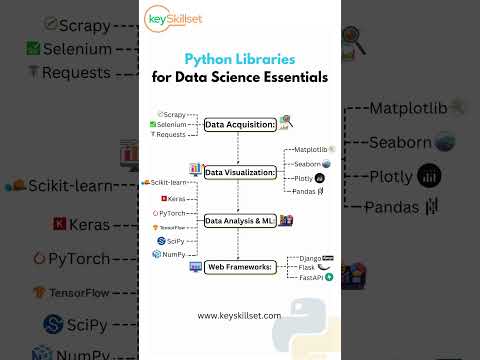
You know that moment when you’re scrolling through endless spreadsheets, and your brain just wants to explode? Yup, been there! You start wondering if there’s an easier way to make sense of all those numbers.
Well, let me tell you about Scikit Learn. It’s like having a super-intelligent friend who loves crunching data for you. Seriously, this library is a total game-changer in the world of data science.
Imagine being able to spot trends or predict outcomes without losing your mind over complicated equations. And the best part? You don’t need a PhD to use it!
So grab a coffee, and let’s chat about how to turn those data headaches into cool insights with Scikit Learn. You in?
Unlocking Scientific Data Insights: A Case Study with Scikit-Learn
So, let’s chat about scientific data insights and a tool called Scikit-Learn. If you’ve ever wondered how scientists make sense of mountains of data, you’re in the right place.
Scikit-Learn is like your go-to toolbox for machine learning in Python. It’s user-friendly and packed with features that help transform raw data into something meaningful. But what does that really mean? It means you can analyze patterns, make predictions, or even classify data without needing a PhD in computer science!
Consider an example: imagine you’re studying plant growth under different light conditions. You collect loads of data on height, leaf color, and growth rate. Now comes the fun part! Using Scikit-Learn, you can apply various algorithms to understand which light condition is best for growth.
Here’s how you might approach it:
- Data Collection: Gather your measurements over weeks or even months.
- Data Preprocessing: Clean up your dataset—remove any outliers or fill in missing values.
- Selecting a Model: Choose an algorithm from Scikit-Learn—maybe regression if you’re predicting height based on light.
- Training the Model: Feed your processed data into the model so it can learn from it.
- Testing and Validation: Check how well your model performs with new data to see if it really works.
You see? That whole process can turn into visual graphs and insights that show trends in your data. Sometimes a simple line graph can tell you more than pages of notes ever could!
Here’s another cool thing: You don’t have to do everything from scratch! Scikit-Learn provides pre-built models for all sorts of tasks—classification, clustering, dimensionality reduction—you name it. If you’re looking at multiple variables at once (like water levels and soil quality), PCA (Principal Component Analysis) helps simplify things without losing important information.
Now, I remember when I first tackled something like this during my studies; I thought I was going to drown in numbers! But once I started using Scikit-Learn, everything clicked. Watching my model spit out predictions felt like having a conversation with the data—it spoke back!
And don’t forget about visualization! Combining Scikit-Learn with libraries like Matplotlib lets you create stunning visual representations of your findings. A well-placed chart can spark conversations and inspire questions that lead to further research.
Finally, remember that this isn’t just limited to plants or biology; whether you’re diving into climate change models or analyzing social behavior patterns through surveys, Scikit-Learn has got your back.
In summary, unlocking scientific insights through tools like Scikit-Learn adds clarity and excitement to research! You can transform messy data into clear stories that lead to impactful discoveries. Sounds pretty dope, right?
Unlocking Scientific Data Insights with Scikit-Learn: A Comprehensive GitHub Guide
Sure thing! So, let’s talk about Scikit-Learn and how it helps us delve into the world of scientific data insights. You know, it’s like having a super powerful toolbox right at your fingertips.
First off, Scikit-Learn is a Python library that’s used for machine learning. It’s really user-friendly, which makes it a go-to option for both newbies and seasoned pros. What’s cool? It allows you to build predictive models without getting lost in technical jargon.
When you’re working with scientific data—think stuff like biology research or climate data analysis—it’s crucial to extract meaningful insights. That’s where Scikit-Learn struts in to save the day!
Now, let’s break down some key aspects:
- Data Preprocessing: Before diving into any analysis, you need clean data. Scikit-Learn offers tools to handle missing values and standardize your datasets, making your life easier.
- Feature Selection: Sometimes you have way too many features (or variables) that just complicate things. Scikit-Learn helps you pick the most important ones so that your model isn’t bogged down by unnecessary info.
- Model Training: This is where the magic happens! You’ll use different algorithms to train your models on historical data. Whether you’re doing classification or regression—Scikit-Learn has got a bunch of options available!
- Model Evaluation: After training comes evaluation. You want to know how well your model is performing, right? The library provides various metrics like accuracy score or confusion matrix to help you understand that.
- Tuning Hyperparameters: Sometimes models need adjustments here and there. With tools like GridSearchCV in Scikit-Learn, you can fine-tune these settings for better performance!
Here’s a little story: Picture me back in college struggling with my first big data project. I was drowning in numbers and formulas. But then I stumbled onto Scikit-Learn! Suddenly, everything clicked—I could visualize the results and see patterns emerge from what felt like chaos before! That triumph still gives me chills.
Now that you’ve got the basics down, using GitHub as a resource can be super helpful too. There are tons of repositories filled with code examples related to Scikit-Learn applications in scientific research. Think of it as an open library where folks share their projects!
You might find tutorials on specific techniques or even full-blown projects that tackle real-world problems using this library.
So basically, if you’re looking to turn complex data into actionable insights for scientific endeavors, don’t sleep on Scikit-Learn! It’s all about making sense of the vast sea of information out there while having some fun along the way.
So go ahead—start exploring Scikit-Learn on GitHub today and unlock those scientific insights awaiting discovery!
Harnessing Scikit-Learn for Deep Insights in Scientific Data Analysis with Python
So, you’ve heard about Scikit-Learn, huh? It’s like a toolbox for people who want to mess around with data in Python. You can think of it as your go-to friend when you need help analyzing scientific data.
Scikit-Learn is pretty much the MVP when it comes to machine learning. What’s cool about it is that you don’t need a PhD to start using it. Seriously! It’s designed to be user-friendly. You get to play around with algorithms that can help you understand patterns in your data.
Let’s break this down a bit. The first thing you’ll do is set up your environment. You’ll want Python installed, and then, just pop Scikit-Learn in there. Then you’re off!
One common task is classification. Imagine you’re a scientist trying to predict whether a particular type of plant will thrive in certain conditions based on its features like soil type, sunlight exposure, and moisture levels. You could use classification algorithms in Scikit-Learn to create a model that guesses what kind of plant it is!
And then there’s regression. Say you’re tracking how temperatures influence the growth rates of different species over time. Regression helps you establish relationships between variables — like how much the temperature goes up versus how much faster those plants grow.
You also have clustering techniques at your disposal. This is where things get fun! Picture this: you’ve got a bunch of animals observed in nature but without labels attached—no idea what they are or where they belong. Clustering can help group them based on their behaviors or habitats, revealing fascinating insights without any prior classification.
Another nifty feature is cross-validation. It’s kinda like training wheels for your model; it helps prevent overfitting, which is when your model learns too much from the training data and performs poorly on new data—the classic case of memorizing instead of understanding!
In terms of practical application, many studies have used Scikit-Learn for tasks ranging from predicting disease outcomes based on genetic information to analyzing climate changes over decades using vast sets of environmental data.
Oh, and before I forget, don’t underestimate pipelines. They’re perfect for streamlining your workflow! Instead of running each step separately—data preprocessing here, fitting the model there—you can chain them together seamlessly. Your code becomes cleaner and easier to manage.
Keep in mind that while Scikit-Learn offers powerful tools, the real magic happens when you combine these methods thoughtfully with domain knowledge—that’s where deep insights come from! You might find yourself asking new questions about your data after digging into it a bit deeper.
To wrap this up: Scikit-Learn is an amazing tool for anyone looking to explore scientific datasets through Python. The possibilities are tremendous—seriously! It can open doors to understanding our world better through data-driven insights that weren’t possible before.
Just remember: the journey into machine learning isn’t always smooth sailing; there will be bumps along the way—but that’s what makes it interesting! Happy coding!
You know, when I first heard about Scikit Learn, it felt like discovering a hidden treasure in the world of data science. It’s this amazing Python library that makes machine learning a lot more accessible for folks who might not have a PhD in computer science. I remember chatting with a friend who was trying to make sense of their research data. They were frustrated and drowning in spreadsheets, wishing for an easier way to pull insights from all those numbers. And that’s where Scikit Learn came in.
So here’s the thing: with Scikit Learn, you can take all those raw data points and start asking real questions. You’ve got your regression models that help predict outcomes based on historical data or classification algorithms that can tell you what category something belongs to based on its features. For scientists or researchers, this tool opens up so many doors! Imagine having mountains of data but not knowing where to start—then you get to play with parameters and see which model works best for your needs.
I remember hearing a story about a group of environmental scientists who used Scikit Learn to analyze patterns in climate change data. They were able to take complex datasets and build models to predict future changes—pretty cool, right? Their work became instrumental in drafting policies for conservation efforts.
And it’s not just about crunching numbers; there’s an artistic side too! You get to visualize your findings—like creating graphs or charts that really bring your data stories to life. It’s like painting a picture but with statistics instead of colors.
But here’s the kicker: while Scikit Learn is powerful, it demands some attention and understanding from you. It requires you to think critically about the algorithms you’re using and what they mean for your results. And yeah, sometimes it can feel overwhelming if you’re new to it all, like learning how to ride a bike without training wheels! But once you get the hang of it, there’s this exhilarating feeling of empowerment.
So basically, harnessing Scikit Learn isn’t just about using fancy tools; it’s about transforming the way we see and analyze the world around us through scientific data insights. It reminds us that behind every number lies a story waiting to be told—and isn’t that kind of exciting?