So, here’s a little fun fact: If you could clone your favorite dessert, would it taste the same? Imagine biting into a perfect chocolate cake that just keeps coming back for more! Well, that’s kinda like what scientists are doing with stem cells.
Seriously, they’re tapping into this wild science called Somatic Cell Nuclear Transfer (SCNT). Sounds fancy, right? But it’s basically about taking a regular cell and making it do some amazing things—like regenerating tissues or even creating organs!
Picture this: you need a new kidney because yours decided to take an extended vacation. SCNT might just step in and save the day. Isn’t that mind-blowing?
Let’s chat about what SCNT stem cells can do and how close we are to turning these sci-fi dreams into reality. You’re gonna want to stick around for this one!
Exploring the Future Possibilities of Somatic Cell Nuclear Transfer: Innovations in Science and Biotechnology
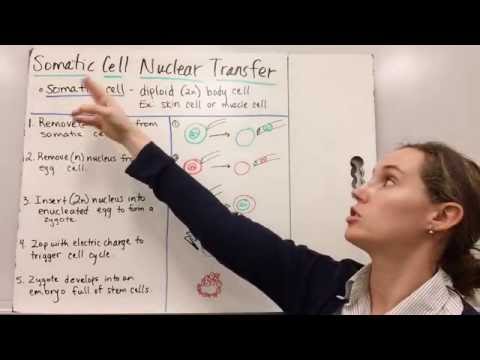
So, somatic cell nuclear transfer (SCNT), huh? It’s pretty wild if you think about it. Basically, it’s a fancy way of saying we take a nucleus from a somatic cell—a regular body cell—and put it into an egg cell that’s had its own nucleus removed. This technique is kind of like playing doctor but with cells. It could lead to some major breakthroughs in science and biotechnology.
First off, one of the most well-known applications of SCNT is **cloning**. Yeah, remember Dolly the sheep? She was the first mammal cloned from an adult somatic cell in 1996. That was a big deal! It showed that, even with just one single cell, you could potentially create a whole new organism. But SCNT isn’t just about making clones; it opens up possibilities for **stem cell research** too.
Why are stem cells important? Well, they’re like the superheroes of cells—able to turn into different types of cells in your body! This means they could be used to generate tissues or organs for transplantation. Imagine receiving a heart made from your own stem cells! That would reduce rejection risk and could save lives, right?
Now let’s talk about some potential applications and innovations we might see down the line:
- Tissue Regeneration: With SCNT-derived stem cells, we could potentially regenerate damaged tissues or organs.
- Gene Therapy: This technique could help correct genetic disorders by replacing faulty genes with healthy ones.
- Study Diseases: Scientists can create patient-specific stem cells to study diseases like Alzheimer’s directly from those who have them.
- Agricultural Advances: Cloning farm animals with desirable traits could improve food production and sustainability.
But hey, it’s not all sunshine and rainbows! There are ethical dilemmas here. Cloning raises questions about individuality and identity—what if someone cloned you? Also, there can be health issues; clones often face more health problems than their naturally-born counterparts. Remember Dolly? She had some serious issues later in life.
Don’t forget about the technical challenges either. We’ve come a long way since Dolly’s time but perfecting SCNT still takes lots of research—a lot more than people realize. Scientists are working on ways to improve efficiency rates (which can be pretty low right now) and reduce errors during the cloning process.
In summary, while somatic cell nuclear transfer shows massive potential for advancements in biotechnology and medicine, there’s still plenty to chew on regarding ethics and technology hurdles. The journey ahead is exciting yet complex! Who knows where this will lead us next? Let’s hope for innovation mixed with responsibility as we explore these frontiers!
Exploring the Applications of Somatic Cell Nuclear Transfer (SCNT) in Scientific Research and Biotechnology
So, let’s chat about something really intriguing: **Somatic Cell Nuclear Transfer**, or SCNT for short. This is the technique that put Dolly the sheep in the spotlight back in 1996. It’s a bit of a mouthful, but it’s basically about transferring the nucleus of a somatic cell into an egg cell whose nucleus has been removed. Sounds tricky, right? But it opens up a whole world of possibilities in both scientific research and biotechnology.
First off, what’s super cool about SCNT is that it allows scientists to create **cloned organisms**. By using the DNA from a specific adult cell, they can create an organism that’s genetically identical to that source. Imagine being able to clone an endangered species just to bring its population back up! Some researchers are actually working on this with animals like the black-footed ferret, which is super rare now.
Stem cell research also gets a serious boost from SCNT. When you create an embryo through this process, it can develop into **pluripotent stem cells**—these are cells that can become any type of cell in the body. Think of them as blank slates ready to become heart cells, skin cells, or anything else you need! For instance, if someone suffers from spinal cord injury or degenerative diseases like Parkinson’s, these stem cells could potentially be used for regenerative therapies.
But wait—there’s more! SCNT isn’t just about cloning animals or stem cell research. It’s paving new paths in genetic therapy. Researchers are exploring ways to correct genetic defects by inserting healthy genes into cloned embryos. So if there’s a nasty inherited illness hanging around in families, this method might one day provide solutions!
Now let’s talk some ethics here because they’re super important when we’re diving into SCNT territory. The idea of cloning humans raises eyebrows and sparks debates—like what does it even mean for individuality? While there’s no actual application for human clonal experiments yet (and probably won’t be due to strict regulations), having these discussions helps frame our understanding of what we can and should do with technology.
In biotechnology companies, SCNT could help us produce **biopharmaceuticals** more efficiently by generating genetically identical animals capable of producing drugs in their milk or blood. This could drastically reduce costs and improve availability for medications that save lives!
Finally, while some people might see SCNT solely through the lens of cloning pets or extinct species, there’s so much more at play here than just those headlines. The potential applications stretch far beyond what we can even imagine today.
So yeah, somatic cell nuclear transfer is not just something you read about in sci-fi novels; it’s an exciting frontier bridging multiple fields—from conservation biology to cutting-edge medical treatments. It’s kinda wild how one technique can hold so much promise for our future!
Exploring the Future: Potential Applications of Stem Cell Therapy in Modern Science
Sure! Let’s talk about stem cells and their potential applications. So, here we go:
What are Stem Cells?
Stem cells are like the ultimate building blocks of your body. They can transform into any kind of cell—muscle, nerve, or skin cells, for instance. That’s what makes them super cool and incredibly useful in science.
How Do They Work?
Basically, stem cells have this incredible ability to divide and renew themselves for long periods. When they do go through the process of differentiation (that’s a fancy word for becoming specialized), they can turn into many different types of cells. This is what’s fueling excitement in medicine.
The Role of SCNT
Now, you might have heard about SCNT—this stands for somatic cell nuclear transfer. The thing is, this technique involves taking a nucleus from an adult cell and putting it into an egg cell that’s had its own nucleus removed. It sounds complex, but it’s like sending a package (the adult nucleus) to a new address (the egg). This can create what you might call “pluripotent” stem cells—ones with even more potential.
Applications in Medicine
So what can we do with these amazing cells? Here are some exciting areas:
- Tissue Regeneration: Imagine being able to repair damaged tissues or organs! That’s right; scientists are looking at using stem cells to heal things like heart damage after a heart attack.
- Treatment of Neurodegenerative Diseases: Conditions like Alzheimer’s or Parkinson’s have long stumped doctors. But research is suggesting that stem cells could help replace lost nerve cells or regenerate brain tissue.
- Personalized Medicine: This is where it gets really interesting! Think of growing tissues that match your own genetic makeup. It opens the door for personalized therapies without the risk of rejection!
- Cancer Treatment: There’s ongoing research into how stem cells could be used to create more effective treatments for various cancers by targeting cancerous tissues specifically.
Anecdote Time!
Let me share something personal here. A friend of mine had a really tough time with arthritis as her joints were battling inflammation daily. She always said she wished there was a way to regenerate those worn-out tissues instead of just taking painkillers! Just imagine if one day someone could actually use her own stem cells to make her joints healthy again.
The Road Ahead
While the potential is massive, there are still hurdles—like ethical concerns and ensuring safety in treatments. The scientific community is buzzing about these advancements but also approaches them carefully.
To sum it all up: Stem cell therapy holds breathtaking possibilities for healing and regenerating damaged body parts but has its challenges too. As research progresses, who knows? We might just see these dream treatments become a reality one day!
So, you know how sometimes you hear about these wild scientific breakthroughs and think, “Wow, that sounds like something out of a sci-fi movie?” Well, let’s chat about somatic cell nuclear transfer (SCNT) stem cells because they fit that bill pretty nicely. Imagine taking a regular old cell from your body and reprogramming it into something totally different—like turning an ordinary potato into fries. Okay, maybe that’s a stretch, but you get my point!
SCNT is pretty cool in theory. Basically, it involves taking the nucleus from a donor cell—let’s say, skin tissue—and putting it into an egg cell that’s had its own nucleus removed. It’s like assembling a new team where the egg gets all the good stuff from the donor. This can create what’s called a cloned embryo—you know, like Dolly the sheep back in the day. That was groundbreaking!
Now picture this: these stem cells can turn into any type of cell in your body—heart cells, brain cells… even those tricky ones that help heal injuries or regenerate tissues. The potential applications are huge! They could help treat everything from spinal cord injuries to degenerative diseases like Parkinson’s. But hold on for just a second; we’re not quite there yet.
I remember chatting with my cousin who’s training to be a doctor. She shared this story about a patient who had been dealing with chronic pain for years after an accident. They talked about how advancements in stem cell therapy could someday offer her hope for healing and relief. You could see the flicker of excitement in her eyes as she imagined living in a world where such therapies were commonplace.
But while we daydream about these possibilities, there are also some ethical bumps along the way—not everyone is thrilled about cloning or using embryos for research. Plus, let’s not forget the science hurdles: making sure these stem cells don’t act rogue once they’re inside someone’s body! No one wants to end up with unintended results.
So yeah, even though SCNT holds incredible promise, we’re still navigating through its complexities and ethics. Still kind of neat to think about how far we’ve come and what might be around the corner! Who knows? Maybe one day fixing broken hearts won’t just be a metaphor but something real we can do with stem cells!