So, you know those moments when you’re just staring up at the night sky, wondering what’s out there? I remember once, sitting in my backyard with some friends, we spotted a shooting star. We all made wishes, but honestly? I just wished for pizza.
Anyway, while we were munching on cold slices, someone mentioned “singularity.” I went full-on confused mode. Seriously, I thought they were talking about a sci-fi movie or something! But it turns out that singularities are like these mind-boggling points in space where the usual rules of physics kinda go bonkers.
You might be wondering why we should even care about these cosmic oddities. Well, they’re more important than you’d think! They play a huge role in understanding black holes and the universe as a whole. So let’s take a little journey together into this wild world of singularity astronomy and see how it fits into modern science.
Exploring Scientific Singularities: Key Examples and Their Implications in Modern Research
Singularities in science, especially in astronomy and physics, refer to points where certain quantities become infinite or undefined. Basically, these are places where our current understanding of the universe hits a wall. You might have heard about black holes; they’re one of the most famous examples of singularities.
Imagine a black hole as a vacuum cleaner for space. Once something crosses its boundary, known as the event horizon, it’s gone forever. What happens at that point? Scientists aren’t completely sure! The laws of physics as we know them break down there. It’s kind of like hitting a brick wall while driving your car—you just can’t go any further.
Another intriguing example is the Big Bang. At the very start of the universe, all matter and energy were compressed into an infinitely small point. This singularity birthed everything we know today: galaxies, stars, planets—everything! So when you look up at the night sky, remember that it all started from this seemingly impossible situation.
Now let’s talk about how these concepts ripple into modern research. Understanding singularities can help scientists tackle some big questions in cosmology and theoretical physics. For instance:
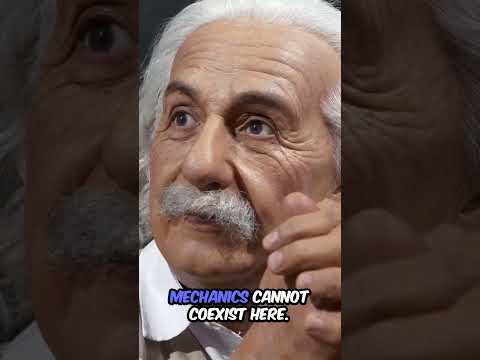
- Understanding Gravity: Singularity theories challenge our current understanding of gravity. By studying these phenomena, researchers hope to find a unified theory that combines general relativity and quantum mechanics.
- Technology Advances: Exploring features near black holes leads to new technologies and materials that could revolutionize industries. Think about how GPS satellites need adjustments based on gravitational effects!
- Time and Space: Singularities make us rethink time itself, potentially leading to new insights into how time flows or even how we can travel through it.
Here’s something emotional: Have you ever looked at the stars on a clear night? It feels like touching infinity—like being part of something much grander than yourself. That sense of wonder is partly driven by these scientific mysteries surrounding black holes and cosmic beginnings. It’s one thing to know they exist; it’s another to ponder our place in relation to such mind-boggling entities!
In summary, exploring scientific singularities isn’t just theoretical mumbo jumbo; it has real implications for what we understand about space, time, and ultimately ourselves. And while we might not have all the answers just yet—frankly speaking, we’re just getting started—each discovery pulls us deeper down this rabbit hole called existence! Who knows what else lies beyond those walls?
Exploring the Key Concepts of Singularity Theory in Modern Science
Okay, let’s chat about singularity theory. It’s one of those topics in modern science that really gets people thinking, you know? When you hear the word “singularity,” maybe you think of a black hole, right? Well, there’s more to it than that.
A **singularity** is basically a point where things break down in physics. Like, imagine you’re trying to draw something and suddenly your pencil snaps. That’s kind of what happens with information in this context—things just fall apart!
- Black Holes: These are the most famous examples of singularities. When a massive star runs out of fuel, it collapses under its own gravity until it forms a black hole. In these spots, the gravity is so intense that not even light can escape.
- Mathematical Singularity: This is where certain equations can’t handle specific values. Picture trying to divide by zero; it just doesn’t work and gives you all kinds of weird results.
- Time and Space: Near these singularities, space and time bend dramatically. It’s like being on a rollercoaster where everything twists and turns unpredictably!
So here’s the thing: when we study these bizarre phenomena, we’re also diving into some pretty intense physics. Take Einstein’s theory of relativity; it explains how mass can warp spacetime itself! Can you believe that?
An emotional moment for me was when I watched a documentary about the event horizon—the point around a black hole beyond which nothing can escape. Just visualizing such an extreme situation brings chills! Knowing there are places in the universe where our usual rules don’t apply feels like peering into the unknown.
Now let’s not forget about **cosmological singularities**, either! They’re thought to represent conditions at the very beginning of our universe—like a cosmic explosion packed into an infinitely small point at the Big Bang! That’s mind-boggling stuff!
But here’s a twist: many physicists believe that traditional theories start to falter near singularities. It makes us question what we really know about reality itself! Are we missing something fundamental? Honestly, it’s both exciting and frustrating.
In modern science, researchers aim to reconcile these strange occurrences with quantum mechanics (that’s all about tiny particles). It’s like trying to fit two puzzle pieces together that just don’t seem to match.
To wrap it up—singularity theory isn’t just an academic exercise; it challenges our understanding of space and time while inviting us on this thrilling ride through the cosmos! And who knows? Maybe there’s more than meets the eye when it comes to those mysterious black holes lurking out there in space.
Exploring Einstein’s Theories: The Link Between Relativity and Singularities in Modern Science
So, let’s chat about Einstein’s mind-blowing theories and how they connect to some seriously head-scratching stuff called singularities in modern science. You might’ve heard of the phrase “black hole,” which is where singularities come into play. Einstein really laid the groundwork for our understanding of how these cosmic giants work.
First off, what is relativity? In simple terms, it’s all about how space and time are connected. Einstein introduced two big ideas: special relativity and general relativity. The first one focuses on objects moving at constant speeds, while the second dives into gravity and how it bends space-time around massive objects. Pretty neat, huh?
Now, when stuff gets super dense—like way more than your typical mountain or even Earth—it can create a singularity. Think of it as a point in space where gravity is so strong that it crushes matter into an infinitely small point. Imagine if you took a whole star and squished it down to the size of a marble! That’s what happens at the center of black holes.
But here’s where things get wild: once you cross this boundary known as the event horizon, all bets are off. You can’t escape from a black hole; not even light can get out! It’s like being trapped in a cosmic whirlpool. And this leads to some fascinating questions: What happens inside a singularity? Why can’t we see what’s going on there?
And then there’s Hawking radiation. It sounds fancy but basically says that black holes aren’t completely black after all. They can emit tiny particles over time, potentially leading them to evaporate! This idea pops up when we think about singularities interacting with quantum mechanics—a whole other layer of science.
You know, it’s kind of like cooking in your kitchen—you can’t really see what happens inside the oven until you open the door. But with black holes and singularities, opening that door is much trickier than just turning a knob!
In modern astronomy, understanding these singularities helps scientists grapple with questions about our universe’s origins and structure. The interplay between general relativity and quantum mechanics—a theory that explains very small things—creates a puzzle that researchers are trying to solve today.
So yeah, exploring Einstein’s theories gives us tools to peep into some cosmic mysteries! Every time we learn more about black holes or singularities, it’s like peeling back layers on an infinite onion where each layer reveals more questions than answers. Talk about profound!
You know, when I first came across the term “singularity” in astronomy, I thought, “Okay, what on earth is that?” I mean, it sounds pretty intense, right? But once you dig in a bit, it’s like opening a door to this incredible universe of ideas.
So, let’s break it down. In astronomy, singularity usually refers to black holes. These are mind-bending regions of space where gravity is so strong that nothing—absolutely nothing—can escape from them. Just the thought of that can give you goosebumps! It’s like they’re these cosmic vacuum cleaners that suck in everything around them.
But what really gets me is not just their wild nature but what they can teach us about the universe and ourselves. When scientists study black holes and singularities, they’re not just figuring out how they work; they’re also probing some of the universe’s deepest mysteries. Like, how did everything come from a point so tiny you couldn’t even see it? How do these massive objects influence galaxies? These questions spark all sorts of curiosity.
I remember reading about an experiment where astronomers measured how stars move around a supermassive black hole at the center of our galaxy. It was this epic detective work that unraveled clues about dark matter and the universe’s evolution. Seriously cool stuff!
And then there’s the whole idea of space-time bending around these things—it makes my head spin! You could almost picture time itself stretching like a rubber band near one of those bad boys. The more we learn about singularities, the more we realize how intertwined everything is: time, space, energy… it all plays together in this cosmic symphony.
But here’s where it gets even more interesting. The study of singularities isn’t isolated to just theory or far-off galaxies; it’s got practical implications right here on Earth! Take gravitational waves for instance—those ripple effects caused by massive events like colliding black holes or neutron stars. These waves open up new ways to understand cosmic events and have led to groundbreaking discoveries just recently!
So yeah, singularity astronomy plays a pretty major role in modern science beyond just looking at twinkling stars or pondering weird concepts over coffee. It forces us to rethink our place in this vast cosmos and pushes us to explore beyond boundaries we thought were solid.
Honestly? When you sit back and let all this sink in—you can’t help but feel a mix of awe and excitement for what lies ahead. The unknown may seem daunting sometimes but man… Isn’t it thrilling to think we’re uncovering pieces of an incredible puzzle every day?