So, picture this: you’re munching on some popcorn at the movies. You crack open that salt shaker, and you think, “wow, salt really makes everything better!” But have you ever thought about what salt actually is?
Let’s talk about sodium chloride. Yup, that’s table salt’s fancy name! It’s more than just a flavor booster—it’s got a cool atomic structure that’ll make your science-loving heart skip a beat.
I mean, who knew that something so simple could be so interesting? But here’s the kicker: understanding sodium chloride could unlock a whole world of scientific significance. Seriously! So, let’s unpack this together.
Understanding the Relationship Between Sodium Chloride’s Structure and Its Chemical Formula in Chemistry
So, sodium chloride, or table salt as we usually call it, is way more than just something you sprinkle on your food. Its structure and chemical formula tell us a lot about how it behaves in nature. Let’s break it down.
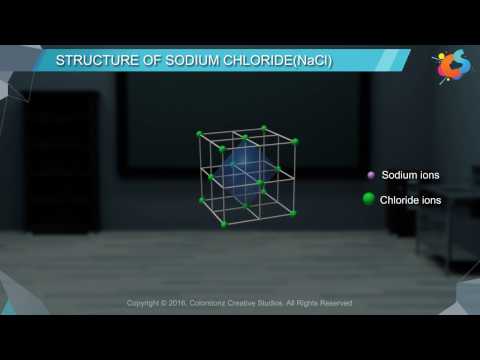
First off, the chemical formula for sodium chloride is **NaCl**. This tells you that there’s one sodium atom (Na) combined with one chloride atom (Cl). But here’s where it gets interesting. These two elements are not just hanging out together by chance; they actually form a specific structure.
What’s Going On with Sodium Chloride’s Structure?
Sodium and chlorine are like opposite magnets. Sodium has one electron in its outer shell that it’s more than happy to give away, while chlorine needs an electron to complete its outer shell. So when they meet up, sodium *donates* that electron to chlorine. This creates two charged ions: Na+ (positively charged) and Cl- (negatively charged).
Now, because opposite charges attract, these ions stick together tightly. They arrange themselves in a repeating pattern called a **crystal lattice**—think of it like a three-dimensional checkerboard where each square has either a sodium ion or a chloride ion.
Why Does This Matter?
This structure is key for some properties of salt:
- High Melting Point: Because of those strong ionic bonds holding everything together, sodium chloride has a high melting point of about 801°C (1474°F). You wouldn’t easily melt salt just by leaving it outside!
- Solubility: When you throw salt into water, the water molecules help pull the ions apart because they’re also polar (they have a slight charge). That’s why salt dissolves so well.
- Conductivity: In solid form, NaCl doesn’t conduct electricity very well since the ions are locked in place. But when dissolved in water or melted into liquid form? It can conduct electricity like nobody’s business!
And here’s something cool: when you look at any salt crystal under the microscope, you’ll see perfectly shaped cubes! That’s all thanks to its structural arrangement.
The Significance Behind It
So why should we care about this stuff? Well, understanding how these atoms interact helps chemists predict how sodium chloride will behave in different situations—like when exploring new reactions or even figuring out how to better preserve foods.
Plus, studying sodium chloride gives us insight into many other ionic compounds—like magnesium oxide or potassium bromide—that share similar structures and behaviors.
In short, there’s so much going on between those two little elements! Simply knowing their chemical formula isn’t enough; you’ve got to appreciate their structure and the beautiful dance they do together. Next time you add some salt to your fries or pasta, maybe you’ll think about all this chemistry behind that crunchy bite!
Exploring the Biological Significance of Sodium and Chloride Ions in Cellular Processes
Sodium and chloride ions, the components of table salt, play a super crucial role in our body’s cellular processes. You might just think of them as seasoning for your food, but they do a lot more than that.
First off, let’s talk about sodium ions (Na+). Sodium is essential for maintaining the electrical balance in and around cells. It’s like the bouncer at a club making sure only certain things get in and out. When sodium ions enter a cell, they help generate electrical signals. This is vital for functions like muscle contractions and nerve impulses. Without sodium’s presence, you’d be feeling pretty sluggish.
Then there’s chloride ions (Cl-). These guys often partner up with sodium to create sodium chloride (NaCl). Chloride helps maintain osmotic pressure within cells. Basically, it helps keep the right amount of fluid inside and outside of the cell walls. Think of it as keeping the balance in a swimming pool; too little water means things get all dried up, and too much can lead to overflow!
Now, you might be wondering about their teamwork—sodium and chloride really do work well together. One example is how they impact nerve transmission. When a nerve cell needs to send a signal, sodium rushes into the cell while potassium rushes out. This creates an electrical impulse that travels along the nerve fiber. Chloride comes into play by helping stabilize this process thanks to its negative charge.
Also important is how these ions affect muscle function. When your brain tells your muscles to move, it sends out signals that depend on both sodium and potassium—the dynamic duo ensuring that your muscles contract properly. If you didn’t have enough of either ion? Well, let’s just say you could end up with cramping or weakness.
In terms of biological significance, think about hydration too! Sodium plays a major role in regulating your body’s fluid levels through something called osmotic pressure—just another fancy way of saying it’s about keeping everything balanced at the microscopic level.
And honestly? If we don’t get enough sodium or chloride from our diet—like if you’re sweating buckets during summer or working out hard—you could experience symptoms like dizziness or confusion because those precious electrical signals start getting muddled up.
So next time you’re adding salt to your meal or grabbing that snack with some salty goodness—remember there’s some serious science behind those tiny white crystals! They help keep your body running smoothly from head to toe in ways you might not even realize.
Sodium Chloride Formula: Understanding Its Chemical Composition and Applications in Science
Sodium chloride, or common table salt, has the chemical formula NaCl. This represents sodium (Na) and chlorine (Cl) ions combining in a fixed ratio. When you think about it, it’s wild how something so simple is so crucial in our daily lives!
So, what’s going on with its atomic structure? Sodium has an atomic number of 11. That means it has 11 protons in its nucleus. Now, chlorine? It’s got an atomic number of 17, meaning 17 protons. These two guys behave a bit differently: sodium is a metal while chlorine is a gas at room temperature and super reactive.
Now, here’s where it gets interesting. Sodium tends to lose that one extra electron it has hanging around its outer shell to become positively charged (this is called a cation). Chlorine, on the other hand, loves to gain that electron to achieve full stability—it ends up being negatively charged (a anion).
When these two oppositely charged ions come together—bam!—you get NaCl through a process known as ionic bonding. They attract each other like magnets because of their charges. This gives table salt its solid crystalline structure.
Why do we even care about this stuff? Well, sodium chloride isn’t just seasoning for your fries! Here are some ways it’s significant:
- Biological roles: Your body needs sodium for nerve function and maintaining fluid balance.
- Culinary uses: Besides adding flavor, salt helps preserve food by inhibiting bacterial growth.
- Chemistry applications: NaCl is essential in chemical synthesis and can be used in various reactions.
- Industrial applications: It’s used for producing chlorine gas and sodium hydroxide.
On a personal note—remember that moment biting into your first homemade pretzel? That sprinkle of salt on top makes all the difference! It’s those tiny crystals of NaCl that elevate flavors and make the experience memorable.
And let’s not forget its role in science labs! Salt can be involved in experiments related to conductivity because when dissolved in water, it separates into individual Na+ and Cl- ions. This is super important for understanding solutions!
In short, the simple formula NaCl opens many doors—not just for culinary delights but also for scientific exploration. So next time you’re seasoning your meal or learning about chemistry in school, give a little nod to those tiny but mighty sodium and chloride ions working together!
So, sodium chloride, right? Or as most of us know it, table salt. It’s kinda fascinating when you think about what it is on a molecular level. Atoms are like the tiny building blocks of everything around us, and sodium chloride is a perfect example of how those blocks come together in a pretty cool way.
Now, sodium (Na) and chlorine (Cl) are the two elements that create this compound. Sodium is like that eager friend who loves to share – it really wants to lose an electron to become stable. Then we have chlorine, who’s the opposite; it’s looking to grab an electron to fill up its outer shell. So when they team up, you get this ionic bond where one gives away and the other takes. It’s like a buddy system, but on a microscopic scale!
I remember one time in school, we did this experiment where we mixed table salt with water and watched it dissolve. Honestly, I was just waiting for my snack break, but then I saw how those salt crystals broke apart into individual ions—Na+ and Cl-. At that moment, I realized just how important these tiny particles are for so many things!
The scientific significance of sodium chloride isn’t just in its chemistry. It plays such a crucial role in our lives! For instance, our bodies rely on sodium ions to maintain nerve function and fluid balance. Imagine not being able to feel anything because your nerves weren’t working—whoa! Plus, on a larger scale, salt has been used throughout history for trade and preservation. Just think of how important it was before refrigeration!
In short, even though sodium chloride might seem simple at first glance—just some white crystals we sprinkle on fries—it’s got layers to it. The way these atoms interact shows us so much about chemical bonds and even life itself. Who would’ve thought something so common could hold so much meaning?