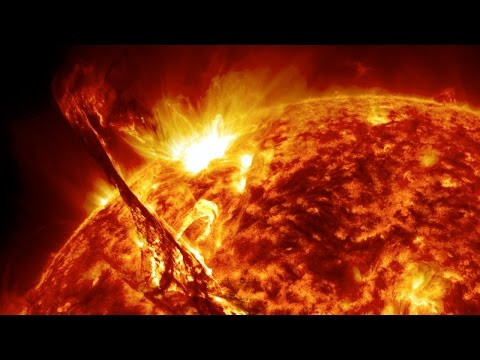
So, imagine you’re chilling at home when suddenly your phone goes haywire. Apps crash, the internet flickers out, and you’re like, “What on Earth is happening?” Well, if that ever happens to you, it might not be your Wi-Fi. It could be a solar flare!
Yeah, those fiery bursts from the sun can play havoc with our tech. It’s wild to think that something 93 million miles away can mess with your day-to-day life. But here’s the thing: knowing when these flares are coming is super important.
Why? Well, it’s not just about losing signal while binge-watching your favorite show. These solar flares can affect everything from satellites to power grids. If we get good at predicting them, we can keep our planet safe and sound.
So grab a drink and let’s dive into this bright topic!
Assessing the Probability of Solar Flares Impacting Earth in 2025: Scientific Insights and Predictions
Solar flares are like the sun’s fireworks. They shoot energy and particles into space, and sometimes they can reach Earth. This is why it’s essential to keep an eye on them, especially as we approach 2025. But how do scientists figure out when these flares might hit us?
First off, the sun has an activity cycle that lasts about 11 years. We’re currently moving toward a peak period, known as a solar maximum. During this time, solar flares and other phenomena like coronal mass ejections (CMEs) become more frequent. It’s like the sun’s throwing a party! In 2025, we expect the sun to be at its most active.
Now, predicting these flares is no walk in the park. Scientists analyze various signals from the sun using special satellites that orbit it. They look for things like magnetic field patterns and sunspots—dark spots on the sun’s surface where magnetic activity is intense. When these spots get active, they can lead to solar flares.
So, what does this mean for Earth? Well, when a powerful flare heads our way, it can affect satellite communications and even power grids down here. Remember when there was that massive blackout in Quebec in 1989? That was caused by a solar storm!
Now let’s look at some factors that influence how likely we’ll get affected by solar flares in 2025:
- Magnetic Field Activity: Strong magnetic fields on the sun often lead to flare-ups.
- Timing: The closer we get to solar maximum around 2025 means increased chances of more intense storms.
- Previous Activities: Tracking previous flare occurrences helps predict future ones.
- Technological Improvements:<!–b Enhanced satellites give us better data on solar behavior.
While scientists can’t predict exactly when or how strong any single flare will be, they can assess overall probabilities based on past patterns and current observations.
Let’s not freak out about it though! There are systems in place to monitor these events and help mitigate risks. For instance, power companies stay prepared for potential outages during high activity periods.
In summary, looking ahead at 2025 means being aware of an increase in solar activity. By monitoring signals from our star and understanding its behavior better each day, scientists hope to keep us informed about those fiery happenings up there—and how they may or may not affect life down here on Earth!
Today’s Solar Storm Warning: Understanding the Impact on Earth and Technology
Solar storms are like nature’s fireworks, but instead of beautiful colors lighting up the sky, they can cause some serious disruptions down here on Earth. So what’s the deal with these solar storms and why do they matter for our techie lives? Well, let’s break it down.
When we talk about solar storms, we’re mainly referring to solar flares and coronal mass ejections (CMEs). Imagine the Sun as a giant ball of gas that sometimes goes a little haywire. When it does, it sends bursts of energy and charged particles towards Earth. This is what happens during a solar flare—a huge explosion that releases massive amounts of energy into space.
Then there are CMEs. These are like big clouds of gas and magnetic fields that come shooting out from the Sun. If one heads our way, oh boy, it can really shake things up! When these particles hit our atmosphere, they can mess with everything from your GPS to power grids.
Now you might be wondering how often these solar storms happen. Well, they follow an 11-year cycle where the Sun switches between being super active and pretty chill. Right now, we’re heading towards a period of greater activity again—so keep your eyes peeled!
You know what’s wild? When these solar storms hit Earth’s magnetic field, it causes phenomena like the auroras. Ever seen those breathtaking lights in the sky? That’s actually a beautiful side effect of this cosmic interaction! But it’s not all fun and games; there are real risks too.
- Power Outages: Solar storms can induce electric currents in power lines. This can lead to transformer failures or even widespread blackouts.
- Communication Disruptions: Radio signals can get scrambled or blocked entirely by solar activity. Imagine trying to call someone during a storm; good luck with that!
- Affecting Satellites: Those nifty satellites orbiting above us? They’re at risk too! High-energy particles can damage their systems or even knock them out completely.
- Aviation Risks: For flights at high altitudes over polar regions, exposure to increased radiation levels is a concern during strong solar storms.
So how do we prepare for these cosmic events? Scientists keep an eye on the Sun using spacecraft like the Solar Dynamics Observatory and others that measure its activity. This helps predict when something big might come our way so we can take precautions.
Let’s not forget about our daily gadgets—we’re basically surrounded by tech that relies on stable signals and power grids. You ever notice how frustrated you get when your phone drops calls or runs out of juice? Now amp that up tenfold if you’re facing disruptions due to a solar storm!
In essence, understanding solar storms is important not just for scientists but for all of us who depend on technology every day. The next time you hear about a solar storm warning, remember: it’s not just another weather report; it’s nature’s reminder of how connected we are to the universe—and sometimes how vulnerable we can be too!
Understanding Solar Flares: Predictions for 2025 and Their Impact on Earth
Oh man, solar flares! These flashy bursts of energy from the sun are, like, seriously cool but can also be a bit terrifying. So, let’s break it down together.
First of all, what are solar flares? Well, think of them as huge explosions on the sun’s surface. They happen when the magnetic field lines get tangled up and release a ton of energy in the form of light and radiation. It’s like watching fireworks on a cosmic scale—except these fireworks can have some real effects on Earth.
Now, predictions for 2025? Here’s the scoop: scientists believe we’re heading into a more active phase of our sun’s cycle. The solar cycle typically lasts about 11 years, and right now we’re in solar cycle 25. So by 2025, we might see more frequent and stronger solar flares popping off.
What does this mean for us down here on Earth? Let me tell you!
- Communication Disruptions: These flares can mess with radio signals and even GPS systems. Imagine trying to navigate somewhere and your map app just goes haywire! That’s what could happen.
- Power Grid Risks: A really big flare could induce currents in power lines that lead to blackouts or electrical grid failures. Not fun when you want to watch Netflix!
- Affects Satellites: Solar flares can damage satellites orbiting our planet. This can affect weather forecasting or even satellite television.
- Auroras Galore: On the bright side (pun intended!), strong solar activity can also create stunning auroras—those beautiful northern and southern lights that you see dancing in the sky.
But here’s something important: scientists have tools and methods to monitor solar activity. They use satellites equipped with sensors to track changes in solar radiation. When a large flare is predicted, they give warnings so that vulnerable systems can be prepared or shut down temporarily.
I remember once hearing about how a massive flare caused havoc back in 1989—remember the Quebec blackout? That was linked directly to a geomagnetic storm from a solar flare! It lasted for around nine hours and left millions without power. Crazy stuff!
So yeah, while we enjoy these stellar displays from our sun buddy, it’s crucial to understand their potential impact on our everyday lives. Keeping an eye on predictions helps us stay safe while marveling at the wonders of space!
Okay, so let’s talk about solar flares. You know, those big bursts of energy from the sun that can mess with our technology? Yeah, those! It’s kinda mind-blowing to think something so far away can affect us here on Earth, right?
I still remember a time when I was sitting outside on a summer night, chatting with friends while the sky was lit up with all these beautiful stars. Someone pointed out how cool it was that all those lights were actually just… well, like these giant balls of gas burning in space. Then someone else mentioned solar flares and how they could potentially knock out satellites. That really got me thinking about how connected we are to the cosmos.
So here’s the thing: solar flares happen when there’s a sudden release of energy in the sun’s atmosphere. This can send a bunch of charged particles zooming toward Earth. If we’re lucky, most of it gets deflected by our atmosphere and magnetic field—thank goodness for that! But sometimes a particularly strong flare can have an impact on things like GPS signals and power grids. Imagine trying to navigate without your phone working or, worse yet, losing power during a heatwave!
That’s why scientists take predicting these flares seriously. They’ve got some nifty technology and models to anticipate when these events might happen. Having advance warning helps utilities prepare for possible disruptions or even adjust satellites’ positions. Kind of like putting on your raincoat before heading out when you see storm clouds forming.
But here’s the emotional kicker: think about communities that rely heavily on technology for safety—like hospitals or emergency services. A solar flare could create chaos during critical moments! So these predictions aren’t just geeky science stuff; they’re genuinely important for keeping people safe.
Anyway, it feels reassuring knowing that scientists are keeping an eye on our sun while we go about our daily lives. Just another reminder that we’re all part of this bigger universe—and sometimes it’s literally the sun shining down on us making sure we stay connected (even in crazy ways). So yeah, let’s keep looking up at those stars!